
For the love of writing, keep going!

Rejected? Turn the page & start again.

Whenever you’re writing, no matter what stage of your career, it’s easy to become disheartened or start to question – what am I doing? After all, writing is a lonely occupation, full of uncertainty, self doubt and rejection. There are no guarantees that what you write will be good enough for publication or, if it is good enough for publication, that it will earn you any monetary gain.

But if publication and money are the only reasons you write, you might as well stop right now.

Remember, writing is a thing of joy – after all, isn’t that why we spend hours formulating ideas, reworking drafts, shaping words into the tales we want to tell? Of course there will be down sides – such as an editor telling you they liked your book but it doesn’t fit their current list – but these down sides are what make us better, stronger and more resilient. In short, the setbacks are what spur us on, so long as that’s the standpoint we adopt.

As @angelreadman recently tweeted to me: “Everytime I get rejected I feel down for an hour, then re-write the piece. I turn the disappointment into fuel.

Exactly! As writers, we have to take control of our writing careers in many ways; writing, marketing, evaluating and improving. But most of all, we have to keep going. No one else is going to write for us. And if we’re going to let every small criticism set us back, then we’ll stay static in our careers.

Writing is not like a standard nine to five job. You can’t have paid sick days. If you sit back and take it easy for an hour or two, you’re the only one that will suffer. You can’t hide behind a more confident colleague or let someone else make decisions for you.

Surely, that’s the brilliance of writing? As a writer, there’s freedom to schedule your own routine, to work on projects of your choice, to create just for you. You can mess up as much as you want; people will only see the draft that you want them to see. Everything else can be kept private and then turned into something positive. You just need to harness it as fuel for improvement.

But if you’re finding things difficult and are looking for inspiration, here’s a story that might put things in perspective for you…

Earlier this week, endurance swimmer and local hero Steve Redmond returned to Ballydehob, West Cork, after becoming the first person in history to achieve the Oceans Seven challenge.
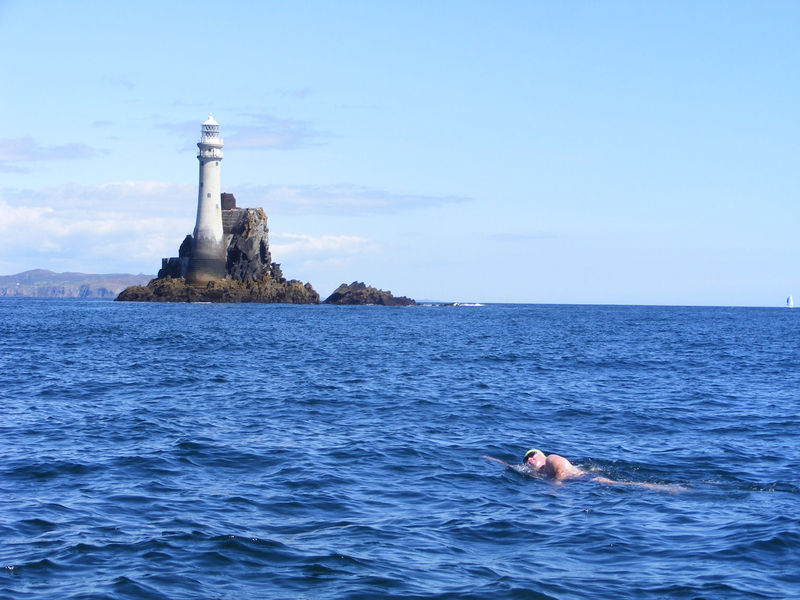
Steve swimming round the dangerous Fastnet Rock

Returning from the Tsugaru Strait swim in Japan, the final leg of his record-breaking attempt, Steve said he was particularly delighted with the victory because at one stage, failure seemed imminent – and he had already failed this final leg three times.

But for Steve, failure was not an option. Like @angelreadman, he took the failed attempts and turned them into fuel for another try.

The Daily News of Open Water Swimming reported Steve saying:

I just can’t go home. Too many people have supported me… I cannot fail. This [Tsugaru] Channel will be the death of me. You just don’t know what this [failure] would do to me.”

As writers, we understand too well. So how did Steve put the past failures behind him and keep going?

Apparently, he concentrated on mantras from his children as well as focusing on the knowledge that he had his home village and county supporting him.

I use anything that gives me a mental edge. Marathon swimming is about as close as you can get to death while you are alive here on Earth. You lose all sense of perception while you are swimming in such difficult conditions.

As writers, we may not be facing life-threatening conditions, but we are facing a journey that risks failure. We’re putting our work out there – complete with passion, heart and soul – for others to reject and criticise (or hopefully enjoy and praise). Once we take the plunge and send off a submission, we can only hope that the reaction is a positive one.

But like Steve Redmond, we have to keep going. If we want to be career writers, we have to go against adversity and reach for our dreams, whatever it takes. This means writing from the heart, using every writing technique we know and learning as we go. We have to allow ourselves to fail and use setbacks to improve.

We’re human, so we’re often impatient and unrealistic, expecting everything to happen quickly. But it takes time and endurance to establish a career and success. It took Steve three years to accomplish what he set out to do – but I bet he would have kept going until completion, no matter how many attempts were required.

So, for the love of writing, keep going.

Read more about Steve Redmond’s incredible world record success here.
Write For You

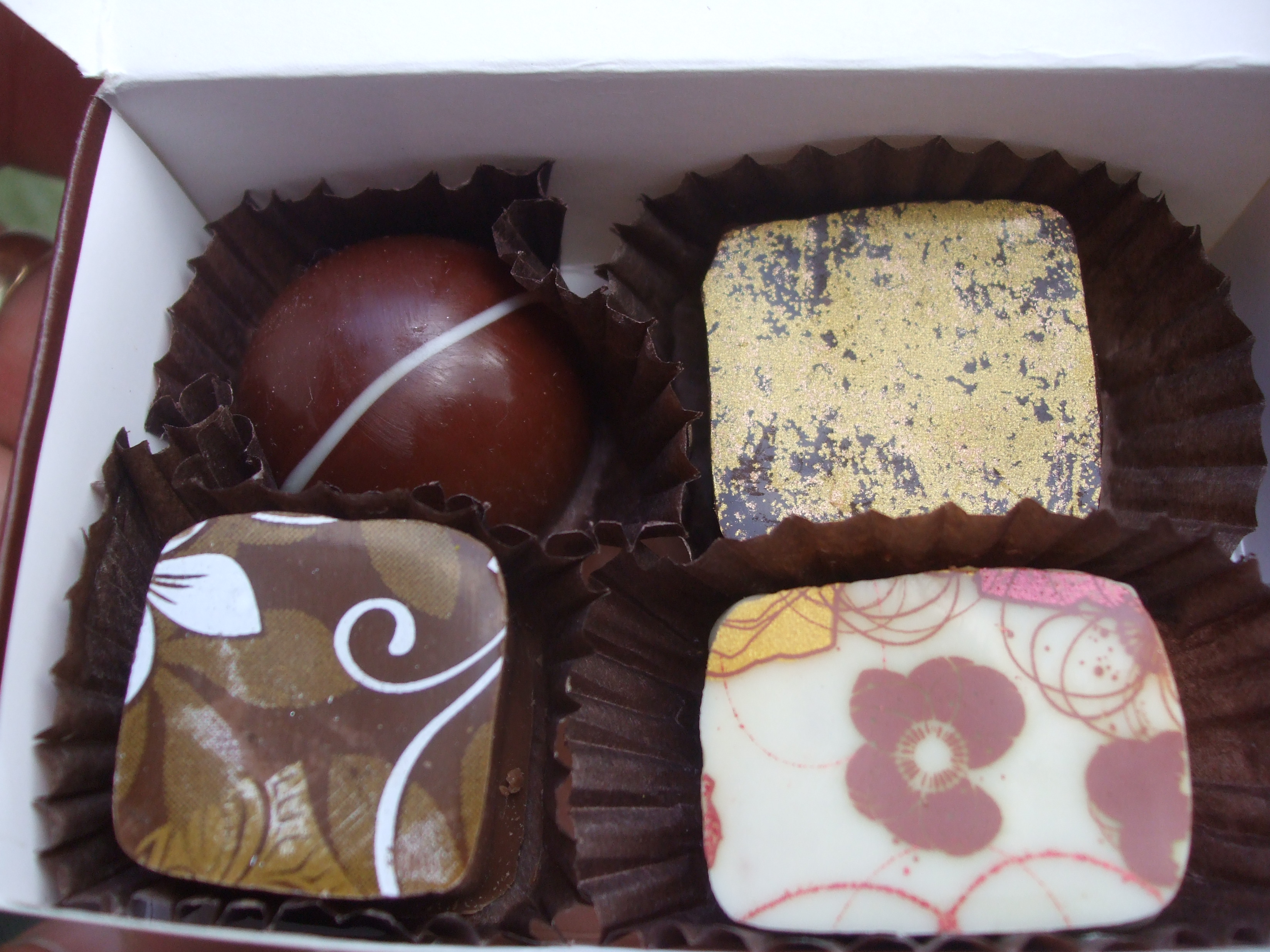
Mine, all mine! (chocolates, Melbourne)

When you write, when you create your poems, stories or novels, who are you writing for?

As writers, most of us feel compelled to put ink to paper; it’s in our blood and acts as sustenance. It keeps our every day lives sane and bright. But as writers, we’re also slaves to ambition and dreams, and the biggest desire of all is to get published.

When it comes to content, there are two schools of thought; write what you know and write what you don’t know! As contradictory as this may sound, it’s all about sparking an idea that leads to brilliant, engaging, exciting writing.

Whatever you write, it’s generally acknowledged that you have to make sure it’s the best possible piece you can manage. Now, a piece of work might seem polished, but leave it for a while (weeks, months, maybe even years) and you’ll probably find many glaring mistakes and necessary changes.

But does everything you write have to be polished? Does every poem, story or novel have to begin with the aim of being perfect or getting published? What happened to experimentation?

As Rebecca Woodhead advised in the June 2012 edition of Writing Magazine, “stop being a constipated writer…Find your voice, and you will find readers.

At the start of this year, I made a pact with myself to send out more submissions as well as complete a new book. This was a direct reaction to the fact that I’d spent one solid year working solely on a Middle Grade fantasy novel and had written myself into a corner. So, for sanity and creativity’s sake, I marked out a multitude of competition and submission deadlines and plunged in, full steam ahead.

Now, half way through the year, I’m re-evaluating this idea. Yes, I had some shortlisting and publishing success, but I’ve found that while my ambition has been tamed, in some ways, my creativity has suffered. I’ve found myself adopting a severe, business-like approach, which has sometimes made writing seem like work.

It’s not that I’m saying writing should easy; we all know the amount of energy, effort, determination and tears that go into a great piece of writing. But surely we write full time for the love of it? As far as I’m concerned, we should be motivated to write well and efficiently, but still have time to play.

Of course, deadlines will loom and ambition will still snap at our ankles. So what’s the answer?

Instead of aiming for a masterpiece, let yourself go. It’s OK to experiment. No – it’s good to experiment! How can we improve as writers if we don’t try new things?

I’m talking about trying to write something in a different genre, a new voice or writing in second person instead of first. If you always write fiction, try adapting an idea from personal experience or vice versa. Don’t even complete a piece; list great first lines or titles, play with metaphors and sentence structure. Just have fun and you never know, it might turn out brilliant. But don’t let this be your aim; allow yourself to write just for you.

And it seems I’m not the only one considering this route. In an interview on writing.ie, Irish literary super-agent Marianne Gunn O’Connor advises writers…

“…You have to say to yourself: why am I writing? Am I writing to get a publishing deal or am I writing because I just have to express something? I think if it’s the former, that’s a difficult place to be. But if you’re writing from a pure place, I think eventually someone will connect with your work. I always say, ‘write because you have something to say’. Remember, we all love good stories.”

When was the last time you wrote something without any publication aim in mind? Is it time to take stock and reclaim the enjoyment of writing?

Writing Without Payment

Will work for magic beans.

Inspired by a post about musicians being expected to work for free (see acknowledgement at end of this blog post), I got to thinking about how people often expect writing to be donated out of good will. This comes in many guises including blogging, stories, novel excerpts, reviews and articles. There are lots of writers desperate to be discovered – but should this mean that they should be expected to provide content without any monetary return?

Many websites and communities that claim adding your content can improve your profile – but in truth, how many of these sites will actually get you noticed? It’s like a David Attenbrough documentary out there: new writers, wannabe writers, newly discovered writers, published authors – they’re all battling it out to be seen, heard, read.

In many cases, you are submitting your work without any editorial structure: this means anything and everything goes. Will this increase your profile? Or is it potentially damaging? After all; don’t you want only your best work to get noticed? Publishing work too early, stuff that isn’t ready or simply isn’t good enough, places you at the bottom of the pecking order, making you the writerly version of plankton or crill. At worst, you’ll be known for writing badly. At best, your free content will get swallowed up in the tumult while helping the website’s google rankings.

It comes down to personal choice, but the way I see it; there are two types of payment: monetary and reward.

If you’re offering a professional service to a person or company then you should be paid. Writing articles, blog posts, reviews, stories, poems (yes; they’re a professional service if used as content), all take time, effort and skill. The days of blogging for free tickets should, in my opinion, be abolished – after all, how many of those reviews are little more than a quick gush in the hope of another free ticket? I’m not saying that everyone should be paid for every little piece they write; but quality and professionalism should be rewarded. Simple.

So is it ever ok to write for free?

There is always going to be some requirement for unpaid writing; especially when we live in an age where everyone has a voice that can be heard via the internet. For instance, you may read a book that you can’t help reviewing, have a burning issue you want to report on, or believe in a certain charity that you’d like to support further by contributing your skills. But as far as I can see, the free stuff should be what you want to write which will in some way benefit you or someone you think deserves it. Reward could be in terms of satisfaction gained, lessons learned, the joy of sharing something important or exciting, or simply supporting someone/a company that you think is worth supporting.

But what about writing creatively? Some writers will only publish their work if it is paid (fair play), but does this mean that its a waste of time if you don’t have a commission or book deal behind you?

I don’t think so. Every creative writing exercise helps you to learn, improve, adapt. In other words, get closer to your goal of being the best writer than you can possibly be. If you put in the hours, dedication and develop your talent, then hopefully publication will follow; somebody somewhere might read it and be inspired or moved. That’s often payment enough.

Discussing this issue with a friend recently, they raised a valid question: what about writing competitions? After all, they have entry fees attached. Is this even worse than writing for free?

Again, not in my opinion; writing competitions are creative outlets which enable discovery of quality work while championing recognition and reward for both established and new writers. Entering a competition may be a long shot, but they’re judged anonymously; if your work is good enough, you could see impressive results.

I think the best approach is to know what you want to achieve and how; then stay focused. Dedicate time to the assignments/submissions that matter to you. It can often be difficult for us, as humans, to say no. The opportunity to seemingly further our writing profiles can be tempting and it can be awkward to set a price on our talents and capabilities. But, like with your creative writing, you don’t write in every genre. You’re selective, you find your voice. If you don’t know your own worth, how do you expect anyone else to?

Huge thanks to Elisabeth Hobbs for her inspiring post which got me thinking.