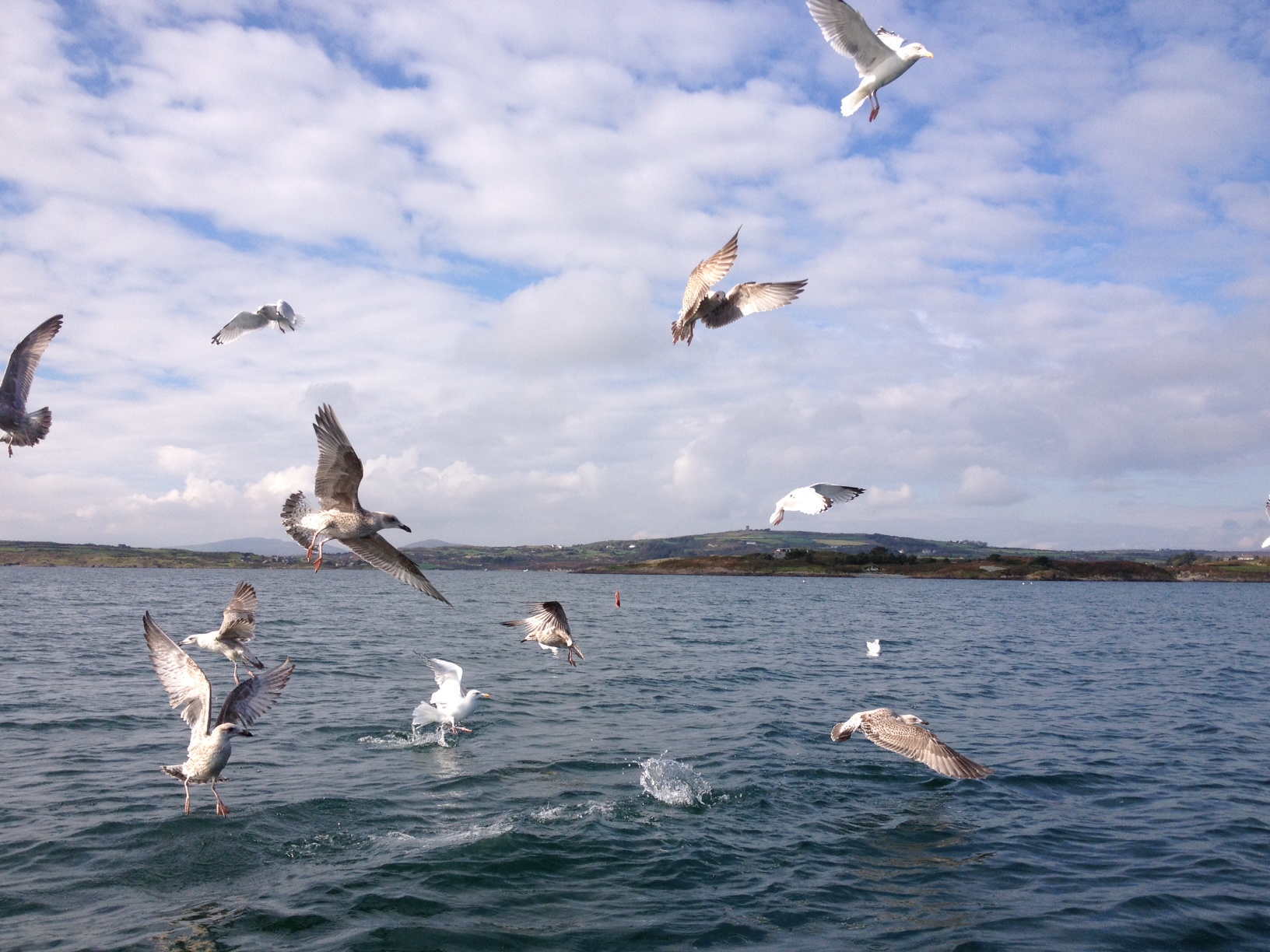
I took this action shot out fishing a couple of weeks ago. I get a real kick out of watching them feed as we gut the day’s catch and share our feed with some feathered friends
To be a writer you have to write, that is true, but I believe that you also have to live life to the fullest to be able to write well. That means looking after your health and mental health, stimulating your curiosity and experiencing new things. You also have to make sure you have enough time out to let the ideas, characters and stories in your brain settle. Like Helen Moorhouse wrote recently, perhaps you don’t need to be writing to write!
This is a concept that I’ve struggled to come to terms with. When I gave up my city job to pursue a writing career a couple of years ago, I thought I had to sit at my desk for eight hours every day, slogging away no matter what the outcome. True, some writers do work like this, but for me, it’s not productive.
It’s taken some time to figure out and lots of jiggling and reworking of schedules, but I’ve found that after a certain amount of time, my writing suffers and my ideas channel themselves down one dull, lonely path.
Like Niamh Boyce and many others, I’m an intuitive writer, so I write a ‘draft zero’ without any planning and see where the characters and story lead me. I often have a name or a feeling, a sense of what a character is experiencing in my mind, but other than that, it’s a free for all. And sitting there for eight hours in a day does not work if you write this way.
Sometimes I get a powerful writing bug and my bum-glue seems more adhesive than usual – I can certainly edit/redraft for long periods of time – but when I’m starting a new project, I tend to write in bursts. An hour here, half hour there, two hours later. I split the writing up over the day (especially in winter when the nights are long) and let my brain unwind and tick over in between.

Sometimes I’ll be helping with hay bales, sometimes I’ll be taking walks and admiring the newly cut silage or painting big X’s on the wrapper to deter the crows.
I take walks, swim, garden, cook, read, watch films and documentaries, I go fishing or meet up with friends for tea, then start all over again. This means that each time I sit down, my brain is recharged, my body energised and it’s like I’m writing for the first time that day.
I do work as well – part time in a bookshop and part time with my own social media business – and these provide a good distraction, balancing out the hours spent alone at a computer. Work makes me appreciate all the free time I have to write, but I still dream of the day when I can just write.
I attempt to take days off from both writing and work to fully recharge, but I find this extremely difficult to do and if I don’t elope from the village for the day then I’ll find myself doing one or the other (usually both).
So what’s this post all about? I guess it’s two things. Firstly – it’s OK not to be writing sometimes and secondly – we all have to find a way to write that works for us.
I’m always interested in the writing process and how other writers handle their work/life balance, how they keep motivated and get the best possible results. Does any of the above sound familiar to you or do you work completely differently? Are you an eight hours a day person or a short bursts devotee? I’d love to hear all about it.
 E.R.Murray