teaching Cambodia rural living

My arrival in Tanop – Singing Kites #WritingCambodia

I’m writing this in retrospect, which is really hard because I feel like the past week has shown me so much, and I hardly know where to start.

Ready for the countryside, but not really sure what to expect, I was delighted to have the company of another volunteer. Ashleigh had been at Singing Kites two years earlier and was fulfilling her promise of returning – which meant she could show me the ropes a little and give me an idea of how much things had changed. She was also great fun to hang out with, which always makes things easier. The director, Tith, was immediately friendly and informative, full of energy and ideas, and I knew right away that this was a man with vision.

Eventually pulling into the school in Tanop, Tnuot commune in Takeo district, the first thing I noticed was the beautiful grounds and the warm welcome. Picture young mango trees, brightly painted school buildings, brown ponds and lush gardens. Then add to that plenty of smiling faces. Teachers that had met Ashleigh before remembered her immediately, giving hugs and asking questions about her life since she’d left. They shared their own news of marriages and babies, and then kindly left us to get acquainted with our temporary home.

Tanop, volunteer cottage, Cambodia

Home sweet home – one of the volunteer cottages

The accommodation is superb – small cottages kitted out with a fridge, kettle, fans, mosquito nets, and all the cleaning and cooking utensils you need, as well as a pile of oil, spices and mosquito coils left behind by previous volunteers. You buy your food and supplies in the city to bring with you, and although I was lucky enough to meet an American girl, Tori, who spoke Khmer and was kind enough to accompany me to the local markets, I was grateful for the extra bits I’d forgotten or not even considered.

The first shock was the shower – not because it wasn’t good enough, but because I had never thought of myself as someone who was reliant on small luxuries. Turns out I was wrong. The shower is collected rainwater that you pour over yourself with a scoop – simple and efficient, but it took me a couple of days to brave. Why? What did I think would happen? Dengue fever is an issue in Cambodia, so that was a concern during the day; the dengue mosquito bites during the day, prefers enclosed spaces and has a range of about ten meters. But I had no excuse at nighttime other than my own overly delicate sensibilities. I’m happy to report, this is no longer an issue (thanks to Ashleigh who had the idea of braving it at the same time in showers next door to each other).

The set up here is excellent. A library, several classrooms, a ‘Bali hut’ for music and group work, a bandstand for the same, and a playground where children seem to like to go and draw. The children are incredibly sociable and love to chat and play in big groups – and they also love to include you if you’re around. You feel very welcome and respected, and it’s genuinely heart-warming to experience when we are exposed to so much turmoil in the world on a daily basis.


cambodia rural school

The school bus 🙂

Tith, the director of the school, is incredible. Not only is he focused on making sure the children get a quality education with plenty of exposure to native English speakers, he is very hands on. One minute he is with pupils, the minute he’s on the radio raising awareness of the cause, and then he’s driving the children home in the school truck. Tith’s aim is to improve the lives of his pupils, and the local community, through education and equality, and I can see that he is definitely achieving what he has set out to do.

What I particularly love is that all the teachers are Cambodian. They spend their weeks working in the school from 7.30am until 7.30pm, then travel up to Phnom Penh to study at university for the weekend. They are dedicated, determined and doing a great job despite the challenges they face.

teaching in Cambodia

One of the teachers, Channa, helping to brighten up the school (the drawings were done by the pupils)

The parents are also included in their children’s education, with meetings on a monthly basis that include interactive activities that tackle subjects such as behaviour management. I got to give a speech to one group of parents and from the turnout it was apparent that the school is a central and respected part of the local community. This is thanks to Tith’s vision – he understands the importance of upholding and improving upon strong community values – and the hard work of the teachers.

My biggest surprise was when the primary and secondary children arrived – and it’s something that continues to amaze me daily. Literally hundreds of bikes start pouring through the gates for 1pm, and they don’t stop coming and going until 7.30pm, when classes finish. The children attend Khmer school during the day, then come here to learn English – and they all have such an incredible desire to learn, their energy is infectious. The second they see you, you get a deafening chorus of ‘hello’ which then continues with every class as you pass through the school. It is so beautiful to experience and is a highlight of my day at Singing Kites.

I started teaching right away, assisting with a primary class studying colours. Then a class on numbers, and a joint teaching session on greetings – everyone in Cambodia that I have met so far responds to the question ‘how are you’ with ‘I’m fine’, so Ashleigh and I tried to give some alternatives. It’s been a few years now since I taught in primary school, but it seems it’s just like riding a bike and it felt immediately good to be there. A fourth class just wanted to ask me questions, which was fine too – especially with the heat and excitement getting to me.

Since then, I’ve taken focused groups to introduce and consolidate new language skills, whole classes to improve pronunciation, given presentations to children and parents, and positioned myself in open spaces so that the inquisitive ones that want to talk but may not like to speak up in a classroom environment can come and join in with, or instigate, a chat.

Cambodian schools, rural, singing kites

Just a few inquisitive faces

The level of English here is varied, but I’m amazed at the skill of the more able students. However, you cannot guess the ability of the child based on their age. The younger ones are really inquisitive and confident, while the older pupils can be much more able but shy – so it’s really important to get to know the children quickly. That’s what this week has been about – adapting to the environment, winning the confidence of the teachers, and making friendships with the children.

The emphasis in Cambodia is on rote learning because that is how people have been traditionally taught, so the lessons consist of reading from the board or book and the children repeating the words back. I know that Tith and everyone at Singing Kites is trying to change this approach and so I’ve tried to incorporate as much interactive learning as possible with limited supplies – you should have seen the laughs I got producing a carrot and packet of noodles from my bag! I’ve since seen the children re-enacting the games and teachers adopting flashcash cards, so it is apparent that everyone is open to different methods, it’s just a question of provision and some positive role models.

teaching Cambodia rural living

A small group, learning more food words (that’s the boy that gave me the hug!)

This week, I feel I have offered a very small contribution to the wonderful work here, but the children have a real thirst for knowledge and so hopefully it will leave a positive residue that will add to the incredible work that everyone is already achieving.

I have only been here a short time but it is already apparent to me that the most important thing for any volunteer to be aware of is – we are simply here as support and should take care to respect the local community. There are changes that need to be made but all change takes time, and we need to be sensitive in our approach, adopting a positive manner that is respectful towards the people that live and work this life every day. The staff and children work so hard, and they all deserve recognition for their achievements.

In the time that I’ve been here so far, I’ve seen barren land transformed into a vegetable garden by the caretakers, I’ve seen kids soak up new knowledge and open themselves up to new experiences, and I’ve seen teachers hungry for knowledge adapt a lesson in even just a small way to improve the learning experience for their pupils. The highlight so far has to be when I earned a hug from a child who was so excited that he had remembered the word ‘pineapple’ on our second group session.

I’m writing this from the city, surrounded by tourists complaining that the hotel beer is $2 instead of $1.50 like it should be, or quibbling over 50 cents for a piece of clothing in the market. I can also hear tired NGO workers discussing their latest challenge as they take a swim, thankful for the opportunity to reset and reflect.

Cambodia is a country that is as beautiful as it is recovering, and it is clear that there is lots of excellent work going on, but there’s still a way to go. I can’t wait to get back to my rainwater shower and the sound of a hundred bikes bumping their way along the lane to see if I can add even just a small contribution. Follow the #WritingCambodia hashtag on twitter to see how I get on!

You can find out more about this wonderful organisation by liking their Singing Kites Facebook page and I know they’d love you to show your support by sharing and reblogging this post if you can.

travel Cambodia

#WritingCambodia – First Impressions of Phnom Penh

This is where the man scavenged on the ground for food.

This is where the man scavenged on the ground for food.

My first day in Phnom Penh… 

A street kid with a feather duster trying to clean my shoes in a tuk tuk, a dinner of snails & chicken’s spurs, fantails dancing in the vines, a kitten with a squealing mouse in its mouth trying to also catch a gecko, debris-lined roads, a driver with a trailer filled with pigs racing us, and a man so hungry he was eating dirty crusts of bread off the litter-filled floor, spitting them out if they were too inedible but not bothering to check beforehandAt night, the air fills with the perfume of flowers and an unidentifiable screeching and lunging from overhead in the palms. I find the people are as warm and friendly as everyone says, and sleep is peaceful in this small oasis of a guesthouse.

travel Cambodia

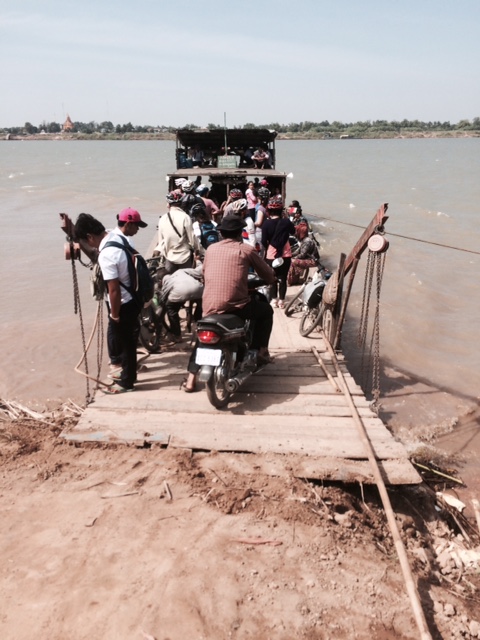
One of the the three ferry crossings – be warned, sit on the side & you get wet. I found out the hard way 🙂


Phnom Penh, Day 2…

Feet swollen with mosquito bites and a 25KM bike tour of the Mekong islands. Death-defying single file ride through the city streets: tuk tuks and trucks take no notice of the traffic direction, especially on roundabouts. To survive, just keep going. There is constant motion and the drivers are used to dodging and weaving. Stop and you screw the whole system. We enjoy ferry crossings, bumpy mud track rides – around farms, past rice fields, in temples, through cattle. We visit a family home silkworm farm (they don’t try to sell you anything) and a local temple. Included: lots of fresh coconut water and a local lunch so plentiful, there was food left behind – anyone who knows me knows that doesn’t happen when I’m around. At night, I find incredible seafood street food, and a young girl abandons her family to join me to eat and speak English. The weird screeching continues overhead and the mosquitos are out in force.


Phnom Penh, Day 3…

ethical travel cambodia

My patient and helpful instructor for coconut carving, Sok Chea

A motorbike ride with a student called Kim Sroung to a crafts workshop where I cut, file, sand and polish a piece of coconut shell into the shape of an elephant (‘dom rey’) under the guiding hand of Sok Chea. Warm greetings from stall owners as I return for more snails, and I eat as much fresh jackfruit as I can stomach. Exploring random streets on foot, stepping in potholes, dodging traffic, confusing the locals with my presence. Later, discovering a menu at the seafood street vendor opens up a world of over fifty dishes!

My final day in Phnom Penh…

An ad hoc invite which turns out to be church (not what I unexpected!), where I get to see some outreach work by a charity, and meet an American girl called Tori who speaks Khmer – she takes me to buy my food for the countryside from the local market, greeting her usual vendors and getting me a pile of food at a great price. At night, a food tour not for the faint hearted – including (optional) grasshoppers, water beetles, snake, grubs (the snake & water beetles were my favourite) – but also rooftop cocktails, tropical fruits and an amazing BBQ.

street food Cambodia

Tastes like fish jerky. Really, really good.

Tomorrow, I head to the countryside to help at Singing Kites. I already love this country but it clear that there is a lot of pain hidden behind the smiles. Imagine being so hungry, you don’t even care whether your food is clean. Already lots to think about. 

Happy New Year – Let The Next Adventure Begin!

winter walks in west cork

Escaping the weather – I’ll be back end of Jan!

As you read this, I am flying out to Cambodia to work for Singing Kites, a charity that focuses on health and education, giving people ‘a hand up, not a hand out.’ Their emphasis is on building the villagers’ skills and confidence:

assisting them to develop and complete projects that help in alleviating poverty and suffering and open opportunities which bring life changes, vocational training, improved quality of health, sustainability and importantly, self worth and pride in themselves and their achievements.

I have never been to Cambodia, but I am aware of the poverty and problems the country faces and I feel lucky to have been given this opportunity to help. Sometimes it’s easy to lose sight of what we have and to create problems for ourselves, so also I’m looking forward to taking stock and balancing my perspective.

Although it started off frustratingly slow, 2014 turned out to be an incredible year – I signed the book deal I’ve aways dreamed about  and I got the opportunity to be a resident writer for Singing Kites. All those hours of writing and rewriting finally paid off, but it’s not something I could have done alone.

So I’d like to end 2014 by saying a huge thank you to my lovely, supportive and tireless agent, Sallyanne Sweeney, and to my ever-supportive and very understanding husband.

Thank you also to the local community that makes West Cork such a great place to be, and to all my wonderful friends (both online and offline) that have listened to my bleating on, tolerated my meltdowns and sent me words of encouragement when needed – you know who you are, and you know I’m here whenever you need.

And now, it’s time for me to give something back. I want to make 2015 a year of adventure and words (just like my blog tag line) and although there are lots of charities closer to home that I would like to help with, I haven’t yet found a way to make that a reality. Maybe in the future my books or writing can somehow help – who knows? (All ideas welcome.)

But for now, what better place to start the new year than Singing Kites? My role is to help in classes across the school, assist the teachers with their language skills and lesson plans, and to give the children (and adults) an opportunity to express themselves through creative writing.

I’ll be blogging about my experiences while I’m away, so hopefully you’ll stay in touch – and maybe even help spread the word.

Happy New Year everyone – here’s to 2015! What would be your dream come true in the year to come?

Cambodian butterflies

My first interview as an author!

Rural Arvon course

Just starting the journey…

This is my first interview since signing my book deal, and it was such fun, I had to share it.

Writing a book is only half of the struggle – you have to get your name out there and sell your book too.

You need a marketing strategy – that DOES NOT mean a hundred ‘5 STAR AMAZON REVIEW’ posts/tweets a day (especially when it was your mum who wrote the review).

You have to do readings, interviews, school visits, radio, maybe even TV – and you still have to be human.

So that’s why I’m delighted my first interview as an official author was with Michelle Moloney King. And if you’re sick of the usual ‘where do you get your ideas’ type questions, I think you’ll appreciate it too.

Thanks, Michelle, for bringing some fun back to interviews, and thanks to everyone who reads it. Let’s hope there are more like this down the line!

You can read the interview here (and check out the others too, including an interview with Mr Lemony Snickett himself!)

elephant conservation thailand

Elephant Nature Park – Animal Conservation in Thailand

elephant conservation thailand

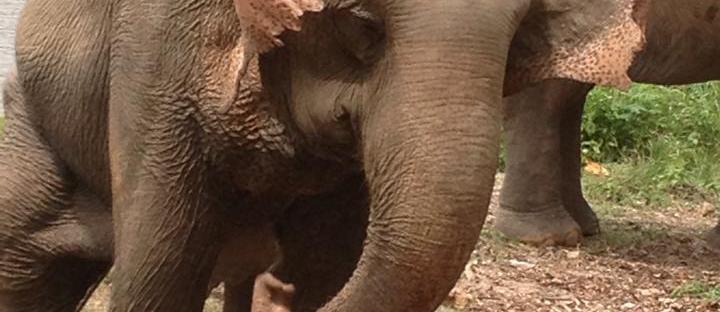
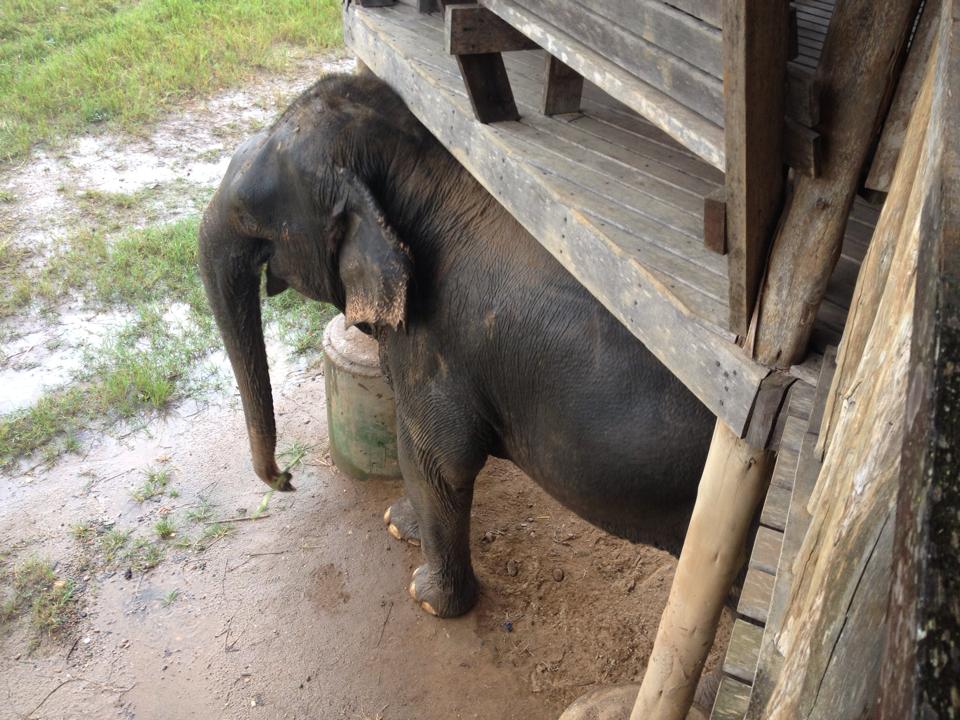
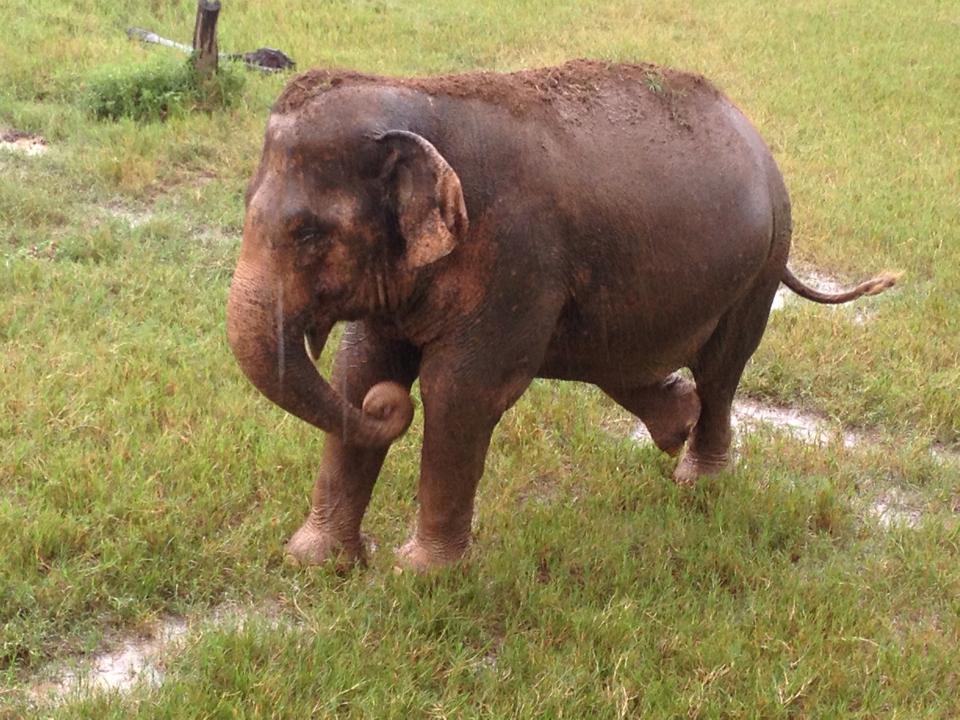
One of the elephants with a permanently dislocated hip, rescued from forced breeding programme

Our Elephant Nature Park visit definitely deserved a post of its own, especially as a follow-on from the post about Thai wildlife. Although the elephants in the park are not ‘wild’, they’re as wild as they’re ever going to be due to their prior circumstances.

Because most of these creatures went through the awful ‘breaking’ process during training, and have always been under the violent control of people, releasing them into the wild would be impossible. They have no natural social cues and so wild elephants would either see them as weak or a threat – and so they would end up killed.

Our role in the park was to help unload fruit trucks, clean and prepare elephant food, shovel elephant poo, bathe elephants, shovel more elephant poo, plant trees, weed and manure trees, and to also help walk the many shelter dogs (rescued from floods, abuse and the illegal meat trade) on a daily basis.

There was a good balance between helping out and getting to watch the elephants (as well as cattle and water buffalo herds) from various viewing platforms, and there were also talks and walks amongst the elephants in their grounds. We also got to interact with the local village shamans and school children, taking part in ceremonies and special Khantoke dinners, so we really did get to see a slice of life in that part of the country.

Considering the situation they are faced with, the Elephant Nature Park is doing an incredible job of rehabilitating these physically and mentally abused elephants through positive reinforcement. They are faced with a bit of a conundrum, however, which some people found a little difficult to get their head around.

elephant nature park thailand

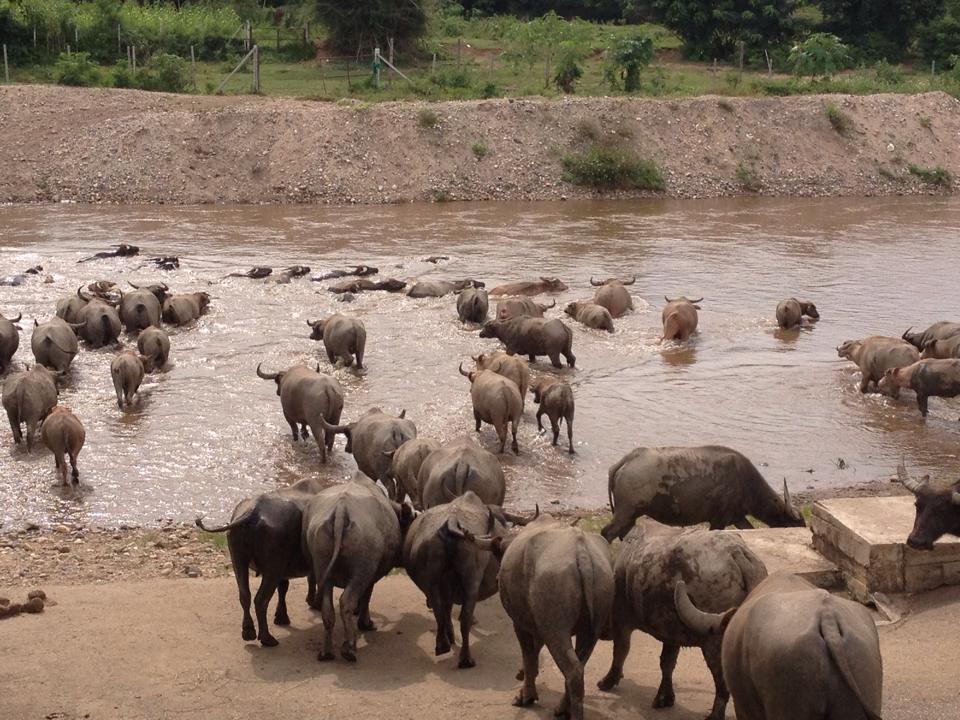
Water buffalo, crossing the river

Lek (founder of ENP) and her staff want the elephants to live as normal lives as possible, making their own friendship and family groups and being allowed to roam the grounds on their terms, but they also have to bring in money for the park to keep it open and to be able to rescue more elephants. This means they have to let people get close to the elephants by feeding them, bathing them etc – which keeps the element of human interaction high.

Although some people feel this is going against the park’s original ethos, I disagree. It is clear that the elephants that interact with visitors will never be able to be released into the wild, and the interaction they now receive is wholly positive – no riding, no bull hooks, no violence.

I don’t think they could do the amazing job they’re doing any other way – and I truly believe that if it is possible, Lek, will find a way. Her love for the animals is bottomless, and the way she interacts with them has to be seen to be believed – if there is such a thing as an elephant whisperer, then that’s her.

elephants, thailand

Viewing posts make the best scratch pads!

There are a couple of exceptions among the elephants that are worth noting – two fully grown bulls that were orphaned. These animals were not exposed to the ‘breaking’ cruelty as they were rescued and raised by Lek at a young age. They have never witnessed violence and do not see humans as their superiors or friends – in fact, one is known for throwing logs and rocks at any humans that come near. These wild instincts means there is hope that these animals may be released into their natural habitat; I’m certainly interested to see what happens.

This was the most expensive part of our trip, but I felt like every penny was worth it. The experience we had, as well as knowing that every single penny went into the ENP, was exactly what we had hoped for – and like many of the volunteers there, we would like to return one day to see what further improvements have been made.

There is so much more I’d like to write about Thailand, but unfortunately, there just isn’t time. I’m currently completing my edits for my publisher, preparing for my Cambodia trip in January, and finishing up my freelance work before I head out to work with Singing Kites. I’m really excited about helping this charity, as I love their ethos of ‘a hand up, not a hand out’. I’m also looking forward to what the country and its people will show me.

I didn’t have my computer with me in Thailand but as Cambodia is a working holiday, I’ll be bringing it along, so I’ll be blogging about my time over there as often as I can. I hope to support the charity not just by physically being there, but by raising awareness of what they do.

I fly out on New Years Eve, landing on New Year’s Day in Phnom Penh – hopefully you’ll join me by helping to spread the word about the great work that’s going on over there?

thailand butterfly

Thailand wildlife: Scorpion Spiders, Bubble Crabs & Unexpected Visitors

thailand butterfly

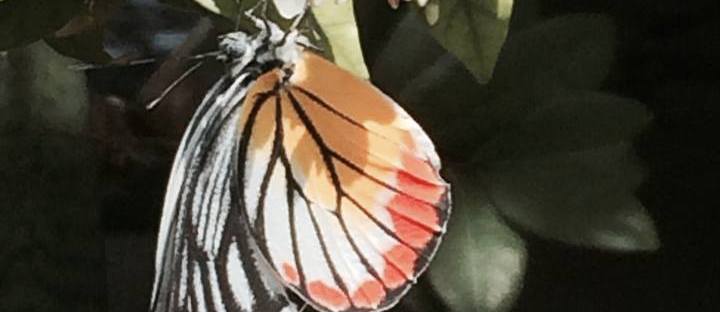
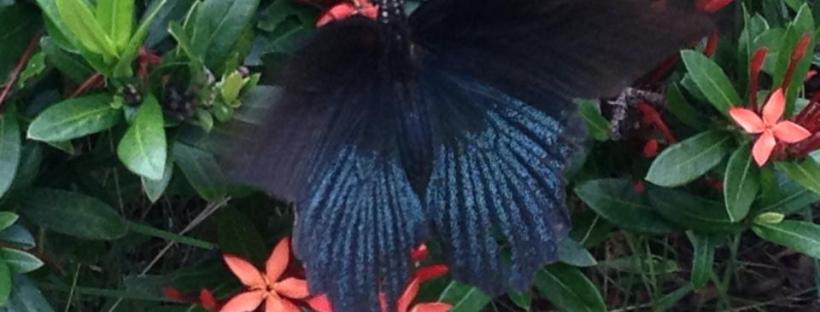
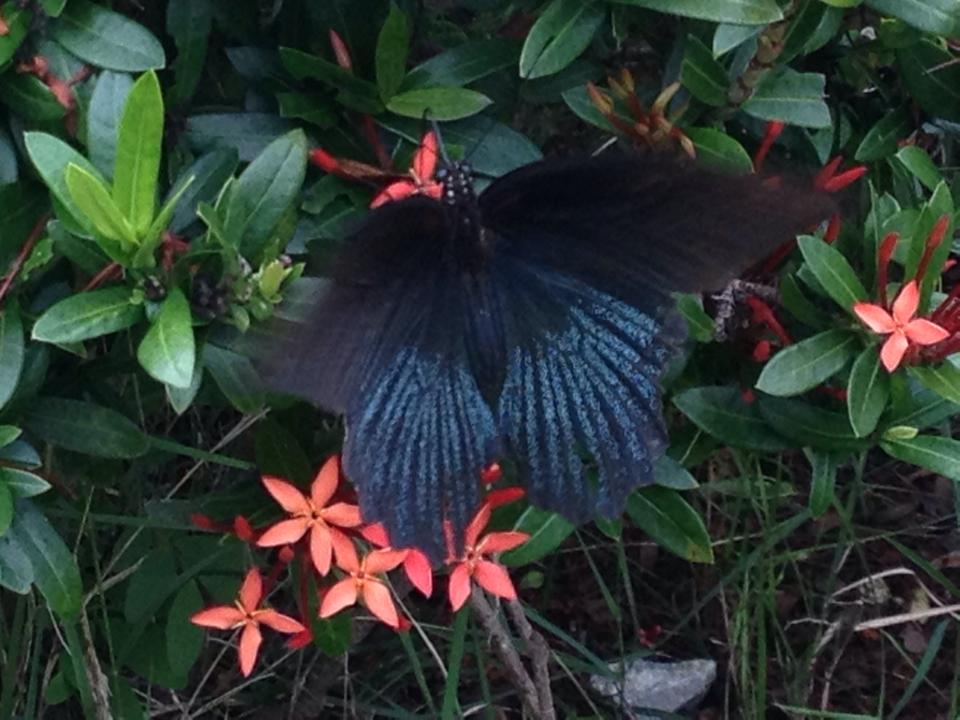
Just one of the many beautiful butterflies

We’ve already established that when I’m travelling, food and local experiences like public transport and getting lost are part of the experience, but one of the main attractions is always the wildlife. As we travelled quite a bit within Thailand, we got to see plenty of wild creatures, starting with an unexpected sighting, on our first day in Bangkok, of a giant head sticking out of one of the canals.

We weren’t expecting to see much wildlife in the capital, but we could see this head quite clearly from the flyover we were stood on – and we were only stood there because we’d managed to get completely lost and were trying to figure out where we’d come from and how to get back there!

Our best guess was a giant rat, and we thought no more of it until the following day when we decided to have a breakfast picnic in Lumphini park and came across several giant swimming lizards. We soon discovered that these beasts are everywhere – and that while the monks feed them, many youngsters around the slum areas find sport in trying to kill them. But no one goes so far as to eat them (unlike the giant bugs that are attracted by lantern light and, therefore, are easy to hunt).

Our first real wildlife experience was a trip out to Khao Yai National Park, staying at Greenleaf Guesthouse (which I highly recommend) for a few days. The tours – which we usually avoid, but here they are necessary if you don’t have a car – were excellent because the guys knew exactly where to bring you to find the various creatures including gibbons, lizards, scorpion spiders, tarantulas, tree snakes, kingfishers, and giant centipedes which we took turns to hold.

We learned lots about the creatures, their habitats, their behaviour, and of course, got to take lots of photos of the creatures as well as the stunning scenery – but nothing can beat the memory of the gibbon families staking their territory with loud calls in the early morning.

In Khao Yai, we got to walk off the usual trails into the National Park, and saw all manner of strange insects, butterflies and bugs – some beautiful, like luminous blue crickets, and some to be avoided.

This is one of the few places to see wild elephants in Thailand; we weren’t that lucky, despite plenty of rigorous searching, but the following day’s group saw a herd of about fifteen. Note: the leech songs get itchy with grass seeds, but do wear them, even though you do get adept at flicking leeches off your leg quite quickly. You can actually see the leeches coming for you if you stop, so you can also try stepping out of the way. .

thailand butterflies

Another butterfly – with a ribbon-like tail. We also saw a fish that looked similar when we were snorkelling!

Another highlight was getting to see the pink dolphins in Khanom. We’d made the trip there especially for this reason, and I did a weird ‘judder dance’ the day I was on the beach and saw a pink dolphin passing in the ocean. Ridiculously excited, we booked a boat trip with a local guide, and we were really lucky; the weather was incredible (it was rainy season), the sea flat calm, and we saw around twenty pink dolphins.

We were also lucky because our guide refused to feed the dolphins to encourage them to come closer, because this alters their behaviour in the wild. Throwing fish to dolphins encourages them to trust boats – and as fishing is a massive industry here, this is not a good idea. In case you were wondering, all the babies are grey, because the pink colour is due to skin pigmentation, and the dolphins turn pinker as they get older. We didn’t get any photos because they moved too fast – but sometimes I think trying to get photos spoils the experience anyway.

Throughout Thailand we saw an array of gorgeous butterflies, so bright and beautiful they took your breath away. They were always easy to spot in garden and wooded areas, and the way they glided was incredible to see. But if you want to find butterflies in the cities or towns, have a look around any areas with bins – they like sweet foods, and that’s where they’re guaranteed an endless source.

We also saw some gorgeous, brightly plumed pheasants, a variety of squirrels that could traverse the electricity cables of Chiang Mai as easily as they could leap from tree to tree in Chumpon, and some magpie-type birds that glowed blue instead of white. The geckos and praying mantis were a never-ending source of amusement, and then there was the joy of the bubble crabs that created intricate patterns on the sand every morning and afternoon.

thailand snakes

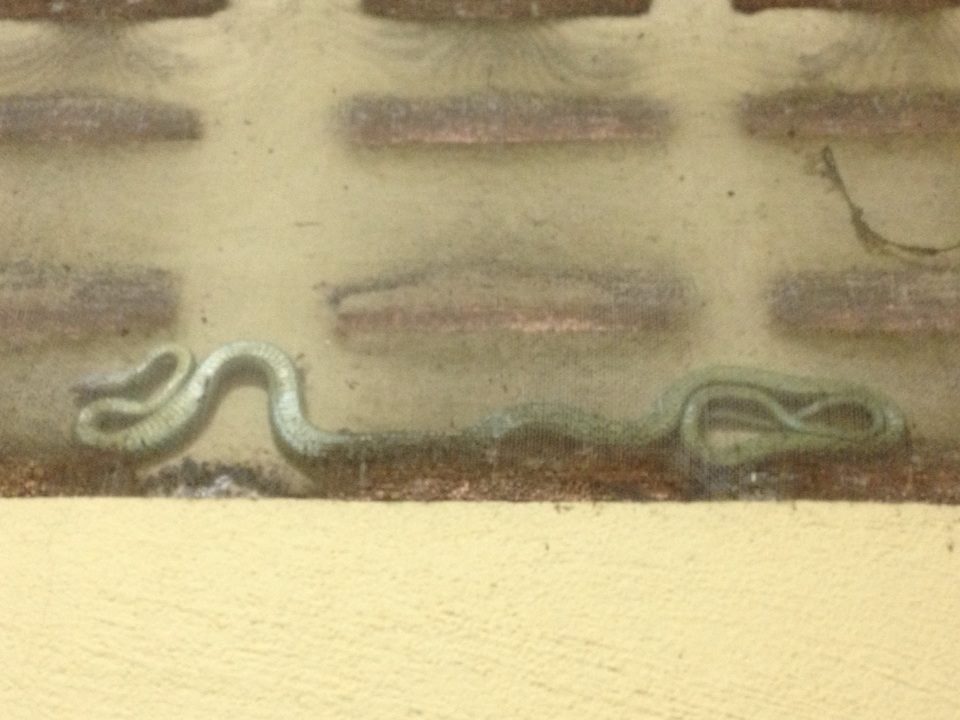
The snake that kept trying to get in!

As for unexpected visitors, we regularly had a frog appear in the bathroom for a night’s kip, and there was a rather determined snake in Suphan Buri that seemed to want to inhabit our room (but thankfully failed each time). There was a similar incident in Koh Yao Noi, come to think of it; every morning, there would be a generous section of snakeskin somewhere in the room – on the bathroom shelf, on the mosquito net – so there was definitely an inquisitive fellow around somewhere.

The island of Koh Yao Noi in the south of Thailand held plenty of unexpected surprises; the hornbills were beautiful, and a pair visited a tree opposite our breakfast table every day. I was amazed that they were so graceful in flight because I expected them to be clumsy like the heron birds that frequent our Irish shores.

There were also lots of mangroves to visit, as well as a fruit bat colony hidden in a giant tree in the middle of a lagoon, and live sand dollars. I’ve only ever seen dead sand dollars before – as beautiful as they are – but to see them live, their purple bodies travelling along the surface of the shoreline, was incredible.

If you are a wildlife lover, then Thailand is a great destination. But make sure you don’t fall foul of the elephant rides or monkey schools (I don’t believe for one minute the claims that they’re chained all day and let free at night), the tiger temples, or even the seemingly harmless dolphin feeding – wildlife should be respected and kept wild, and my next and final post on Thailand will hopefully emphasise that idea further.

Can you use social media wisely?

West Cork walks

Switch off & go for a walk – you’ll feel better and the answer might be waiting for you when you return.

My short answer is yes – if you choose – and this is an example of how…

I’m currently working on edits for the first book of my Nine Lives Trilogy – and I managed to get myself in a bit of a pickle. What seemed to be working perfectly was suddenly floored, and this wonderful fantasy world I created threatened to come toppling down (no panic – it’s only the structure for the whole book) unless I came up with some answers – and fast.

So I stared at the conundrum and made some alterations – and then I quickly unaltered them because I’d made things worse. I walked the dog. I scribbled notes. I cleaned out the cupboards. I scribbled more notes. Some stuff fell into place and could be crossed off the list. There are bigger fish still to fry – but small, bitty details wouldn’t stop niggling.

After a while, I sat in a bewildered mess, thinking – how am I going to separate all this stuff so I can figure things out?

Here’s how: I put a question out on twitter, made it clear it was research (so please RT) and turned twitter off. Then I posed a different question to a Facebook group, and turned Facebook off.

As I worked on other elements, my lovely facebook and twitter friends (huge thanks to you all) were sending a flurry of answers my way. Some of the answers helped, some cemented an idea – others ruled out possibilities. But the point is – every answer was helpful.

Social media doesn’t need to be a distraction, it can be a very useful tool. You just have to remember to ask the right questions – and to turn it off at the right times.

tuk tuk thailand

Thai transport – reliable and fun, if a little hairy!

One of our aims when we visited Thailand was to try and make sure we did everything as local as possible; travel, food, homestays, volunteering – we wanted to enjoy the real Thai experience as much as we could, even though we weren’t sure it would even be possible any more. Thankfully, it was.

One of the real gems of Thailand was the transport. And if you like a bit of adventure, I’d highly recommend you use it.

tuk tuk thailand

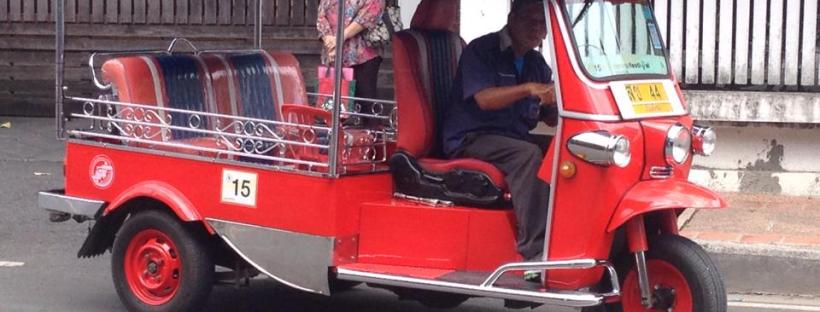
The infamous tuk tuk!

Landing in Bangkok, there was an incredibly efficient airport taxi service in place, with a lady who spoke several languages manning the desk. She collected details on where her customers were going to and paired them with the taxi driver. The price, info on toll fees and expected arrival time were given up front, and an official receipt issued. When you’re jetlagged, this is a real gem – and we were delivered to our rented apartment in good time, without a hiccup.

Although iconic, we found the tuk tuks throughout Thailand more of a nuisance than a useful mode of transport. In Bangkok, the drivers were constantly hounding you for a ride and trying to charge you much more than necessary. The constant cry of ‘tuk tuk’ was on a par with the incessant car horn beeping, so you eventually manage to block them out. Yes, people need to make a living, but there’s a fine line between helping out and allowing yourself – and, therefore, others in the future – to get ripped off.

We did take two tuk tuk rides over the six weeks, but on both occasions they drove so recklessly, we preferred to use the local bus or Songthaew. Another issue was the ‘souvenir shop’ stop – in Bangkok, the tuk tuk driver will inevitably drop you off at some shop or another that you don’t want to go to so he can earn a fuel voucher. Our driver did ask us if this would be OK, explained we just had to look not buy, and we (naively) thought – sure, help a guy out!

We were taken to a shop full of silk. Very expensive silk, might I add. If we’d bought anything we would have had no spending money left for the rest of the holiday – this was our first night! But this information didn’t stop our tuk tuk driver from sulking when we came out empty handed and throwing us out of his vehicle in a random part of the city.

Songthaew thailand

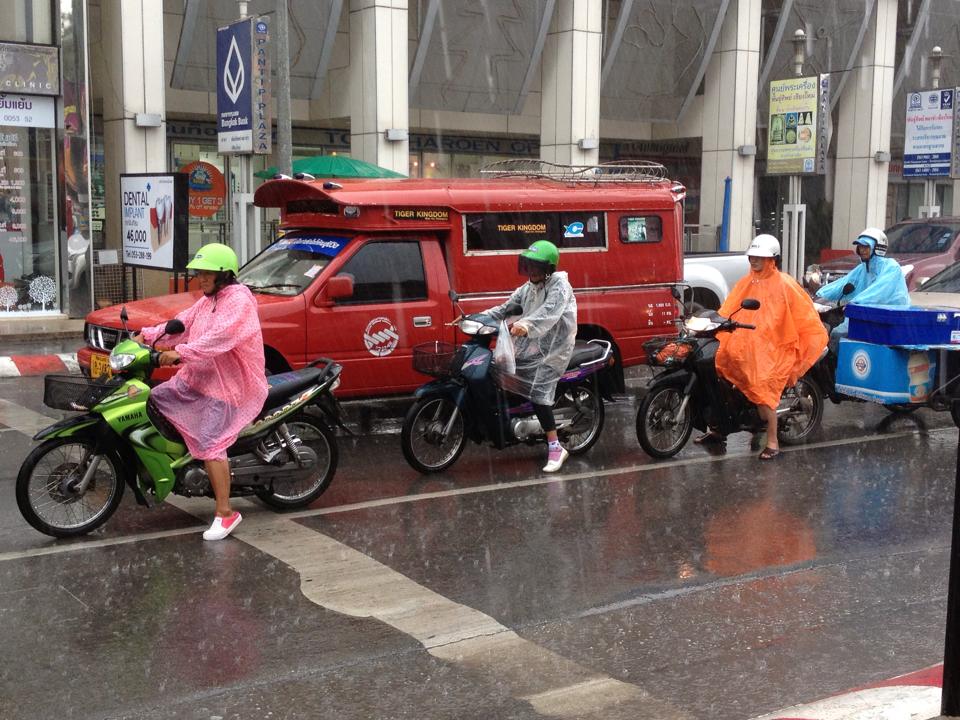
Airy sides – but a roof has certain benefits!

We like to walk a city anyway, and most of our best experiences in Bangkok came from jumping on the Skytrain to a random area for exploring, then meandering and getting lost. The Skytrain is incredible – efficient and very well air conditioned so you’re nice and cool, even when it’s 35 degrees outside and packed with commuters. The lines and connections are easy to figure out and it’s cheap.

The red Songthaew truck taxis  were impossible to figure out in Bangkok but they were a saving grace in Chiang Mai, where each one had its route clearly marked on the sides, back and front. If you flagged down the wrong one, the driver would tell you which route to look out for. A note of caution though; although these are open air, you can still suffer from travel sickness! I found this out the hard way on a journey up to the temple of Doi Suthep – where I spent the first twenty minutes retching into the really gross (hole in the floor) toilets. But forget that – the temple and views were incredible and well worth it!

The only transport scam that we got caught up in was one we couldn’t avoid – the driver of the local minibus from Chumpon dropped us at a fake tourist office in Surat Thani in the middle of a storm. They tried to charge us 7x the price of a ticket and wouldn’t tell us where the bus station was. We’d left our guidebook with its map of the town behind with our Thai hosts, as nowhere else we were visiting was listed and we thought it would help with communication when other English speaking visitors passed through.

overnight sleeper train bangkok chiang mai

The ‘posh’ version of the overnight sleeper train – 2nd class

We eventually bartered the scammers down to double the ticket price and went on our merry way – it was worth it to avoid the soaking and only cost us a few euro. But if you pass through Surat Thani, do watch out for this – it’s a common problem and totally avoidable. Just make sure you don’t give your guidebook away!

By far the best transport we used was the overnight sleeper train from Bangkok to Chiang Mai. We used this twice and discovered that there’s more than one train type – so bear this in mind when you’re booking your tickets because they differ quite a bit! We were certain we would go for the first class option but ended up plumping for second class. It was amazing! Comfortable, roomy, air conditioned – and watching the beds get set up was a highlight. It went from comfy chair to snug bed in under two minutes – complete with sheets & curtains! Afterwards, we felt a bit grimy without a shower, but fully rested.

By far our hairiest journey was in Chumpon, when our arranged transport didn’t turn up to meet us. Eventually, we figured out the mix up, after a very kind ‘taxi’ driver called them for us – they only spoke Thai, and our language skills were limited to ordering a few badly pronounced food dishes. He then explained he would take us for 100 baht for the two of us, when it usually cost 100 baht for one. Very reasonable, I thought, and hollered over to my (hot and wilting) husband that it was all sorted out.

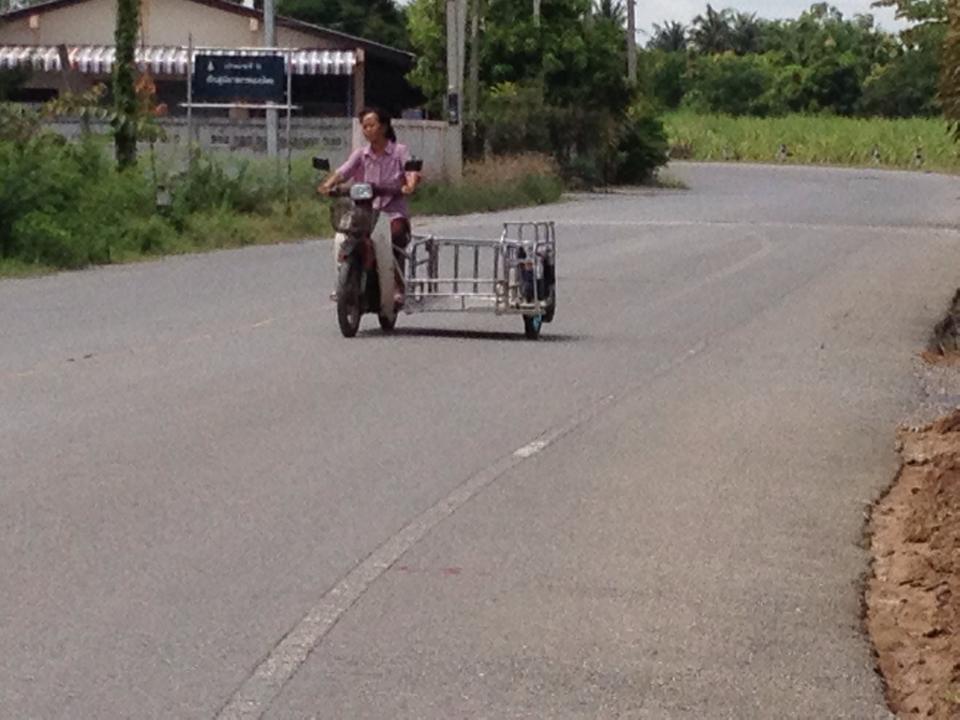
However, the taxi turned out to be a small motorbike. That meant two rucksacks, two passengers and one driver on one small vehicle that seemed to be powered by a hairdryer motor. There was no other option, so we managed to squash on – me at the back wearing my rucksack, foot on the exhaust because there was no room for me on the seat, clinging desperately to my husband.
transport thailand

I have no idea what these are called but I did get a lift in one on Koh Yao Noi – so uncomfortable, but I laughed so hard!

When we stopped at the first traffic light, I realised – after a bit of pointing and sniggering – that my helmet was on backwards and upside down. The journey lasted around twenty minutes, although it seemed much longer. We probably should have been scared but we were laughing so hard, I think we forgot to be concerned! On arrival, it was a source of much amusement to our Thai hosts – but thankfully, we didn’t have to repeat it on our return!

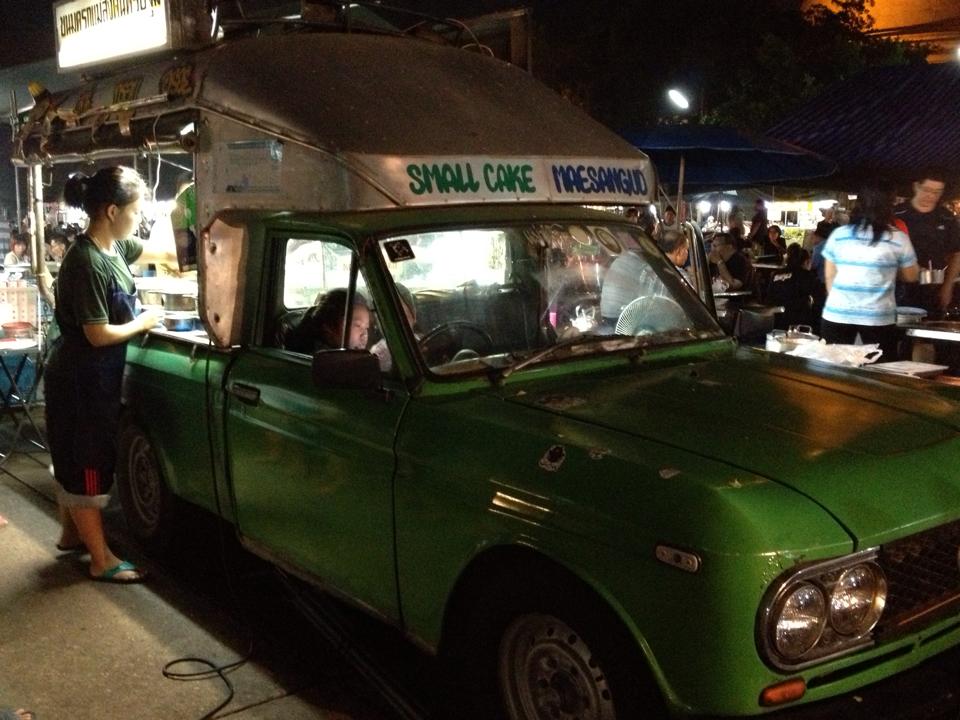
If you think that sounds scary, watching the traffic as a pedestrian is even scarier. In Bangkok we saw four people to a scooter, plus a tiny baby who couldn’t have been more than a few weeks old, ride along the pavement and out into four lane traffic – not a helmet between them. Then there were the pickup trucks filled to the last with the food and cooking equipment for a street stall, with the family squashed in and piled on top – the kittens or puppies included.

Using the public transport system was easy, efficient and cheap – and we got to spend time with people we might not have otherwise crossed passed with. We covered quite a bit of ground in Thailand, and although there are scams out there, you just need to use a bit of street smarts to make sure you get on the right mode of transport, at the right price.

Forget the ticket offices and tourist information centres – they’re just adding on big fees for a quick phonecall – go to the source and buy direct. Thailand is known for its friendly people, so you’ll always find someone willing to help. And you’ll probably benefit from an extra adventure or two along the way.

A quick story… Discrimen on 1000Words

thai decoration gardens

This is how happy I’ll be when I finish my book edits 🙂

I’m currently editing my book, so things are quiet on the blog front. I hope to get back to my Thailand adventures soon – especially with a Cambodian adventure booked for January – but as I’m sure you’ll understand, these edits have to take priority.

After having read through my editors comments, I should also copy Mel Sheratt and expose a few of my blunders via the blog – there are some corkers in there! What do you think? Would you like to hear some of the most embarrassing ones?

In the meantime, here’s a piece of flash fiction that I wrote, ‘Discrimen‘, kindly published by 1000Words. If you’re a reader, they have lots of really good, bite-sized fiction for you to read. If you’re a writer, why not consider submitting?

I hope you enjoy the story – thanks for reading if you get round to it – & I’ll be back with more blog posts soon.

More on Thai food culture…

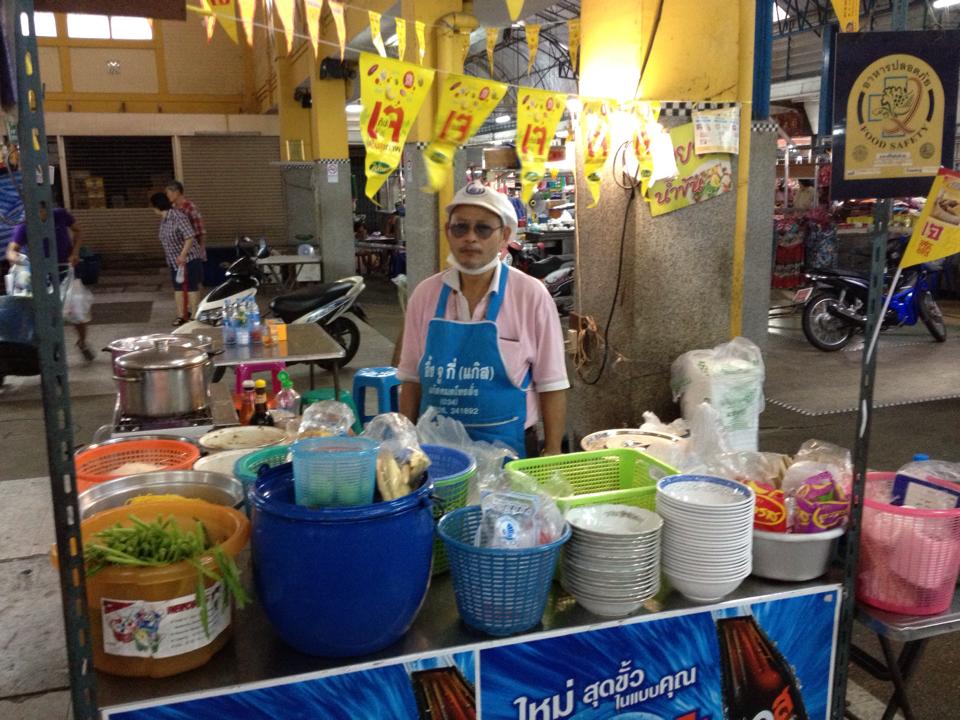
The food adventures continued as we moved around Thailand, with each area taking particular pride in its local dishes and specialities. And at all times, there was a clear fusion between Thai food and Thai life.

thai style picnic, hot springs

Boiling eggs in baskets at the hot springs

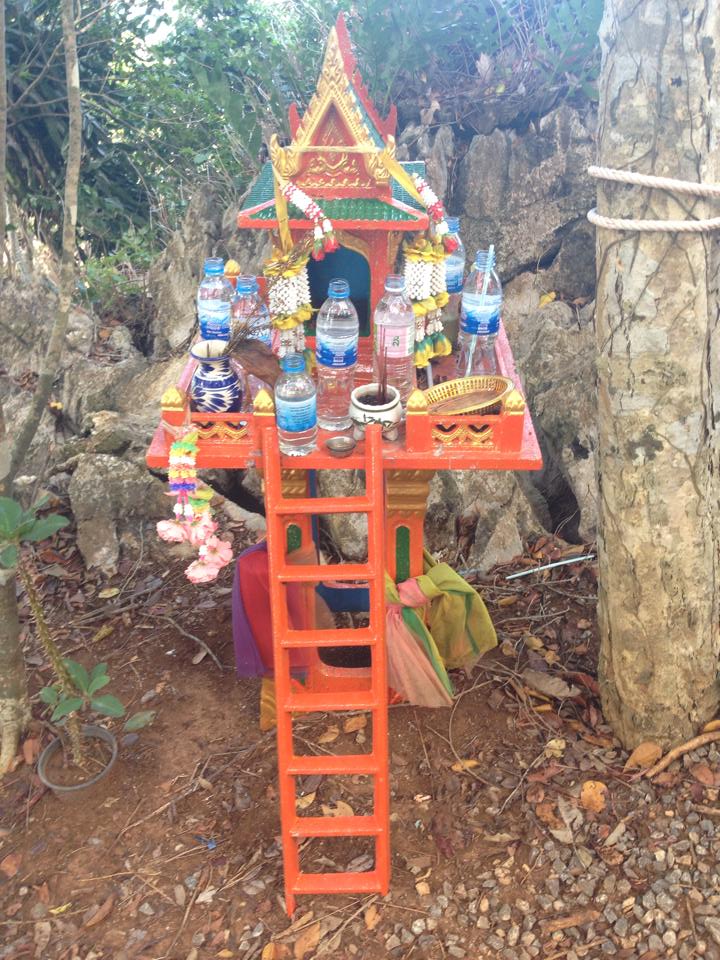
For instance, the owner of the homestay we chose in Suphan Buri took fruit to be blessed at the temple daily, and then put it out for her guests to bring them good luck – a very important element of Thai culture. The spirit houses were always bursting with food and drink for the ancestors, and there were edible holy fish fatted in the pond. We didn’t quite manage to decipher whether they would or would not be eaten.

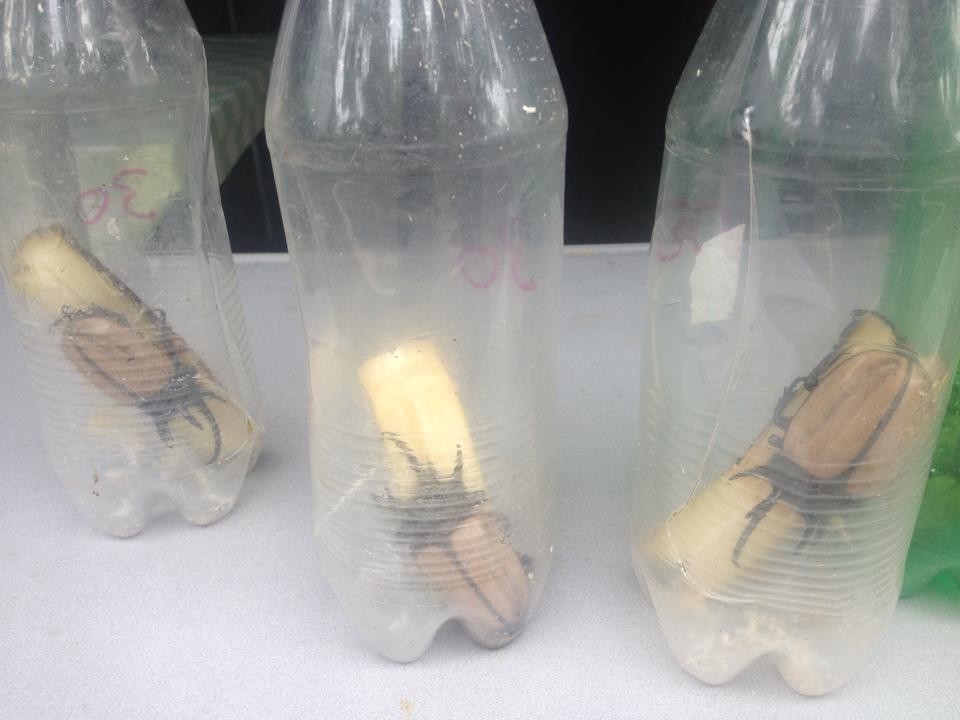
When we stayed with a family in Chiang Mai, they were so hospitable that they took us to the San Khamphaeng hot springs on their day off, so we could boil eggs in the sulphurous water and make a picnic. We were the only westerners there and it was a real honour to sit with our feet in the springs alongside the locals. There were some rather odd-looking offerings also available and we weren’t even sure whether they were on sale for boiling – but we later found out they were definitely there as food (see beetle photo).

unusual foods Chiang mai

Beetle picnic, anyone? Delicious boiled, apparently.

Afterwards, our Chiang Mai hosts took us to a local restaurant famed for its Isaan-style food. We would never have found this on our own and we got to try new spicy fruit salads, sticky sun-dried meats, and delicious fresh fruit smoothies made with ice we could actually drink. (Most people don’t realise but the biggest cause of upset stomachs is from the ice in drinks made from tap water so just in case, avoid, avoid, avoid!)

One of the clearest examples of how lifestyle and belief influenced food was during our stay at the Elephant Nature Park in the Mae Taeng valley, Chiang Mai province. A wonderful conservation centre focused on rescuing and rehabilitating abused elephants – as well as over 400 dogs, a herd of water buffalo and some humpy-looking cattle – the flavoursome food they offered was completely vegetarian, reflecting the animal-centric ethos of the park. (I love tofu but didn’t realise it could be presented in so many ways!)

The park also welcomed us with an intriguing good luck ceremony, led by the local village shaman. The food, flower and candle offerings were placed on a small, decorative float and the ceremony consisted of all our bad luck being drawn out by the shaman’s song. This was deposited on the float, which was then sent away down the river. We were all given white blessed wristbands, just to make sure the luck stayed, with strict instruction on which wrist they were to be worn (left for female, right for male), how long they could be worn (between 3-7 days), as well as how to remove (untie, not cut – and then keep).

elephant conservation volunteering thailand

Not edible – but I had to post a pachyderm.

The Elephant Nature Park also bade us a lucky farewell with a traditional Khantoke dinner. I’d hoped to experience one of these while in the North of the country, but had trouble finding one in Chiang Mai that wasn’t solely catering for tourists. These dinners consist of small, low tables, where you sit with others on the floor and share food. The village presents the food, with traditional entertainment while you eat – such as local music, candle dances, and mask dances. The spirit is one of celebration and the aim is – you guessed it – to guarantee good luck from the spirits when you leave.

It didn’t matter where we travelled in Thailand, the quality of the food was impeccable and food was central to everyday life. Everyone liked to show off and share, and it was clear that you lived for food, rather than ate food to live. Food was ritualistic and an important event, not something to shovel down quickly.

Just try wolfing down the special BBQ served in Khanom without doing yourself an injury: the hot, domed griddle in the centre of the BBQ is kept fizzing with a wedge of meat fat, while the coals inside the dome keep the soup bubbling. You dip your fish, meat and seafood in raw egg and BBQ it while adding vegetables and noodles to the moat of soup around the outside. Move too fast and you find yourself cooking as you try to keep things turning, but too slow and the meat fat starts spitting. It’s all part of the experience and after our fifth (yes, we liked it!) attempt, I think we got the hang of it.

There were many more food adventures we could have engaged in, but we had to leave some for next time. We didn’t try any of the deep fried tarantulas or crickets, but we did have the rich boat noodles (flavoured with pigs blood) and the gloopy chicken rice soup for breakfast, which is definitely an acquired taste.

seafood street food in thailand

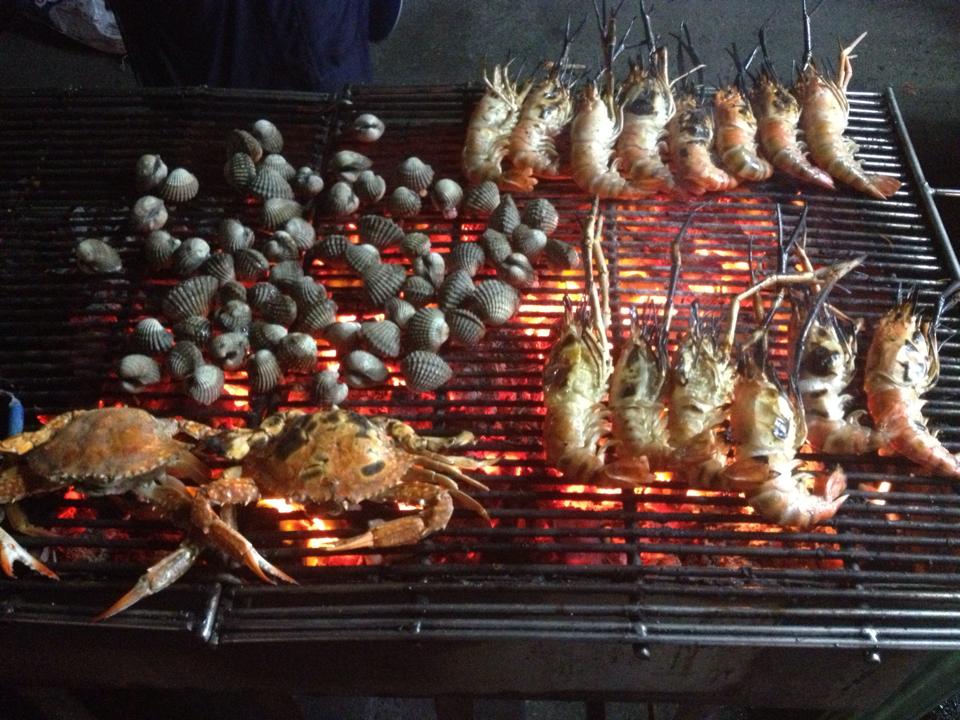
Just one of the many delicious street-food seafood BBQs

Our favourite meals in Thailand were barbecued squid with spicy lime sauce (Chiang Mai), sticky deep fried sun-dried beef (Isaan style), sticky rice with mango (Bangkok), spicy papaya and mango salads, Thai BBQ (Khanom), red snapper in Tamarind sauce (Suphan Buri), chargrilled swordfish (Chumpon) chicken laab (Koh Yao Noi), molasses and yellow bean cakes (Koh Yao Noi) and any of the lemongrass-based soups such as Tom Yum Goong.

But I think the best thing about the food in Thailand was the overall experience and seeing the pride people had in their dishes. I’ve cooked many Thai dishes since returning home, but without the buzz of hungry queues, the hum of traffic, the glorious sun and a person peering over the counter from behind a wok, curious to know whether you’re enjoying it, it just doesn’t taste the same.