Festivals, Stations and Jellyfish Swarms

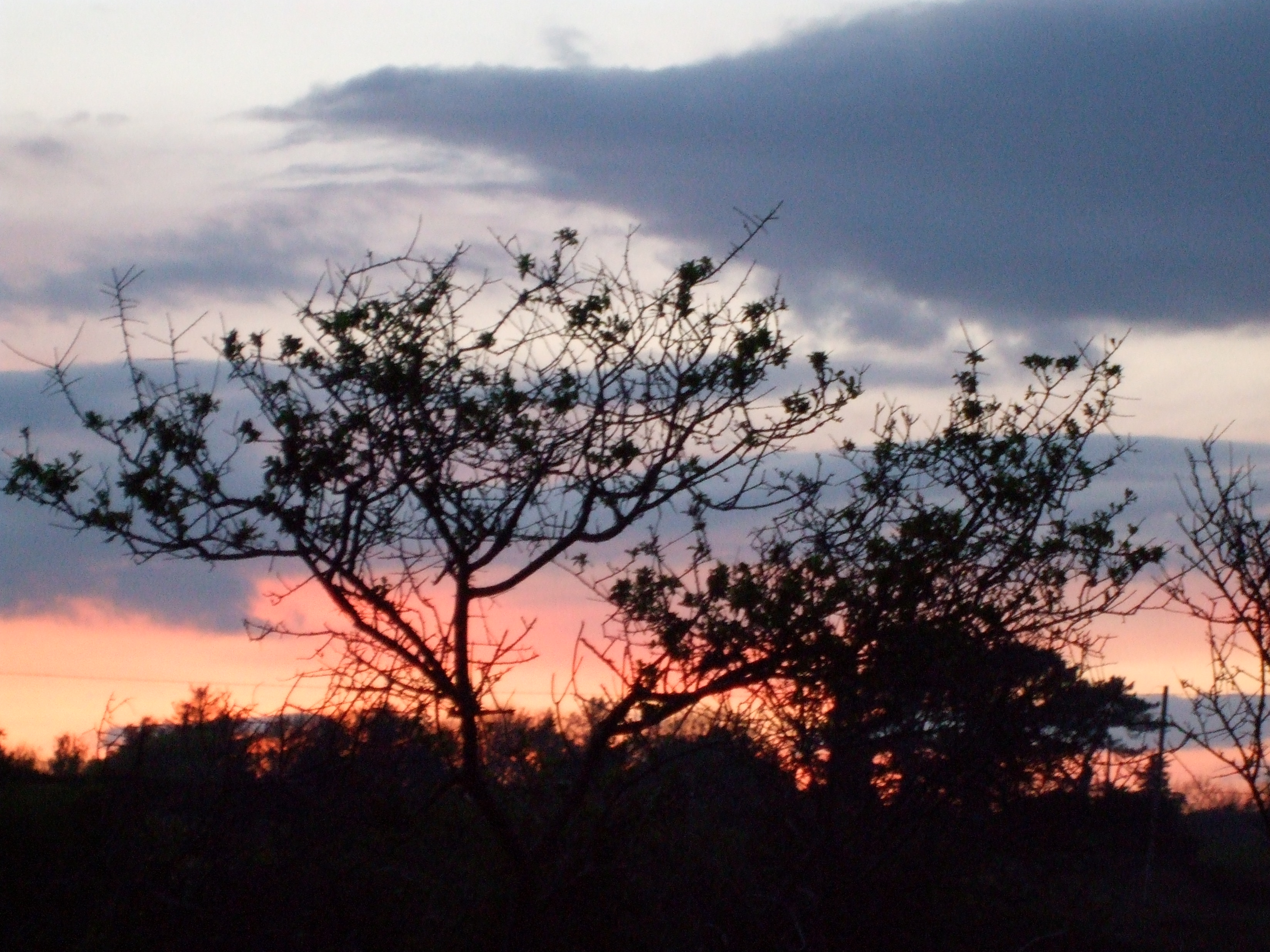
Mackerel skies and horses tails

Moor your boats and lower your sails

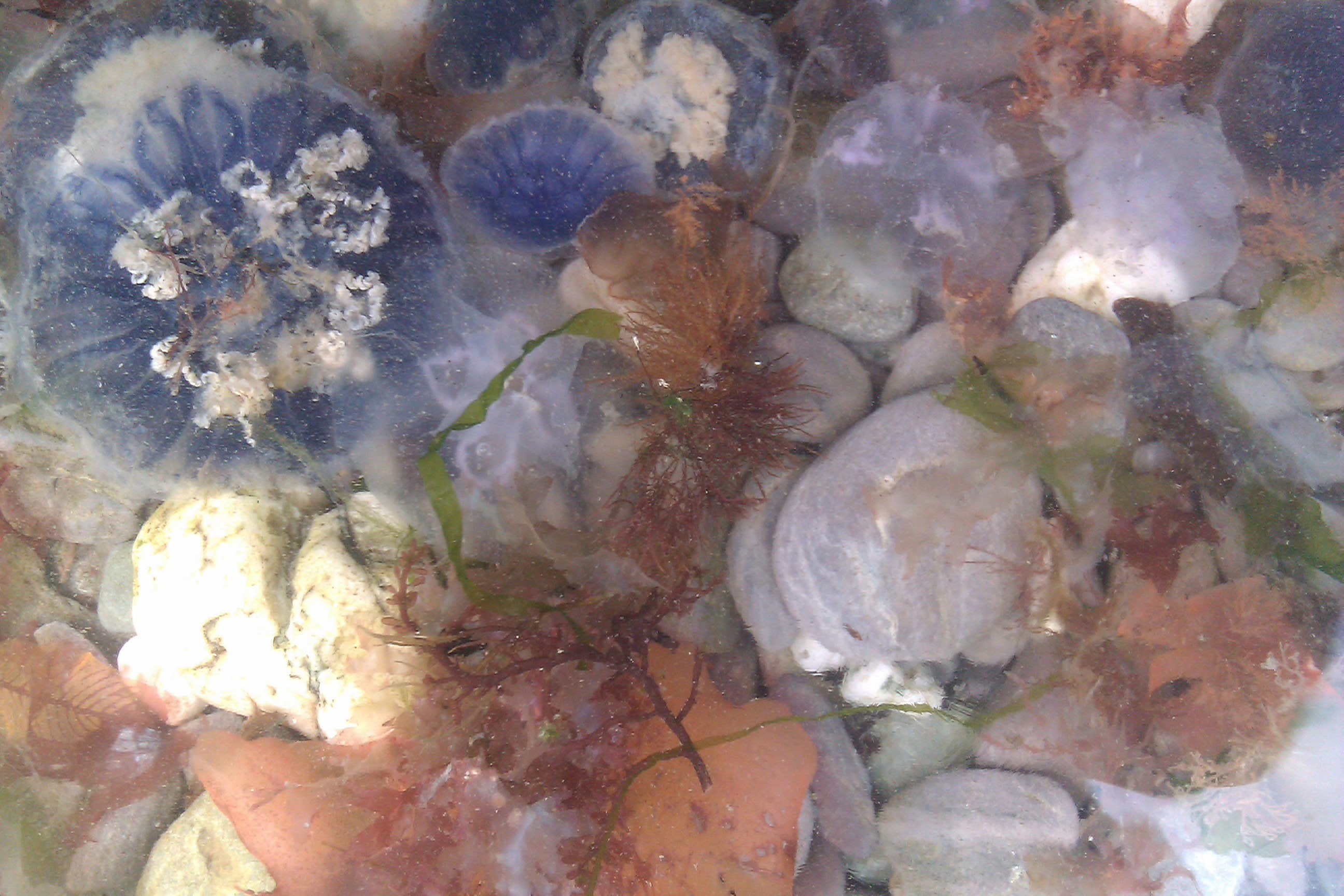
These portent-filled skies haven’t been a problem but the mist has, so the boat has been firmly tethered to the pier for the most of June/July. We’ve had a few fishing trips but the shrimp pots are still waiting to be shot and the mackerel has been as scarce as the sea jaunts. However, jellyfish are in abundance, filling the lobster pots and driving the locals mad with their promise of a warm summer that hasn’t yet arrived.

Jellyfish on the shore

On one of our sailing trips it looked like the surface of the sea was bubbling in the distance; on closer inspection, it was a vast swarm of white and purple common jellyfish. In thick layers, they filled a chunk of sea (about 20 square metres) right down to the sea bed – something I’ve only ever seen once during a lagoon visit in Montego Bay many years ago.

As for the mist, it’s slowed the vegetables right down and has left a depressing air over the land. It’s amazing how much you feel the weather here. In a city, you can still go to an art gallery or the cinema, and you can cut through or alongside buildings which offer some shelter from the elements. Here, you’re constantly open to nature’s whims. It’s wellies and woolly hats one minute, sunscreen and caps the next.

A friend of mine has decamped to the village from Dublin for a few months and is amazed at how differently the weather affects her day – and she’s right in the main street. We’re only two miles out but planning is almost impossible; if the weather is fine, you need to get out and tend to the crops or go fishing while you can. It makes life very unpredictable, unsettling at times. And winter when it’s meant to be summer leaves a bizarre taste all round.

Luckily, I decided to take a break from novel writing this month, donating some TLC to my garden and (theoretically) myself. As the cuckoo moved her morning song to 5am, I tried lowering my sails, filling the month with festival cheer and short term projects.

Perfect spot for a live writing event!

At the beginning of June I was at Writers’ Week in Listowel, shaking hands with Michael D. Higgins and chatting to the likes of Patrick deWitt and Germaine Greer. At the end of June, I was writing live stories with two other writers in Kent train station as part of the Midsummer Festival in Cork City. Somewhere in between I was weeding, pruning, side shooting, plant feeding and earthing up drills in an attempt to keep blight away and growth encouraged.

Working on the Ciudades Paralelas installation called Station meant trips to the city every weekend for rehearsals and then two further weekends of performances – a pleasant change during the muddle that is an unpredictable rural summer.

This area is usually known for better weather, but last year’s summer was non existent and this summer is seemingly following suit. Not that I’m complaining. Since visiting my father as a young girl and helping with his garden, living like this is all I’ve ever wanted to do. The visits were during school holidays and nothing extraordinary, but coming from Middlesbrough, an industrial town, they were a slice of heaven in my adolescent life.

I feel lucky every day to live in my own version of paradise, but feeling restless without a big project to grapple, I was pleased to get the chance to be away. They say a change is as good as a rest, but in truth, it’s been tiring. Since February, I’ve stayed in either Galway, Cork, Kerry or Dublin (a day’s travel in most cases) a total of 11 times for work and writing related events. And I’ve somehow written a new book in between as well.

Big (but still green) tomatoes

People think you take it easy when you live in the countryside but I’m finding the opposite to be true. It’s not the stuff that you wouldn’t necessarily do in a city that makes you busier (e.g. chopping firewood, fixing ditches, finding lost cattle, helping elderly bachelors with their farms), it’s the everyday basics. You have to work harder to socialise, to establish yourself in the community, to find work and then maintain a work/life balance.

It was difficult to let go of the novel-writing for the month and in many ways it was more stressful trying to do less. But I guess this is just conditioning. I’ve realised it takes longer than we think to allow ourselves to just be. I’m slowly getting better but I’ve a long way to go.

As we head further into July, the cuckoo has spread her wings and migrated to Africa. Like her, I’m ready to get going again. The sails need to be hoisted so I can focus on my next big project: editing two books simultaneously. I hope the sun arrives, bringing with it an abundant crop and a much-needed surge of energy. And a few mackerel (of the fish, not cloud variety) would be nice!

(Please note, this is a cross post with Krank.ie: an Irish news and current events magazine website.)

What is this creature?

What am I?

I must have a name!

This is a quick detour in the usual blog-posting schedule because, quite frankly, it’s been driving me nuts!

I saw this bug on a shop window in Dublin over a year ago and have been unable to identify it since.

I’ve asked all my science-loving, bug-loving nature-loving friends and have consulted books, websites etc to no avail.

Can anyone help? Any ideas at all?

From Script to Screen: A Masterclass with Jack Gold

Ever wondered how you take a short story and turn it into a film?

Although I don’t write for screen, I write short stories, and the idea of watching the next step in any creative process intrigues me.

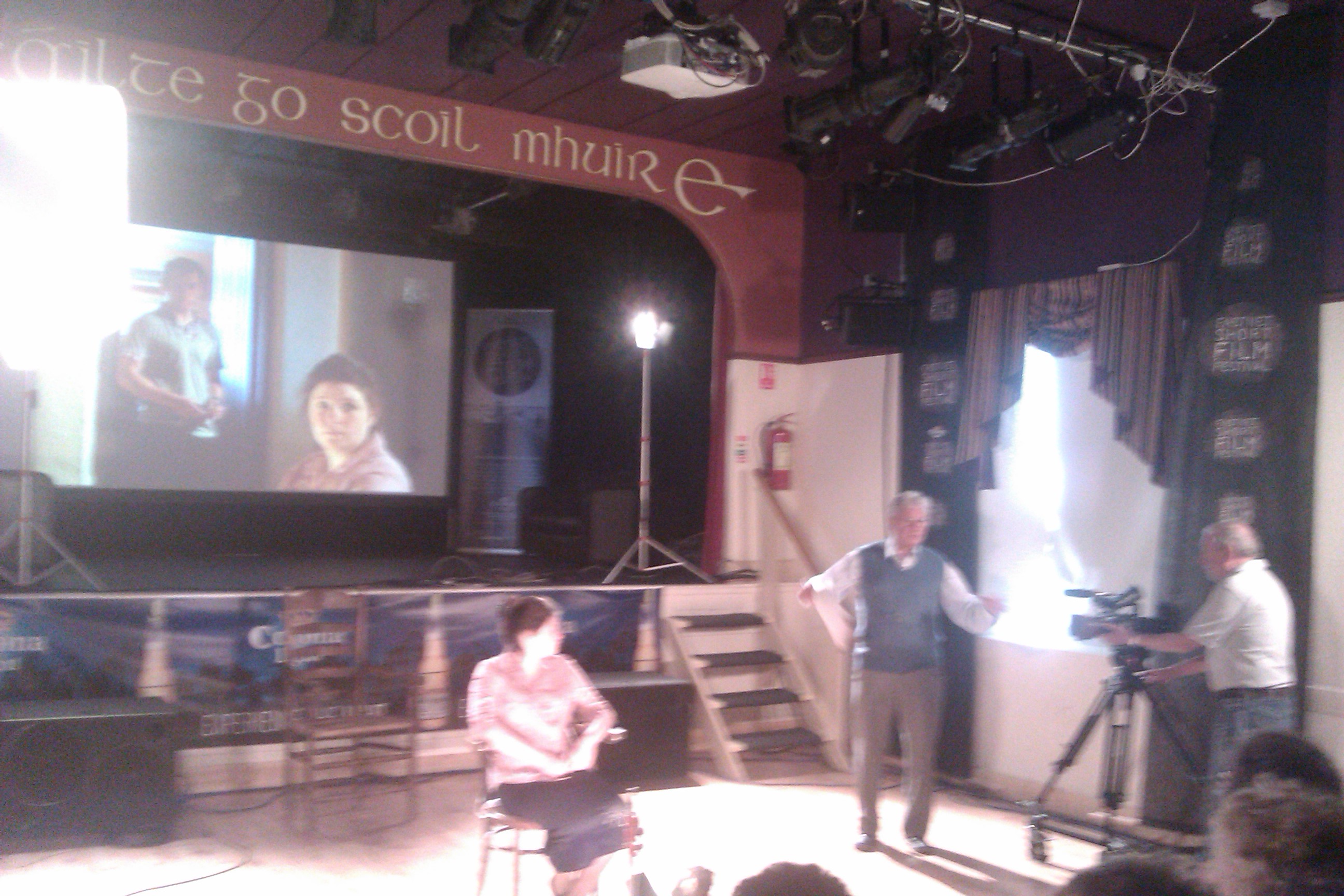
Luckily, I had the chance to attend this outstanding, fully interactive workshop with British film director Jack Gold – and I thought it only fair that I should share some of the key elements for all the short story writers, film makers and film watchers out there.

Jack calling the shots (literally)

The story: Dusky Ruth by A E Coppard

The setting: a church hall, with a crowd of 200+

Equipment: Jack Gold, two local actors (one male, one female), a pipe, a camera man & camera, a stage hand, 2 chairs, 1 entrance door, a lighting technician

The process: The audience was given a printout of the story beforehand to familiarise themselves with the tale. Then, after Jack’s short introduction, it was straight to work.

The section that Jack chose to demonstrate the filmmaking process with (when the man returns to the room and the woman doesn’t respond) over the course of the next four hours was purposely dialogue-free. Encouraging audience participation from the start, Jack asked:

If you don’t have dialogue, how do you get inside the heads of the people watching?

The audience concluded that expression, lighting and mood were the key elements. But what we couldn’t figure out was what made it work. As a writer, I should have realised that editing was the key. Jack explained:

Filming a piece like this is a jigsaw. You film the links in the chain – both big links and tiny links – and then join that chain. Editing is fundamental to storytelling, in whatever medium you’re telling the story.

He went on to discuss and identify the ‘hingepoint’ of the piece – where the action takes off in a different direction – and then demonstrated the critical thinking required of any film maker. The first problem posed:

Where do we place the chairs so that the character can do all the things required of him in a way that’s beneficial to the audience through the camera?

This was much more difficult than you may think; every time we thought we had it covered, we’d realise that there was an action or a response that didn’t fit.

Once the positioning of the props was correct, Jack went on to direct the actors on the spot, questioning the audience throughout and spending the required amount of time to get each action and shot exactly right. Similar to writing a story, the number of takes or ‘redrafts’ was astounding – the pace, mood, position, action, expressions all had to be perfect, along with the camera angles and lighting. Even some of the tiny links – such as the actor pausing in a doorway – had to be shot a total of twenty one times before the take was right.

As well as considerations for plot and action, Jack also talked us through camera tricks (such as contrazoom) and film making techniques that would enhance the film’s overall impact, enabling the film to capture the essence of the written original.

How can we emphasise the strange yet sensual moment when the stranger approaches the seated woman he’s never spoken to, who hasn’t acknowledged him, and undoes her hair clasp?

The conclusion: physical space and pace, physical speed and subtle gestures which are magnified on camera if you zoom in.

One of the most intriguing things highlighted in the session was the treatment of the female character. She didn’t move at any point during the scene. Her sole role was to gaze into (an imaginary) fire without looking up or changing expression. However, as a parallel to silent characters in fiction writing, her presence was of high importance throughout. Her internal dialogue was indicated by lighting, camera movement and zooms and the reaction of the male character, rather than any actual response of her own. As Jack demonstrated, a fast pace and lots of action isn’t always necessary.

You can have all the rhythm in the world, but if you’re not telling the story, there’s no impact, there’s nothing to watch.”

After acting out and shooting the jigsaw pieces, Jack then adjourned the session to put together the pieces so he could demonstrate the editing process. During this session, the audience were shown how certain sections were cut, joined, overlapped, altered and finalised. Of course, this was just a taster. To create a polished full length short film in a few hours would be impossible.

In Jack’s own words; “The first assembly part alone could take months. Every piece has to be exact. Film making is like storytelling; it takes so long because it’s a ceaseless search for perfection.

It may have been just a glimpse of what’s needed to turn a story into a film, but there was certainly lots of information to take in and take away – most of which applied to storytelling in general, not just on film.

Some of Jack Gold’s tips:

  • A director, like a storyteller, needs an eye for detail and to be able to see all elements at once with an overall idea of what is needed from the very beginning.
  • If you’re transforming from script to screen, optical effects replace descriptions – so ignore necessary details from the story.
  • The adjustment of the camera should work with the actor, enhancing interaction, mood and pace.
  • The order you put each shot is the essence of storytelling, the essence of film.
  • Sometimes, what the audience expects next is not what you give them.

Please note: This is just a taster of the four hour session. I’ve transcribed the actual event so if you are working on a project like this and would find more information useful, please let me know.

Write For You

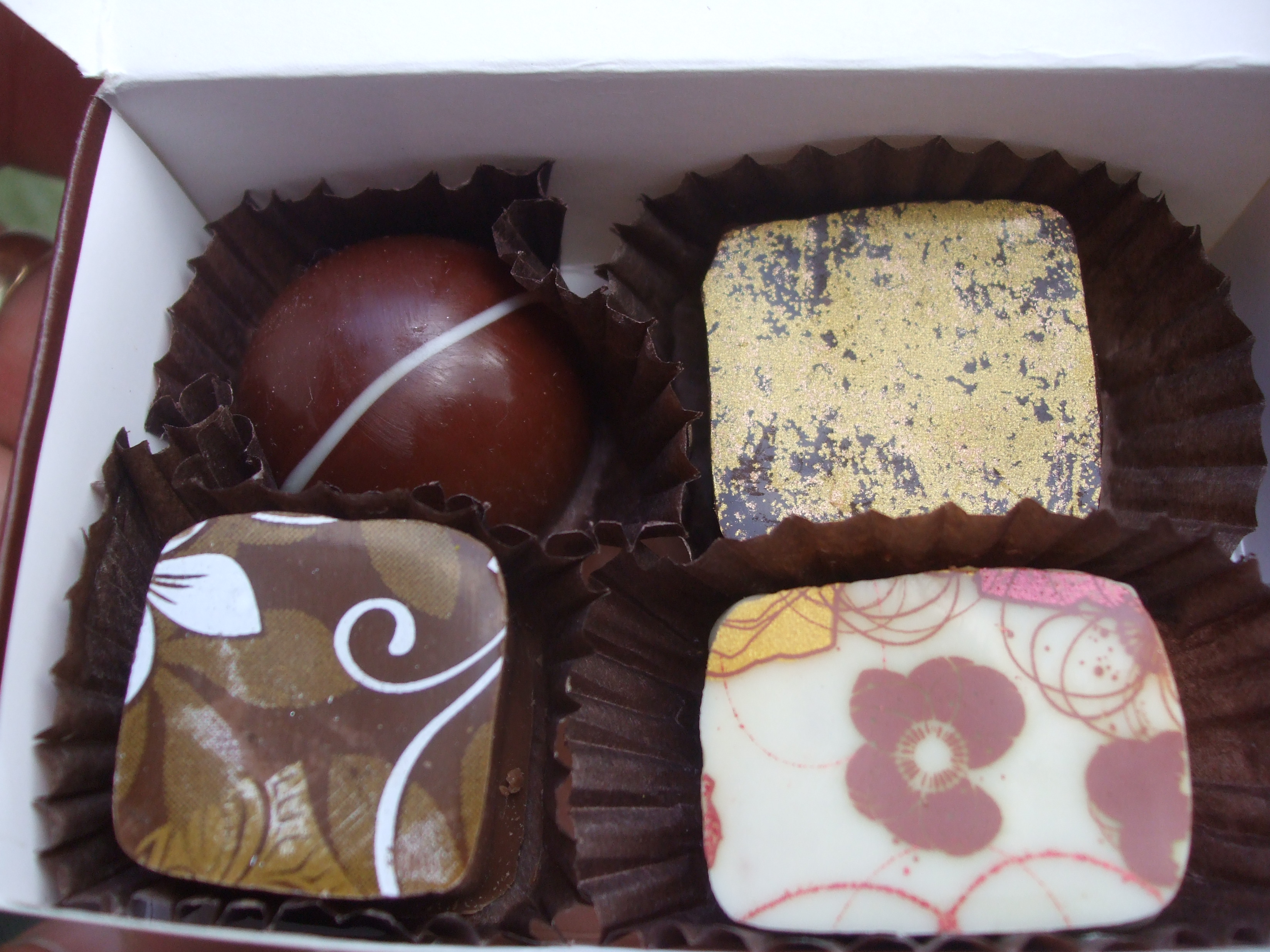
Mine, all mine! (chocolates, Melbourne)

When you write, when you create your poems, stories or novels, who are you writing for?

As writers, most of us feel compelled to put ink to paper; it’s in our blood and acts as sustenance. It keeps our every day lives sane and bright. But as writers, we’re also slaves to ambition and dreams, and the biggest desire of all is to get published.

When it comes to content, there are two schools of thought; write what you know and write what you don’t know! As contradictory as this may sound, it’s all about sparking an idea that leads to brilliant, engaging, exciting writing.

Whatever you write, it’s generally acknowledged that you have to make sure it’s the best possible piece you can manage. Now, a piece of work might seem polished, but leave it for a while (weeks, months, maybe even years) and you’ll probably find many glaring mistakes and necessary changes.

But does everything you write have to be polished? Does every poem, story or novel have to begin with the aim of being perfect or getting published? What happened to experimentation?

As Rebecca Woodhead advised in the June 2012 edition of Writing Magazine, “stop being a constipated writer…Find your voice, and you will find readers.

At the start of this year, I made a pact with myself to send out more submissions as well as complete a new book. This was a direct reaction to the fact that I’d spent one solid year working solely on a Middle Grade fantasy novel and had written myself into a corner. So, for sanity and creativity’s sake, I marked out a multitude of competition and submission deadlines and plunged in, full steam ahead.

Now, half way through the year, I’m re-evaluating this idea. Yes, I had some shortlisting and publishing success, but I’ve found that while my ambition has been tamed, in some ways, my creativity has suffered. I’ve found myself adopting a severe, business-like approach, which has sometimes made writing seem like work.

It’s not that I’m saying writing should easy; we all know the amount of energy, effort, determination and tears that go into a great piece of writing. But surely we write full time for the love of it? As far as I’m concerned, we should be motivated to write well and efficiently, but still have time to play.

Of course, deadlines will loom and ambition will still snap at our ankles. So what’s the answer?

Instead of aiming for a masterpiece, let yourself go. It’s OK to experiment. No – it’s good to experiment! How can we improve as writers if we don’t try new things?

I’m talking about trying to write something in a different genre, a new voice or writing in second person instead of first. If you always write fiction, try adapting an idea from personal experience or vice versa. Don’t even complete a piece; list great first lines or titles, play with metaphors and sentence structure. Just have fun and you never know, it might turn out brilliant. But don’t let this be your aim; allow yourself to write just for you.

And it seems I’m not the only one considering this route. In an interview on writing.ie, Irish literary super-agent Marianne Gunn O’Connor advises writers…

“…You have to say to yourself: why am I writing? Am I writing to get a publishing deal or am I writing because I just have to express something? I think if it’s the former, that’s a difficult place to be. But if you’re writing from a pure place, I think eventually someone will connect with your work. I always say, ‘write because you have something to say’. Remember, we all love good stories.”

When was the last time you wrote something without any publication aim in mind? Is it time to take stock and reclaim the enjoyment of writing?

June in photos

Waiting for the tomatoes to ripen

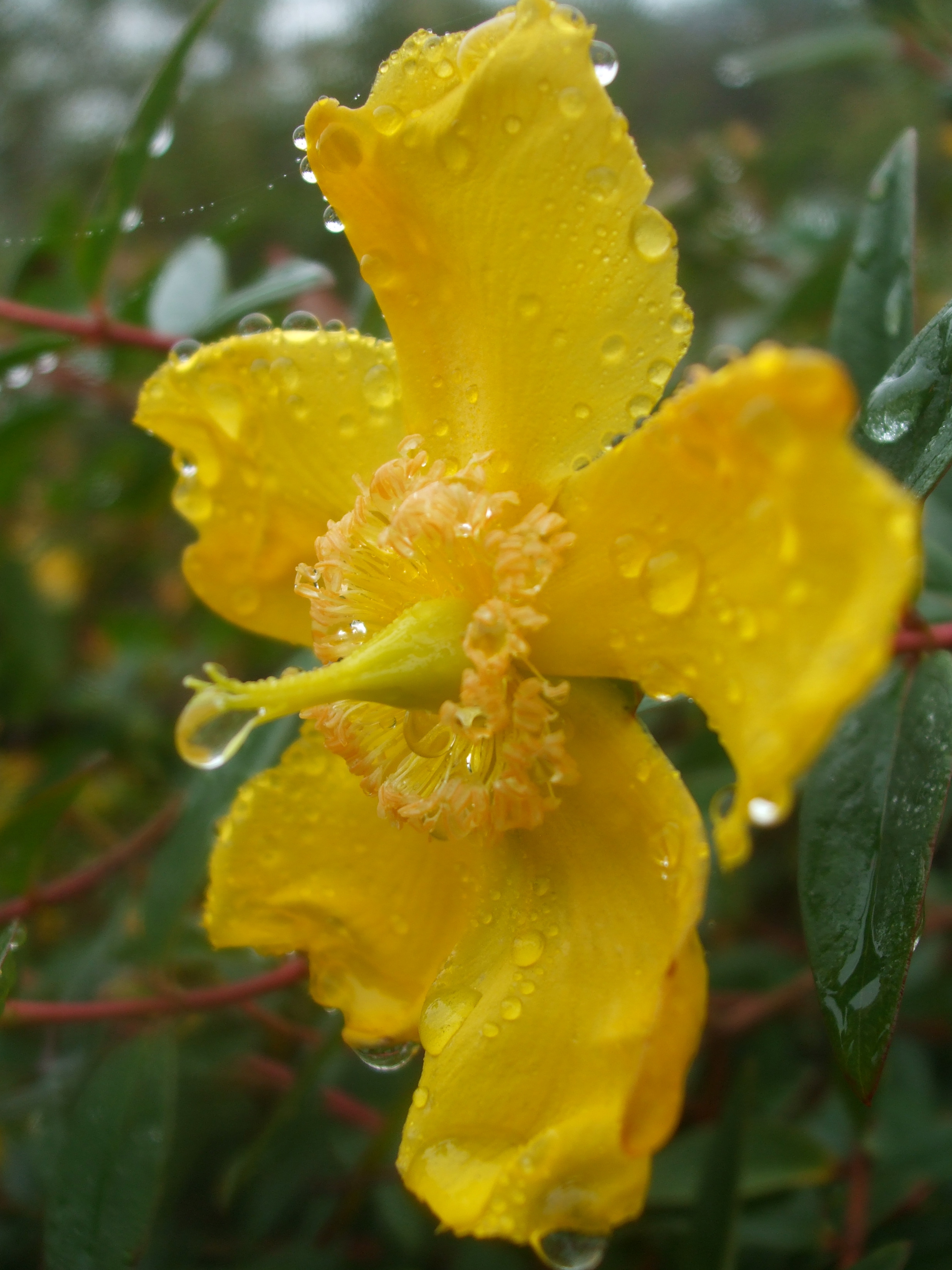
Rain helps flowers bloom

Writers’ Week wore out my shoes!

Cutting grass for silage

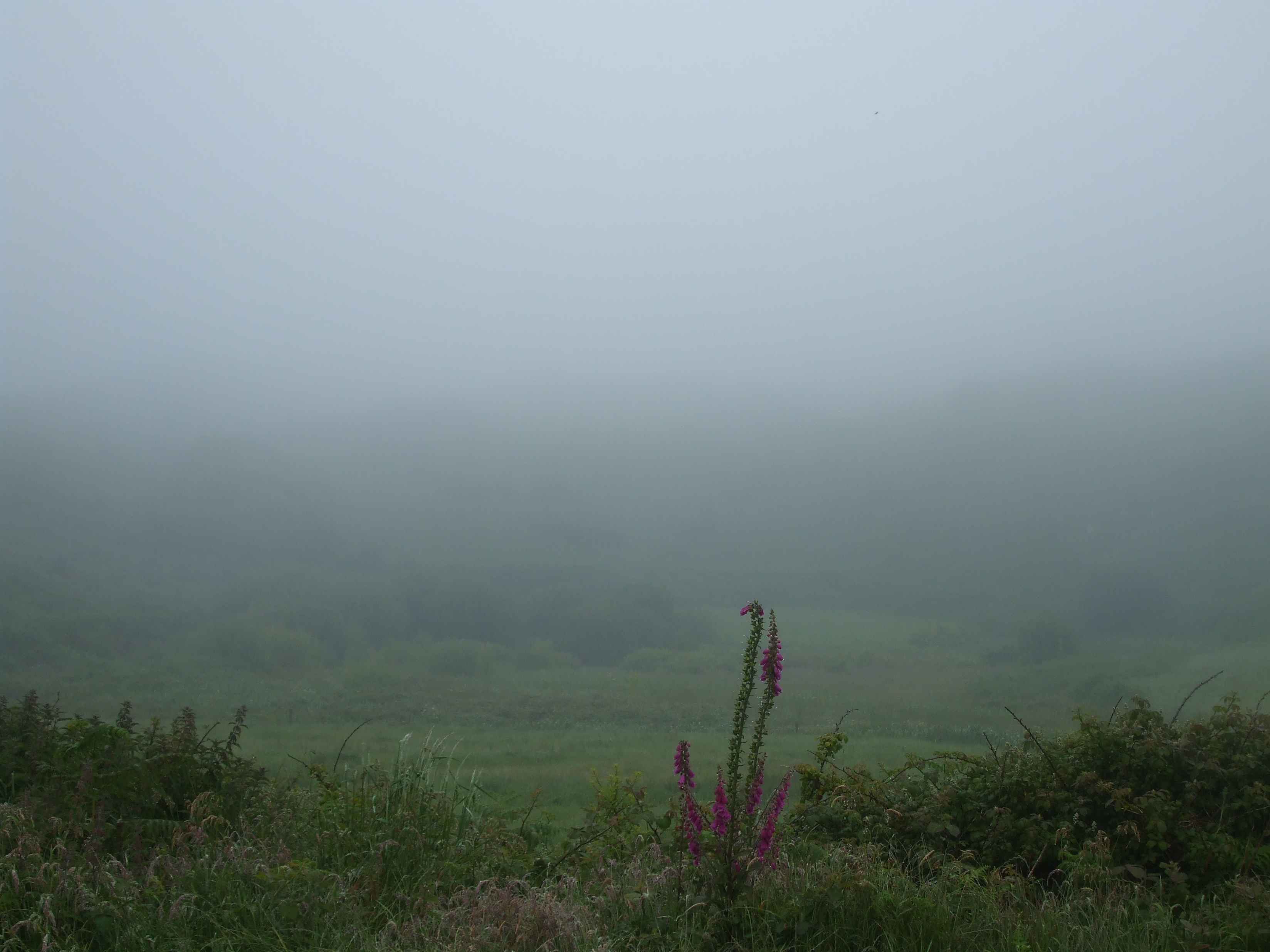
Sea mist covers the land

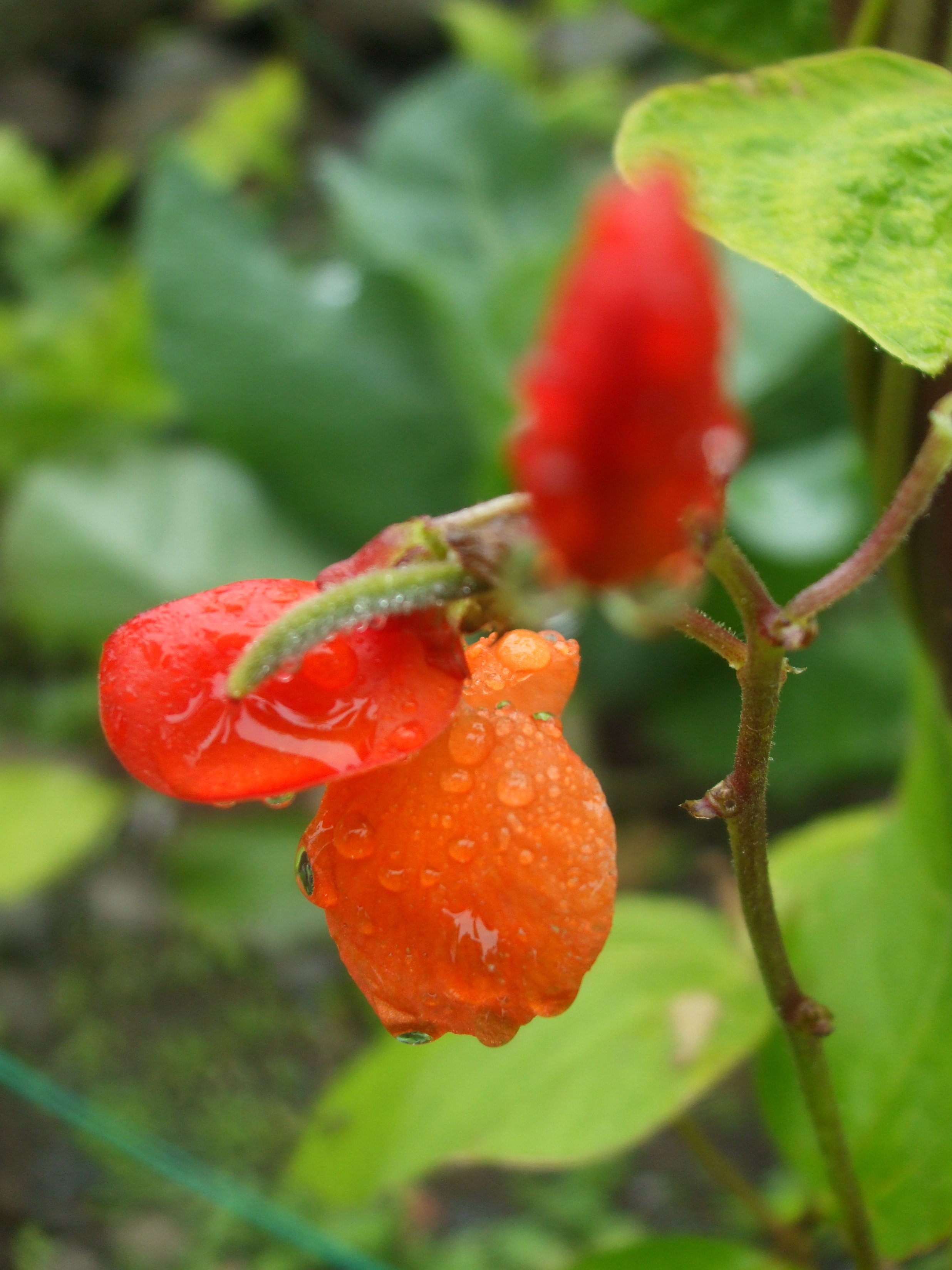
Tiny runner bean, just growing

Crawford Gallery reading room (Cork)

Cow in mud after excess rain

Listowel – home of Writers’ Week

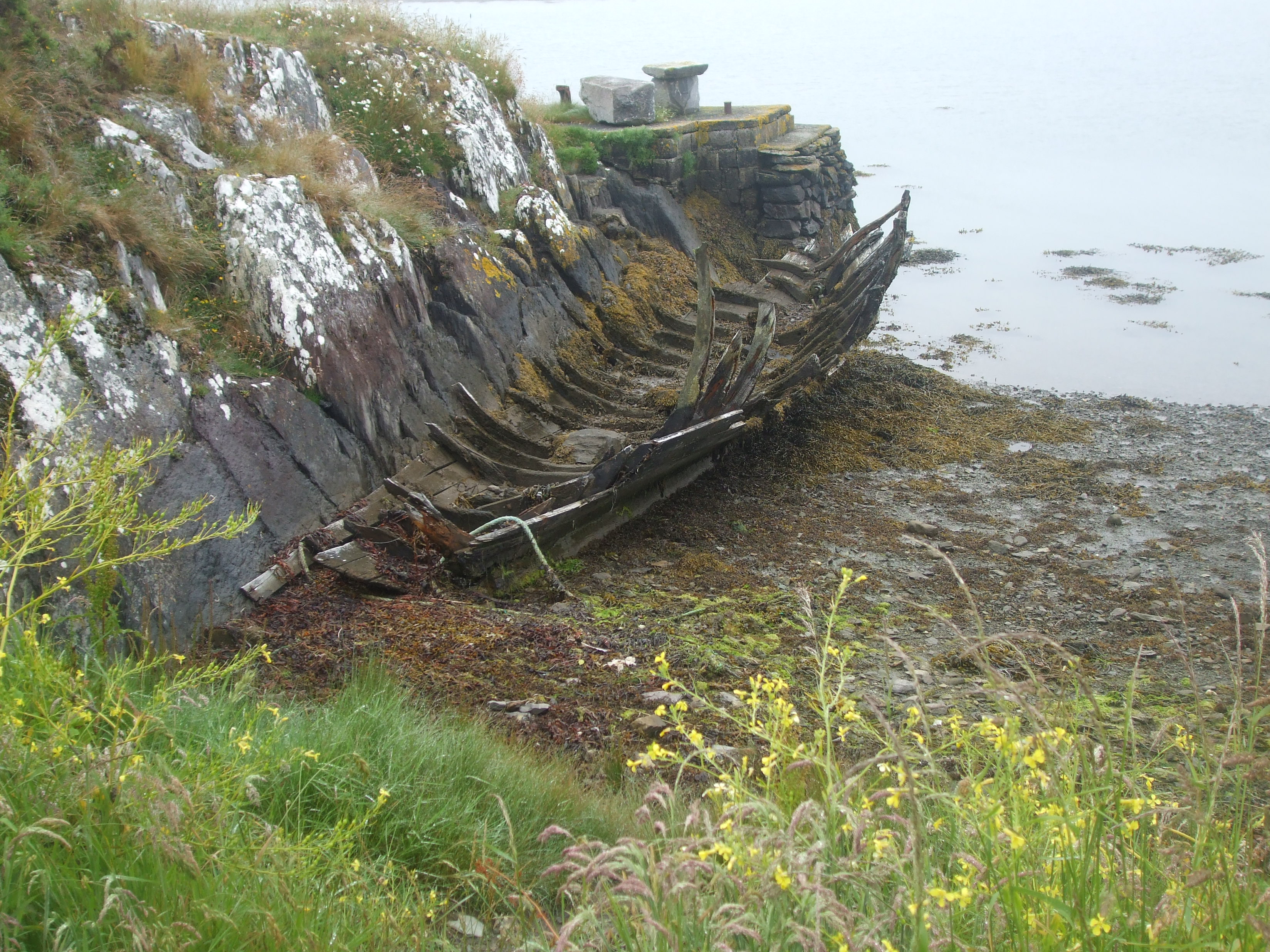
Skeleton of a 1940’s fishing boat

Come, Be the Story…

Station: This is where I’ll be, with two other writers, this Thursday, Friday and Saturday night (6pm-8pm in Kent Station, Cork).

Part of the incredibly internationally acclaimed Ciudades Paralelas series at the Cork Midsummer Festival, Station is a live writing event which focuses on the people within the station, letting them shape, star in and direct stories as they unfold in real time.

Please visit if you can &/or spread the word; we’ve had a great turnout so far with plenty of laughs and surprises.

Hope to see you there!

Mental Health, Mental Wellness

It’s not just whether the glass is half full or half empty

When people hear that I now live rurally, they often have a misinformed vision of people taking it easy, watching the waves lap upon the shore, having a generally easy time of it. The truth is that yes, it is a beautiful place – and the pace is certainly slower – but like everywhere else in the world, people work hard and suffer from the same disillusionments, despairs and misfortunes as their peers.

Mental health is something that I’ve always had an interest in because it permeates every area of society. I have witnessed several tragedies resulting from mental health issues and I know that I’m not alone. Whether it is a relation, a friend, a partner, or ourselves, I don’t know a single person who hasn’t been affected by mental health problems in some way. But what interests me is how, despite the scope of the symptoms, the general attitude towards mental health problems remains closeted, archaic, and the treatment given is always the same.

At the beginning of this month, I was blogging for the Writers Week literary festival in Listowel. This meant I got to attend plenty of amazing literary events as well as interview some of the writers. One of the events was a talk by Dr Terry Lynch; an avid researcher, practitioner and campaigner for mental health in Ireland who is openly discussing his attitudes to mental health and suggesting where positive changes need to be made. I thought it was an important event worth sharing.

Opening the talk in an open, honest address, Dr Terry Lynch explained, “Mental health is my passion; I could speak about it for hours. I’m an unusual voice in Ireland amongst the medical profession. If I was to sum up my position in mental health, I’d say that a major overhaul is needed from the current psychiatric model. There are many people who agree with me, and they do speak up, but not as much.”

So what does Dr Lynch believe in terms of mental health and mental wellness?

From Dr Terry Lynch’s Book, Selfhood

“Mental health is about emotional distress. Communities need to take back, to reclaim and embrace emotional and mental health and the many people who experience it.”

“So-called primitive cultures handle mental health a lot differently and their recovery rates of, e.g. schizophrenia, are much higher. I wondered why – if science is the answer – are we not getting results? My conclusion is that science is not the answer; humanity is the answer.”

So if humanity is the answer, how do we, as a community, embrace the idea that we can change attitudes towards mental health?

“We now have access to so much information; we can access media and create our open media; political, financial, religious scandals have come to the surface because of the enormous access to media.

“Mental health stands out as one area where the public stays misinformed. I see part of my role as a writer and speaker is to set this right. I believe in plain English; and to understand something well we should be able to explain it in plain English. We have a duty to explain it in plain English. We have to accurately define mental health.”

To assist the audience’s understanding, Dr Lynch discussed several common mental health misconceptions.

  • It’s a mental problem – Dr Lynch disagrees. It is an emotional issues
  • Mental health issues are lifelong – but many people have recovered.
  • Mental illnesses are portrayed as  brain disorders which are either a neuro-biological disorder or caused by imbalances in brain chemicals such as serotonin – Dr. Lynch said that this has not been established to be the case, and that doctors’ understanding of the brain is exaggerated.
  • Psychiatry is the medical profession that most understands the brain – but that’s actually neurology and neurosurgery
  • Mental health problems derive from a chemical imbalance – serotonin is used in everyday language but is it understood?
  • It’s a genetic illness
  • How dare anyone question the science?

Dr Terry Lynch went on to counter these with some mental health truths, including:In public interest, science must be questioned.

  • There are no known chemical imbalances in the brain that account or cause mental illness. Have never been confirmed by chemical or laboratory tests.
  • In everyday work with people, psychiatrists and GPs never investigate the brain, except to exclude non-psychiatric illness. There are no confirmatory tests. Think of the difference in activity to other wards.
  • There is no medication that can replace a chemical imbalance.
  • The biological answers are what the medical profession have been focusing on for last 100 years; that’s the hook that keeps us striving to prove it, following the standard viewpoint. But in fact, it’s far from proven. The research undertaken is not objective.
  • Medication is medicating human distress and is focusing on maintenance rather than recovery.
  • The most common symptom is loss of self: that’s where the drive for the book Selfhood came from.
  • There are more than 36 components of selfhood that need to be taken into consideration.

Referencing the familiar saying of putting ‘the horse before the cart’, Dr Lynch explained how in the psychiatric profession, “it is traditional to decide the conclusion before gathering the evidence.”

Using examples from mental health sufferers, he explained, “this is not a mental issue but is about emotional distress; it comes in various forms and needs to be addressed in various ways.” A community-based approach is what he believes will help the situation; a change in understanding, a collective shift in mindset regarding “mental wellness and a focus on recovery, rather than maintenance”.

Dr Terry Lynch went on to discuss various mental health diagnoses such as bipolar and schizophrenia. He also addressed attitudes towards suicide, pointing out that because suicide is such a taboo subject in society, it leaves people feeling suicidal ostracised with nowhere to turn. He also focused on ways in which people can recover, suggesting alternative empathetic and less clinical approaches embracing person-centred coping strategies, humane support and a communal change in belief systems.

The session ended with an address from one of Dr Terry’s patients, thanking him for his assistance over the last four years; a fitting end to a very enlightening and forward-thinking event.

If you’re interested and would like to read more, Dr Terry Lynch kindly completed an amazingly informative interview before the festival. To learn more about his views, research and approach, click on the following links:

Dr Terry Lynch Interview Part 1

Dr Terry Lynch Interview Part 2

Shipwrecks, Beans and Bike-Powered Cinemas

April showers bring forth May flowers,
A wet and windy May fills the barns with corn and hay…

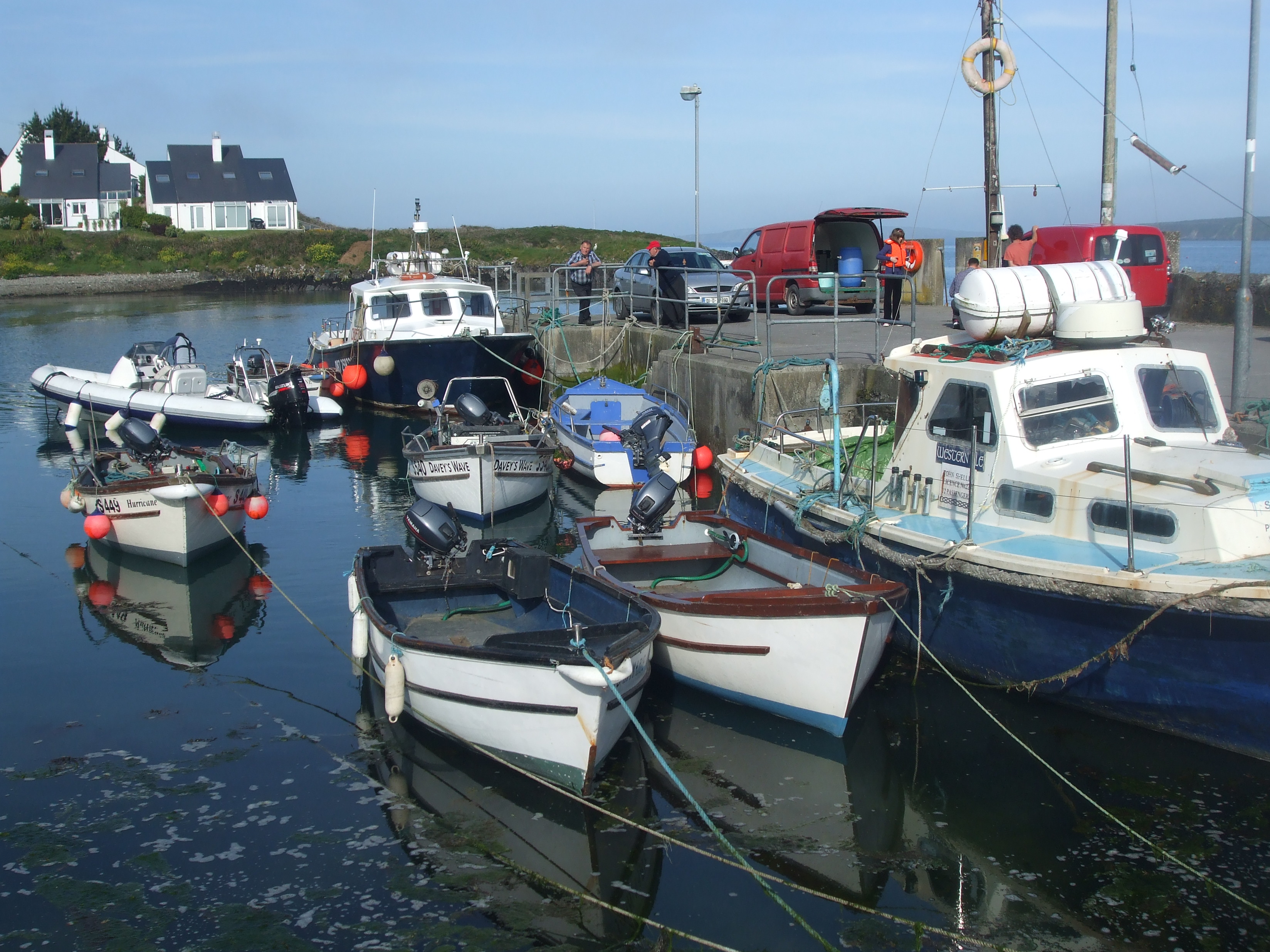
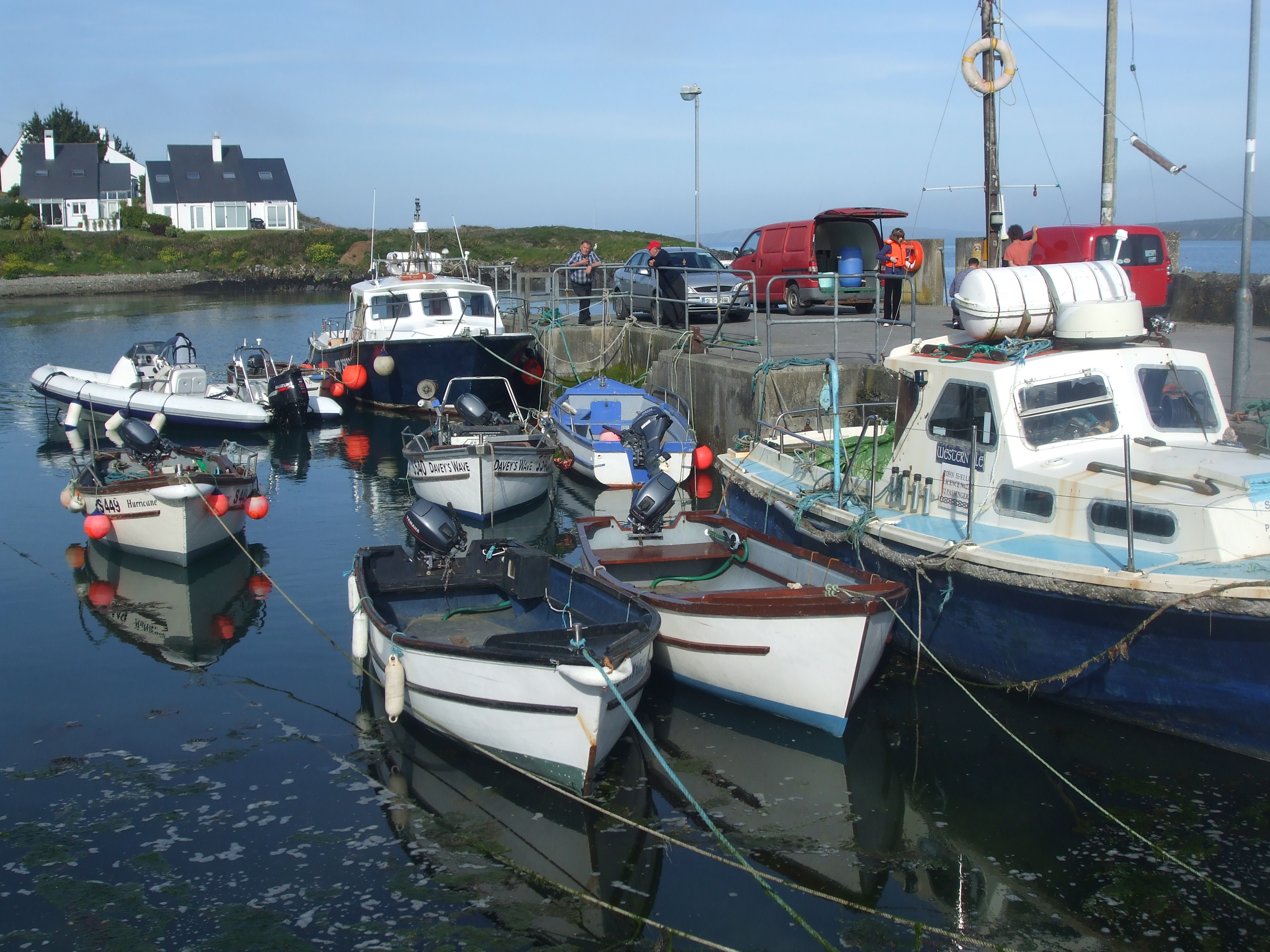
Our punt afloat at the pier

May was a crazy-busy month. We launched our punt (only two trips out and six pollock caught so far; it’s too early for mackerel) and planted out more vegetables. Then there was the local short film festival; Ireland’s only film festival in a village with no cinema. Think bike-powered films, talks with Mike Leigh in the church hall and a visit from the Mexican ambassador and you’ve got an idea of the hotch-potch that you come to expect from rural living. Not forgetting the writerly side, I also managed to complete a new Young Adult book for my agent to read and got long/shortlisted in a few competitions (you can read one of my flash fiction pieces here).

As the local saying above foretold, the plentiful showers of April did bring plenty of May flowers; we got our first lily, our new heather burst into purple blooms and our tomatoes and beans are thriving. We’re particularly delighted with the latter because last year, our tomatoes suffered from blight and so we didn’t get any fruit at all. Tomatoes aren’t too much work; they need feeding every three days (we’re using rose feed thanks to the good advice of the local garden centre) and the side shoots need to be removed regularly to keep the head flowering. You have to make sure they’re not over or under watered and then there’s the tickling (it helps pollinate them apparently). As you can imagine, it’s heartbreaking to spend months tending to crops, only to watch them all fail. Thankfully, everything is going smoothly so far.

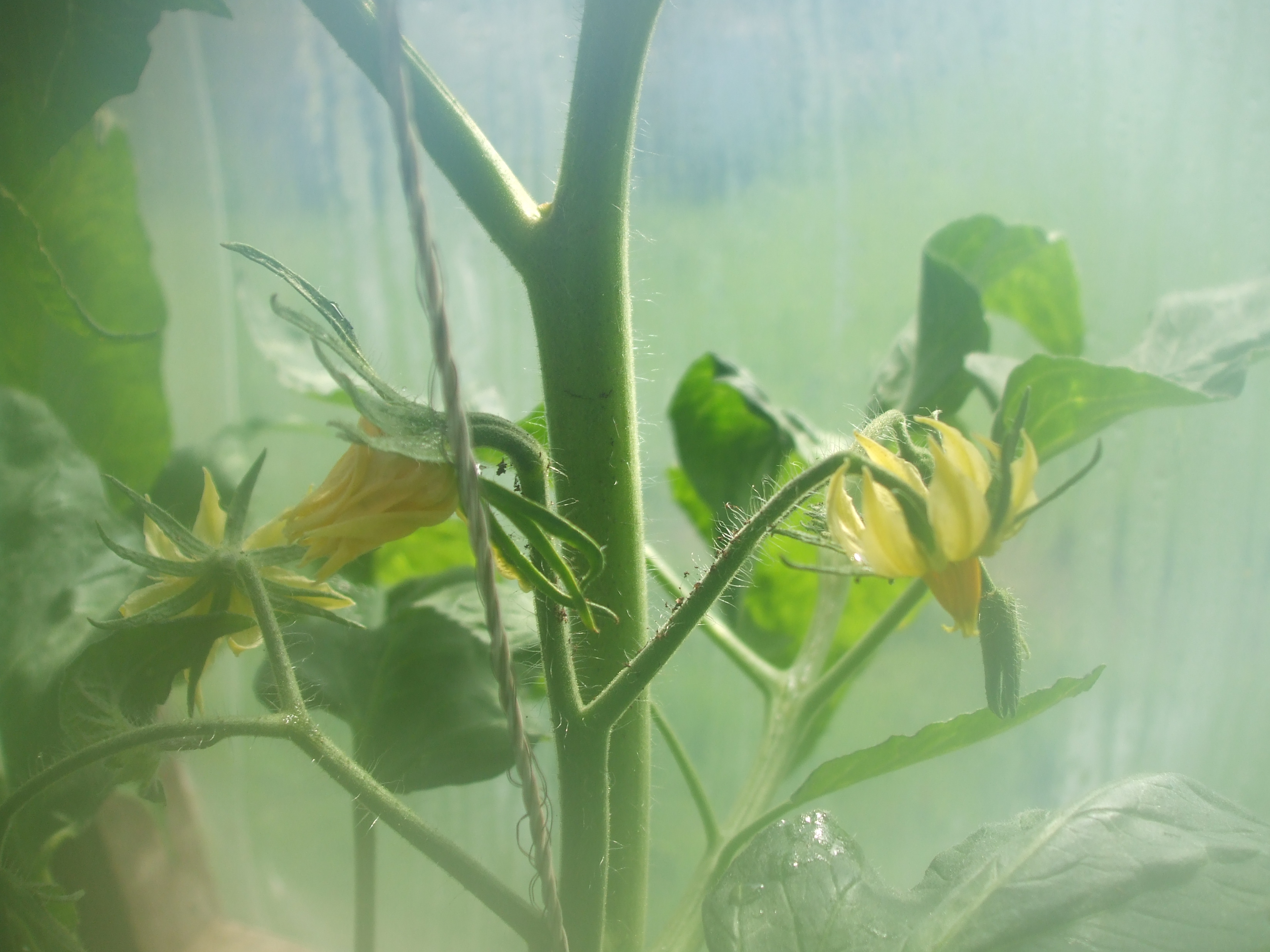
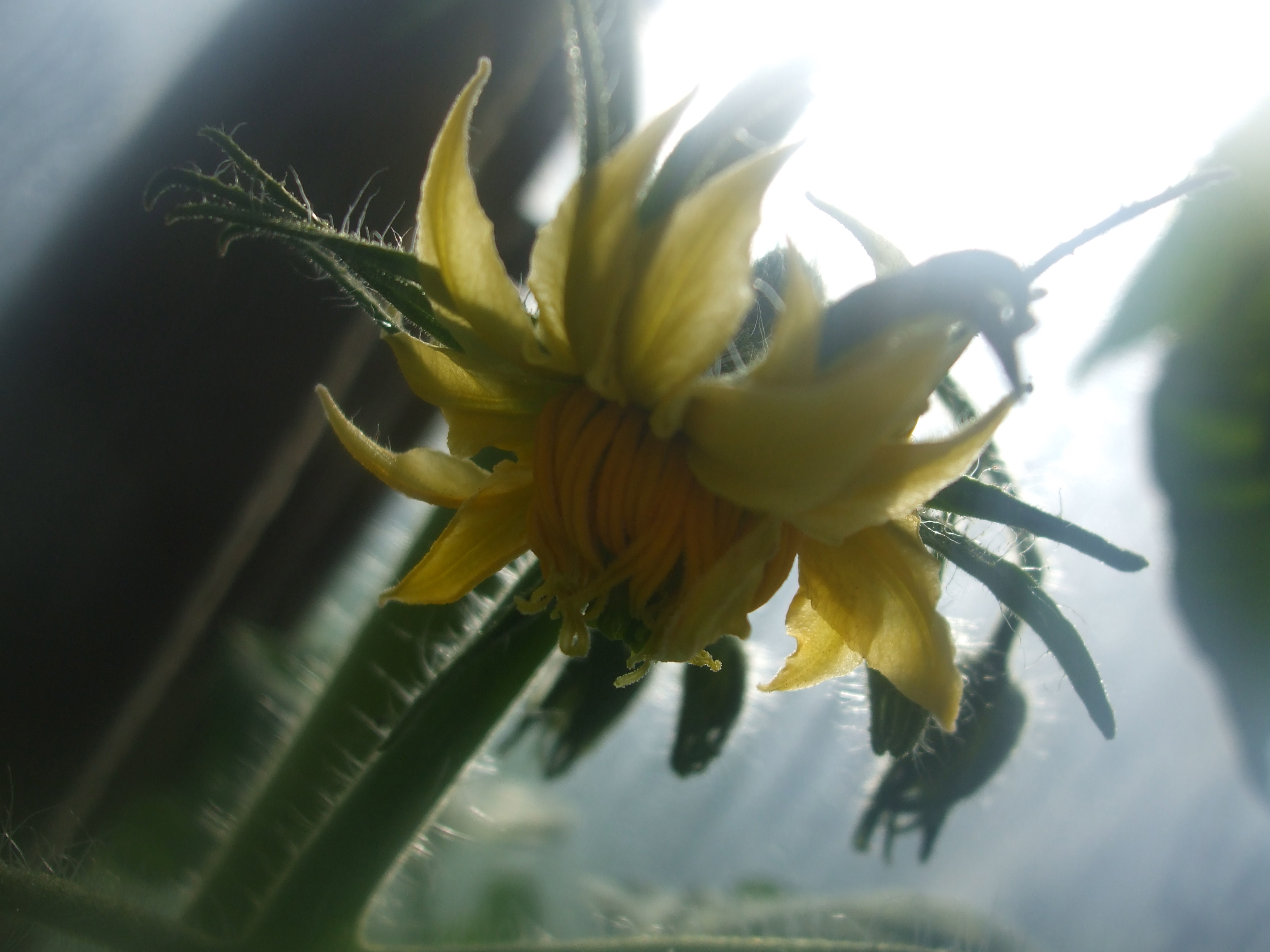
Tomato flowers in the tunnel

Spending so much time in the garden (the weeding alone takes at least an hour a day), I’m amazed to learn how resilient plants actually are. The beans, cabbages, potatoes, beetroot, sprouts, leeks and onions have exploded, despite the lack of sun and continuing winds. The infamous heatwave forgot to reach us; when my Twitter feed was jammed with talk of ice creams and tans, I was struggling to see more than five metres ahead of me while launching a boat. But crops that I thought had died have sprung back into life; and somehow, this makes me feel renewed. I guess I’m experiencing what Mary Carbery described in her 19th century diary:

Isolation means a deeper love and sense not of possession, but of being a part of something essential.” (Jeremy Sandford, Mary Carbery’s West Cork Journal 1898-1901)

Although I’m not living as remotely as many, between the garden, the sea and writing, I’m living a rather isolated life. In fact, weeks can go by where the only other person I see is my husband. Although it’s an amazing way of living, watching nature, being so immersed in it, has also proved frustrating in many ways. Mainly because it shows up your own inadequacies. My biggest inadequacy is time related.

It’s not that I’m bad at managing time; if anything, I’m too good at it. You know that phrase: if you want something doing ask a busy person? Well, that’s me. I fit a ridiculous amount into every day. Which is great for achieving but I’ve discovered it’s not good for the soul. It’s tiring, and often things don’t work out how they’re meant to.

The boat launch highlights my point perfectly. My idea of launching a boat would be: figure out what’s needed, who’s needed, pick a date and time. Total time taken: an hour, max.

Out on the open sea

How it really works is: look out of window, hum and hah about weather conditions, have a cup of tea. Work out the tide times, wander down to the pier to take a look, hum and hah about being right, then back for a cup of tea. When the tide is coming in, return to the pier and sit. Hopefully someone will arrive. As people arrive haphazardly (“Joe might be over in half an hour; let’s wait and see…”), sit and chat about getting the boat in the water. Total time taken: whole day. Time taken to actually launch boat: fifteen minutes.

It’s certainly a lesson in patience, but one I need to learn. If we’d had it my way, launching the boat would have been just another tick off the day’s to-do list. But with my husband taking charge (well, muddling us through), it was an enjoyable experience which included a bit of banter, plenty of laughs and a more relaxed state of mind. Which, as a writer, is very difficult to achieve.

Wherever I go, whatever I do, whomever I talk to, my brain is constantly sourcing information which could trigger a new story idea/character/title/novel. Even when I don’t want it to. Especially when I don’t want it to! The moulding, editing, and shaping takes up so much time, the ideas/inspiration part infiltrates every other minute of my day. Frankly, it’s exhausting. Gardening, fishing boating – which all have a strong sense of belonging and purpose – help me to switch off, but I wonder…is it the same for all creative fields? How do other creative people cope?

In my first post for Krank.ie, I talked about the cuckoo. Well, she’s here: I heard her for the first time in the middle of the month and she hasn’t stopped singing yet. This morning, she was warbling away on the wire above our home. Maybe it’s the excitement of the shipwreck that was found off the coast of Schull, just metres from where we live?

A sunken ship may not seem like a big deal, but being coastal, piracy is ingrained in the local history. Most locals can name the majority of the nearby shipwrecks. People from Long Island used to wave lanterns to confuse passing ships, luring them onto the rocks to loot the ship. There are numerous legends about buried treasure beneath local land. So, of course, another find is a great cause for excitement. The bounty that’s been recovered so far consists of a crate of coconuts from the 1600s and there’s a temporary pause in operations due to lack of funding. But that hasn’t stopped people’s curiosity. Isn’t that wonderful?

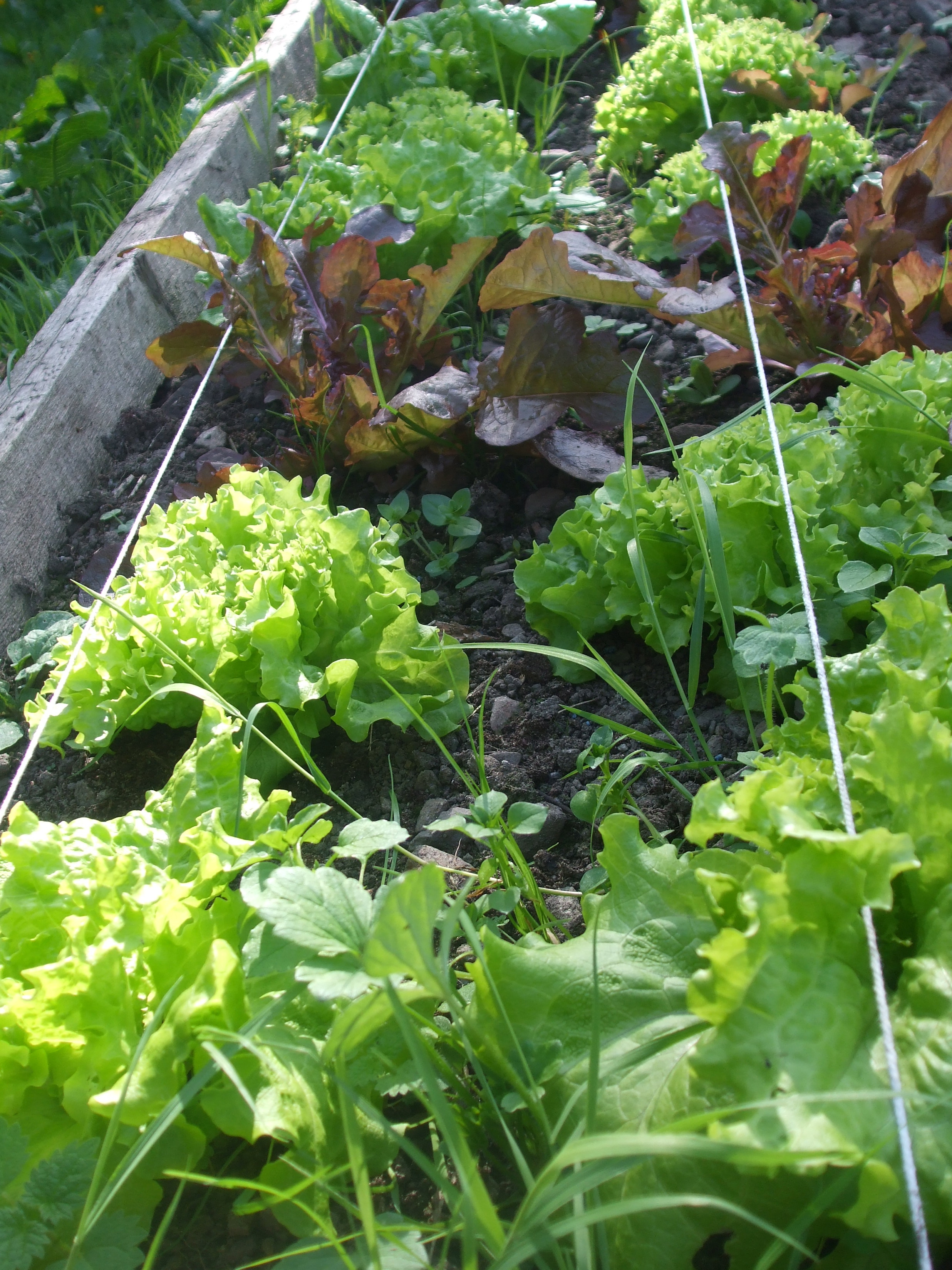
Lettuce grown from seed

I love the fact that when something happens in a small community, everyone talks about it. In a city, you can often miss what’s going on right under your nose. When people talk in a rural setting, you not only hear the facts, you also hear the legends growing. Each version of the story alters a little and the ideas flourish. I mean that as fact, not a slight. It’s a beautiful part of the ingrained storytelling that still exists across Ireland. I feel so lucky to be here when something like this has happened; you feel almost transported back to the times of oral tradition.

As I’ve said before, rural living is not for everyone. But in a time of such uncertainty and economic distress, there’s worse things you could do than spend time amongst trees, vegetables and the sea to balance perspectives. For me, May has been a month of growing in so many ways. As for the corn and hay, we’ll have to wait and see. You can’t hurry nature.

(Note: This post was originally written for and published by Krank.ie – an excellent Irish news and current events magazine website. Take a peek at krank.ie here!)

Treasure Maps and Trowels: X Marks the Spot

Twenty-Fifth of the Fifth, 2010. Our iconic day.

It went something like this… Clamber into the punt, whizz around West Cork’s beautiful Goat Island and whistle for the goats, get up close to some wild seals, watch the gannets dive, circle Long Island and stop to catch a mackerel. Head to Long Island pier, visit one of the Islanders for tea and get given a cabbage three times the size of my head. Carry the cabbage the length of the island to Westerland strand, rescue some stranded jellyfish and barbecue the mackerel. The End.

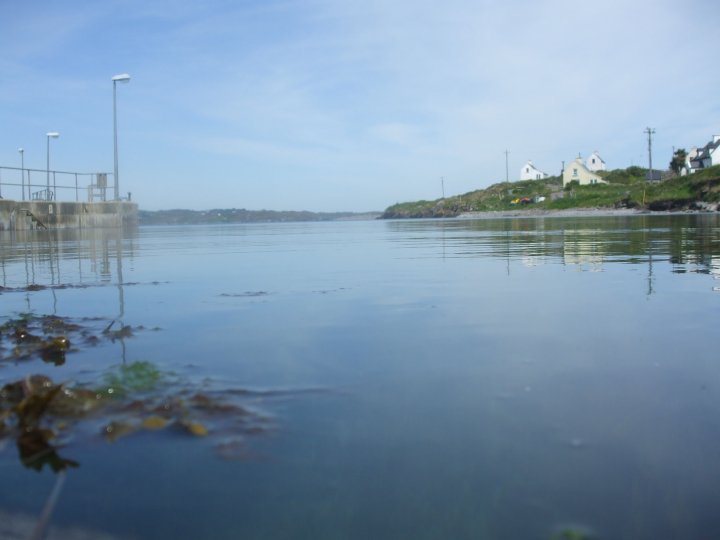
Long Island Pier

Or so we thought…

The next day, I headed back to Dublin and my friend Mick (now my husband) stayed in West Cork. Unknown to us, that legendary day was just the beginning and Long Island was about to become more special to us than we’d ever hoped.

In the early 1900’s, Long Island had a population of at least two hundred. But, like the corn crake, the numbers dwindled, and by the 1980’s, the population had depleted to about thirty. Mick remembers the ferry carting several children across Long Island Sound every morning for school. He talks of the days when the cattle were swum across to the mainland for market, of the time the island got its first donkey.

Those days are long gone; now there are no children on the island, the cattle don’t swim, and only three people inhabit the island year-round. But like the corn crake, the spirit of the island prevails through stories old and new.

The lady on the island that we visit is a legend; in her eightieth year, she still carries hay bales and digs up cabbages three times the size of your head, like the one she gave me during our visit. It’s characters like her – and my husband – that maintain the island’s spirit. Stories about a place keep it alive; and hopefully our own story will add to that.

Long Island Sound

One year after our first boat trip together on 25th May 2010, we decided to recreate our symbolic day, but the terrible weather and wild seas prevented any boat trips until June 11th.

As I got ready to go, Mick turned up with a huge bag, stuffed to the brim with goodness knows what and with several sticks poking out of the top. He never ceases to amaze me so I expected an ad-hoc camping trip or a quickly assembled home-made barbecue – what I wasn’t expecting was for us to reach a certain spot on the island, and for him to ditch me…

“Wait here and I’ll come back in a few minutes,” he said.

Luckily, being a writer, I always have a notebook to hand; and once I start concentrating, I don’t notice the time. Which was a good job seeing as he didn’t return for an hour and a half! Reappearing he handed me a rusty trowel (of all things) and pointed to Westerland Strand.

“Go on, get digging!”

That’s when I noticed huge arrows drawn on the sand. Clambering over rocks and around driftwood, I found a bottle sticking out of some pebbles. In it, was a hand-drawn treasure map which I began to follow. I’m terrible with directions so he stayed close behind, calling “you’re going the wrong way” at optimum times. After a while, I found a stick poking out of the sand and – as the map directed – started digging. Buried twelve inches down was a bottle containing a letter; the label said: ‘Don’t read me yet’.

Over the course of the next hour, I found two more sticks leading to two more bottles. After the third bottle was retrieved, I was finally allowed to sit and read the beautifully written letter inside the first bottle (I later found out that it had taken a month to write). Like any perfect love letter, it said many touching things about me, our relationship and our trips to Long Island. It finished with: P.S. One more thing… X marks the spot!

Long Island

Having no navigational ability, and my guide having disappeared from view, it took a while for me to locate the giant X, realising as I did that that was what the sticks poking out of the bag were for!

As for the treasure hunt, I was still none the wiser. You see, this man is a rogue and I always fall for his tricks. I was sure he had me digging for a potato!  But it was a good game so I played along.

After another ten minutes of digging with a rusty trowel, without any potatoes in sight, I needed some help.

“I can’t find anything,” I called out, hoping the words would reach.

“Dig deeper,” came the reply from behind a boulder.

Wondering why my partner was cowering behind a giant rock, I continued my quest. Still no potato.

“I can’t find it.”

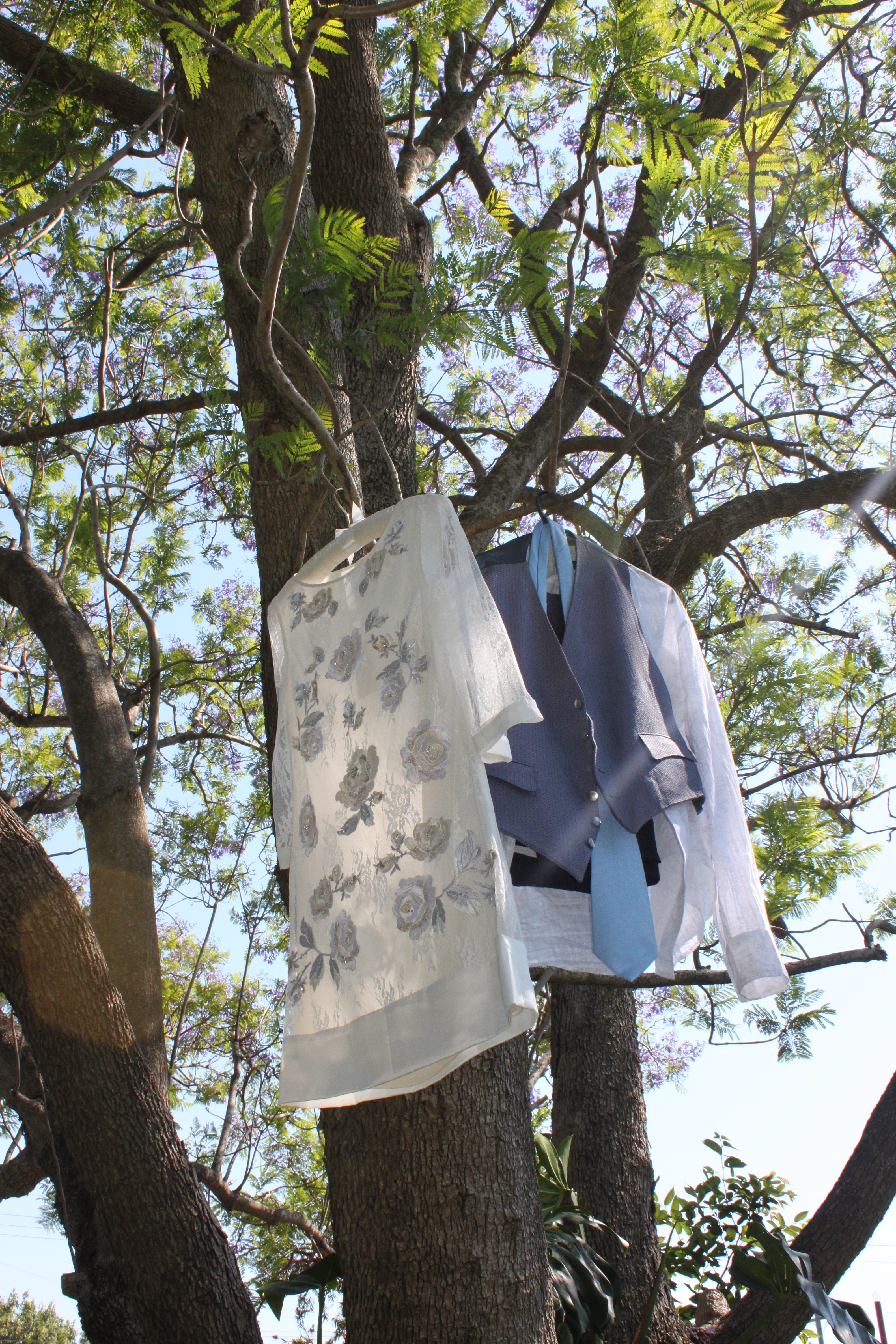
Wedding clothes & jacaranda tree

Mick’s head peeped out for an instant, then disappeared again:“Dig wider.”

Almost half a metre down, my face red from the effort, I found a small box. Inside, it held some tiny shells and a note: ‘Will you marry me?’

As I ran to my future husband, my face collided with a fistful of roots, covered in sand. As he’d heard me running over, he’d reached out and grabbed a bunch of sea pinks. Wrestling sand out of my contact lenses, he apologised;

“I forgot to get flowers! I can’t believe I didn’t make the effort.”

The effort was certainly above and beyond anything I could have ever expected. We got married under a jacaranda tree in Australia six months later. No sand, no trowels; but I did push him around in a wheelbarrow.

The rest is history. Long Island history.

(This autobiographical story was originally posted on Writing.ie in Monday Miscellany)

May in Photos

We’ve found shrews…but so did the kittens. Rescue missions in place!

Our mini veg garden is growing (onions, lettuce, courgettes, runner beans, French beans, corn, leeks, sprouts)

The tunnel is pretty impressive too…

…with good strong flowers on our tomatoes

We launched our punt (& had a few spins)

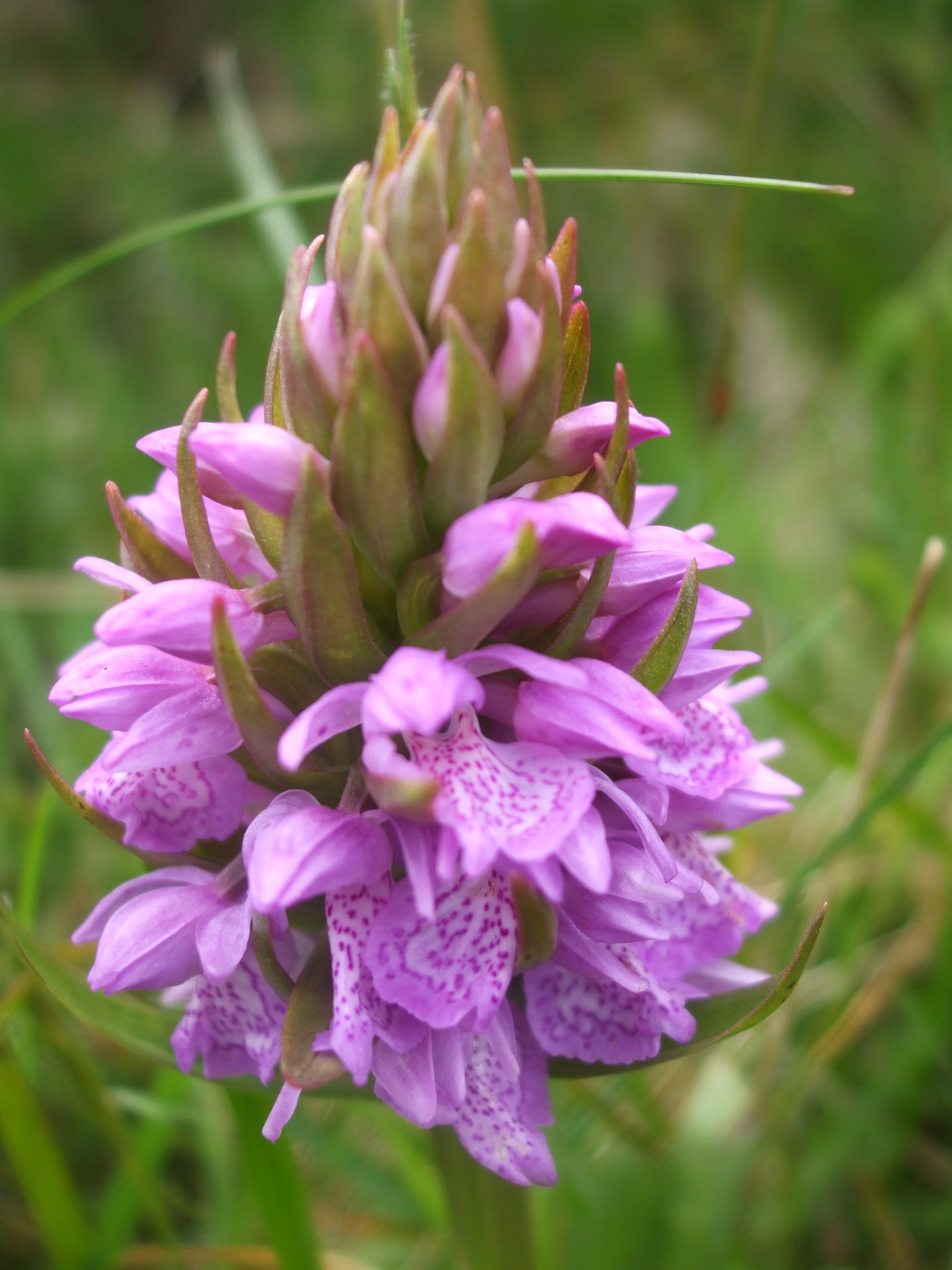
Spotted orchids on Long Island (West Cork)

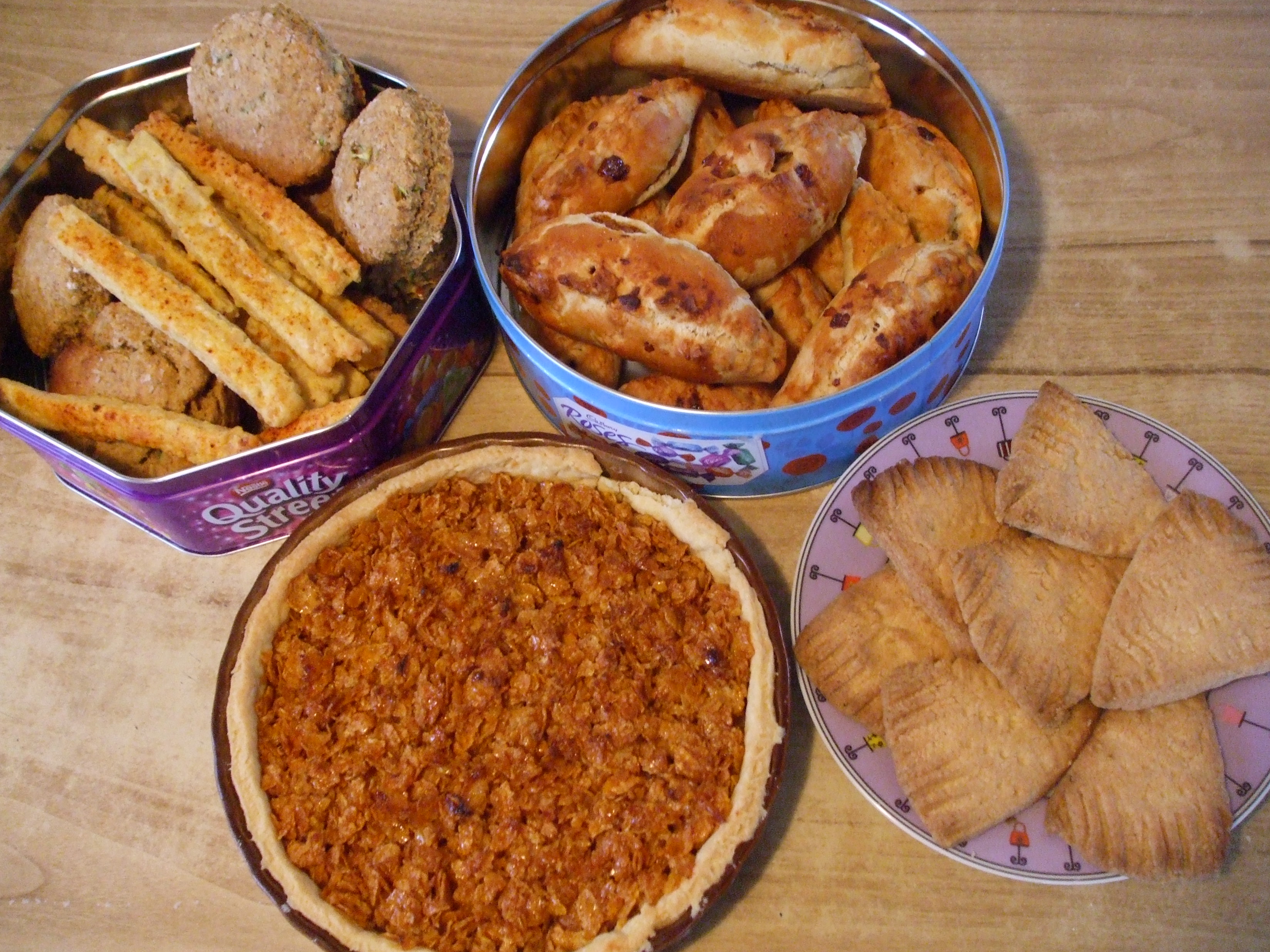
Baking (for pleasure and book research)

Three types of jellyfish spotted

Picnic time!

Some impressive sunsets