Category: A Writer’s Life
Spring in the Irish countryside
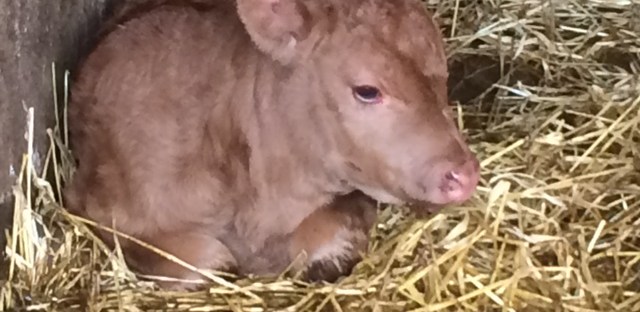
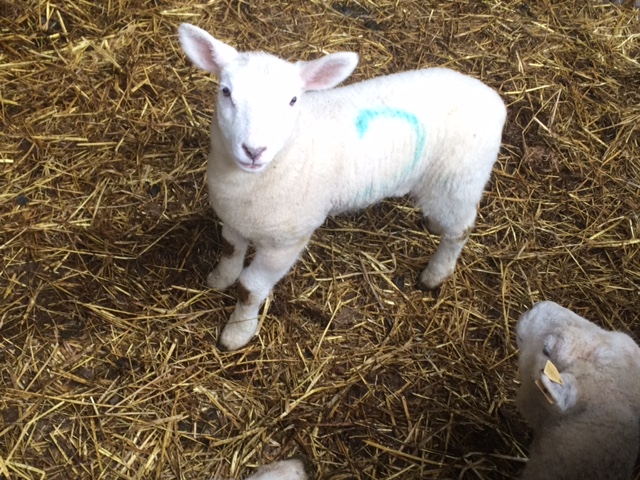
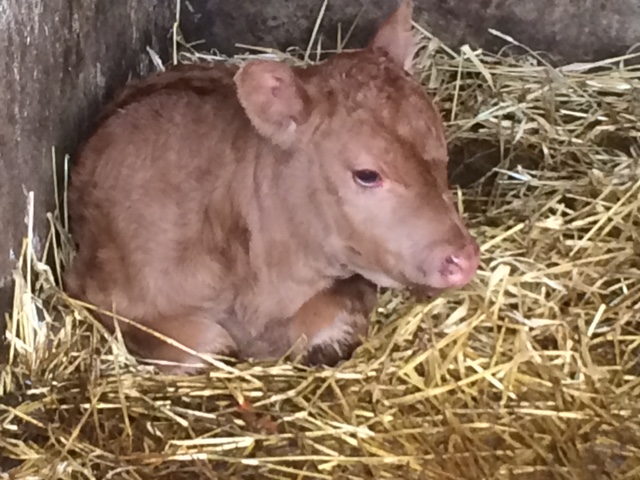
Spring is here and this means lambs, calves, daffodils – and lots of ground to dig up in preparation for planting our vegetables. This is a wonderful time of year in the Irish countryside if you don’t mind a bit of hard work and gardening in the rain (or the hailstone, as I discovered last week).
My husband and I have tried planting as much as half an acre of vegetables in the past, all grown organically and managed by hand, but the amount of work involved was incredible and the crops return very little. With so much to look after, it’s really difficult to keep on top of the slugs, rooks, and rabbits, and so this year, we’re sticking with a few drills of potatoes and several raised beds – some in a field and one in the front garden – along with the tunnel.
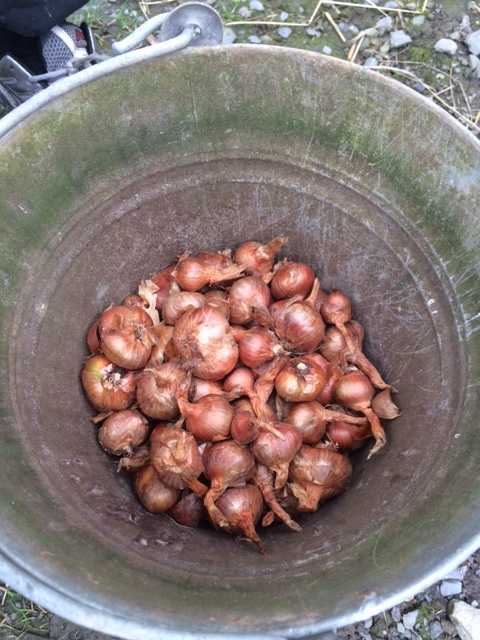
It’s still early, but so far we’ve got two decent drills of early potatoes sat, and this weekend we planted a bed of shallots. Next week, I’ll be able to plant some of the hardier seeds in the tunnel; lettuce, chillis, and purple beans to start, as well as various pak choi seeds I bought in Thailand.
I’ll wait a little longer for the herbs as they need lots of sun and I’m not convinced there’s enough just yet for them to grow properly. Our greenhouse (‘tunnel’) is built against a shed, so it doesn’t have 100% light – and this, we’ve discovered, means we have to amend the usual planting times for better results.
It’s such a lovely feeling having stuff planted – I love everything about it; the digging, manuring, watching things grow, planting out, weeding – and of course, eating! It’s a great way to get away from the computer, and let your head unwind. And every year, you learn something new.
Growing your own food is just wonderful and I can’t recommend it highly enough. You don’t even need to have a big space available – I’ve helped quite a few people grow their own veg in tiny spaces, including window boxes – so if it’s something you’re interested in but don’t know where to start, just shout!
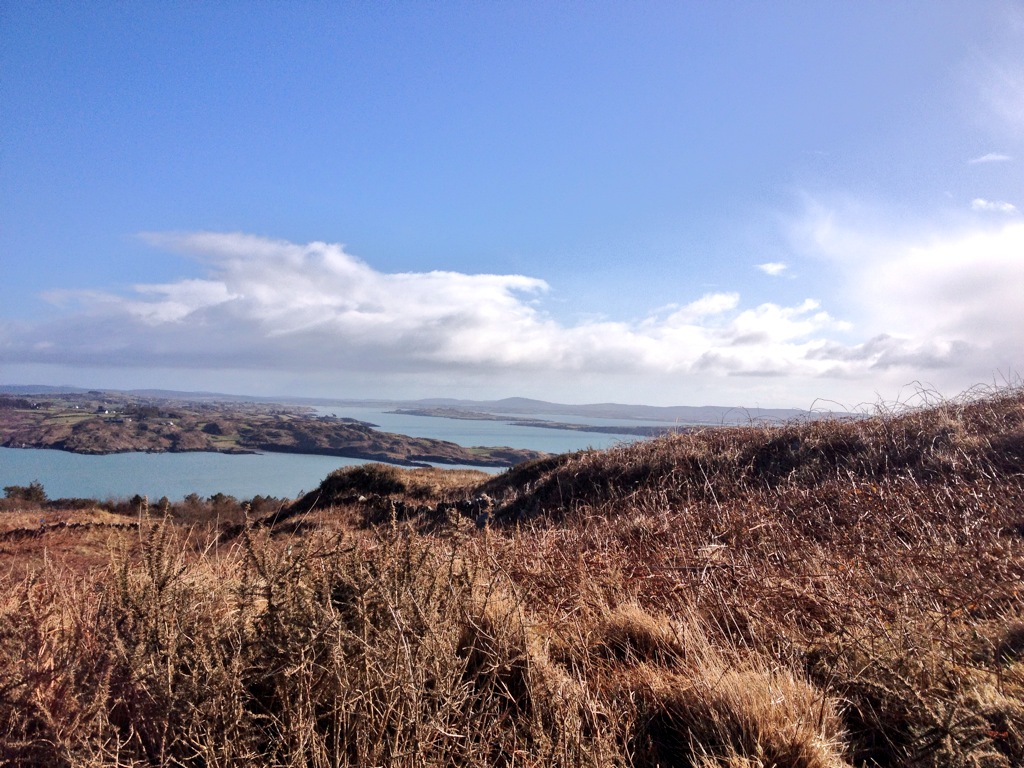
You can also feel the stretch in the evenings now, which is a real treat when there are no streetlights nearby. This week, we’ve seen flowers burst open, a few pheasants, wild ducks and the first few ladybirds; the sun has been shining and the sea has been the most stunning turquoise imaginable. It all feels loaded with so much promise, it makes you glad to be alive.
Who else has that Spring feeling?
What does Spring mean to you?
Brain splurge & a burning question…
It’s been quiet on the blogging front because it’s been hectic – so apologies to all.
It ended up easier than I expected to adjust to the cold weather in Ireland after my Cambodia trip; partly because my husband is a great hunter gatherer and has us stockpiled with fuel for this winter and next, but also because – despite the constant hail stone – there have been plenty of blue skies. And everything feels easier when there’s a blue sky.
So, what have I been up to? Actually, quite a bit. In the last two weeks, I’ve completed and delivered the final edits of The Book of Learning (Nine Lives Trilogy Book 1), so next time I see it, it’ll be a proof copy (which means it’s almost a real book).
There’s been plenty of excitement while my cover was being designed – and bang! Now I have a cover! I absolutely love everything about it, and I’ll let you see it as soon as I can, I promise.
I’ve also been accepted on a three-week writers retreat in France later in the year, invited to participate in an exciting new Cork publication (more details to follow) and invited to speak on a panel in Cork on April 25th (again, more info later).
And, breathe…
When it comes to writing books, there’s no rest for the wicked. When you get signed up for a trilogy, there’s lots of work involved in kicking the first book into shape and then…you have to write Book 2! Aargh! Well, I’m happy to report, the day after Book 1 was delivered, I had a rest, then I glued my butt to the chair and started on Book 2.
Three days in and 8000 words have magically appeared on the page – and I’m delighted, because I was starting to get a little scared.
I always write my first drafts completely free form (I think Niamh Boyce uses this approach too, amongst others). Any planning kills the excitement for me and anyway, it’s the only time you get to play before the editing begins. I enjoy editing, but I like the freedom of the first draft. It’s exhilarating and I look forward to the exploration, watching the ideas form a story.
As everyone knows, writing doesn’t pay the bills, so the work front – I don’t include writing as work – has been hectic too. As well as my usual freelancing gigs, I’ve taken on more Reader Reports for the Inkwell Group, as well as Blogging and Beyond courses. I love both of these roles.
Editing or commenting on someone else’s work is useful for your own; it helps you to focus as you write, naturally avoiding mistakes you would make earlier in your career. And as we all need the support of other writers as we stumble our way along, it’s great to know you’re also helping by providing some support in return.
It’s also rewarding to watch people pick up on social media learn to love it, and then make it work for them. Blogging has opened many doors for me, and I hope it does the same for my students.
But you’ll be pleased to know, it hasn’t all been work. We’ve managed to get our potatoes in the ground now – the ridges were waiting for ages but it was too wet – and I’ve been clearing other vegetable beds. In the hailstone. Which was pretty refreshing, actually.
There have been endless dog walks and library visits, and I’ve been watching a plethora of westerns (I love westerns) as well as enjoying some fantastic reads/rereads…
I was completely surprised by The Miniaturist and I’ve loved reconnecting with The General in the Piers Torday trilogy. And if, like me (and Barbara Scully, it seems) you’re obsessed with Antarctica, I’d highly recommend Empire Antarctica: Ice, Silence & Emperor Penguins by Gavin Francis.
The online world has been lots of fun lately too, with an incredible buzz and energy around the #YAie & MiddleGradeStrikeBack chats on twitter. There’s a thriving community of writers for children and Young Adults here, and it feels like there’s change – and plenty of excitement – in the air. I feel so pleased to be a part of it, and can’t wait to see how things develop. The World Book Day TeenFest tonight looks interesting – see you there?
And so, now I’ve finally managed to get the blog updated with a brain splurge of drivel that won’t matter to anyone but me, I’d better get back to it.
But I’ll leave you with my burning question…
Hands up, who loves westerns? 🙂
How do you do enough?
Since I’ve returned from Singing Kites, it feels like something is missing. It is lovely to be reunited with my wonderful husband, and to be back in beautiful West Cork, but when I was in Cambodia, I felt like I was useful, like I was doing something truly worthwhile.
Now I’m home, I’m loving my work, my writing, my home, and my life – and I’m feeling extremely grateful for what I have – but I also feel, in some way, useless. Not unworthy, but like there’s a void. That’s the best way that I can describe it.
The more you delve into conservation or charity work, the more you realise how endless the need is for help. So where do you start?
Do you help defenseless animals like at the Elephant Nature Park, or do you teach voluntarily in developing countries? Do you look closer to home and volunteer with wonderful organisatons like Inner City Helping Homeless, or do you look even closer still and adopt a rescue dog or make sure you remember to do the little things that help your loved ones and neighbours? All of the above, probably, but how can you ever do enough?
There is no doubt that I will return to Singing Kites next year (I can’t wait!), and I have an exciting charity project brewing that I hope will come to fruition soon enough. But we have to pay the bills and can genuinely only do so much, so in the meantime, I’m left wondering, how exactly can I help?
The simple answer is, that as a writer, I hope that by creating I can provide something useful – whether it’s a blog post that raises awareness, a story that allows for hope or escape, a fun children’s adventure trilogy, or a poem or piece of short fiction that reaches out to someone or simply entertains.
It’s not much to offer but I hope my writing will be read and enjoyed and will somehow affect the reader. I guess that’s what we want as writers, and, while I try and get my charity project off the ground, I’ll have to stop questioning whether that’s enough.
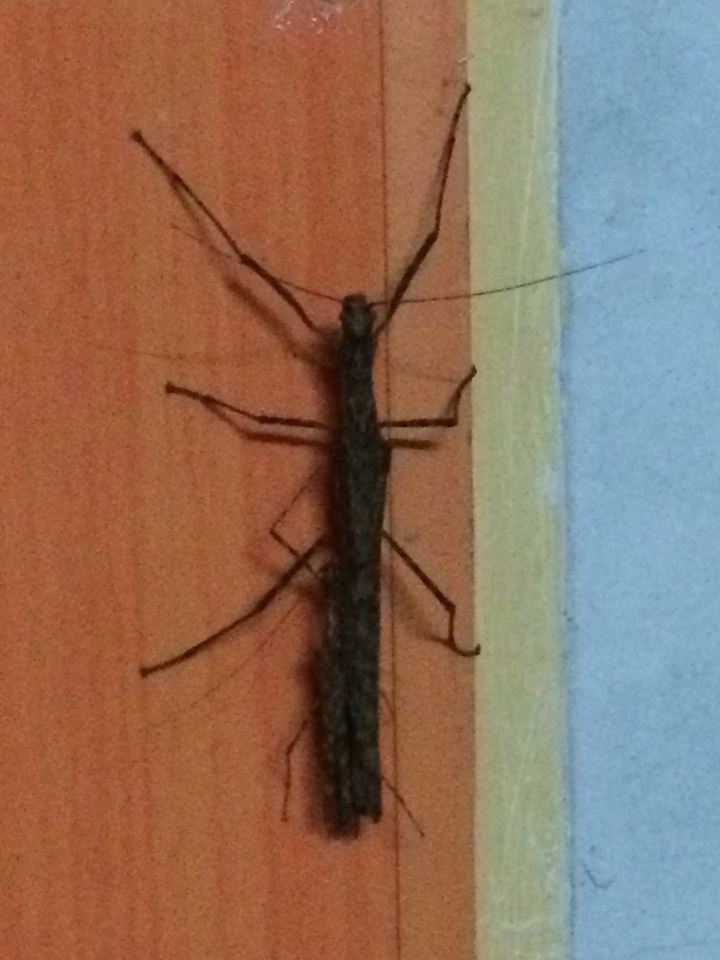
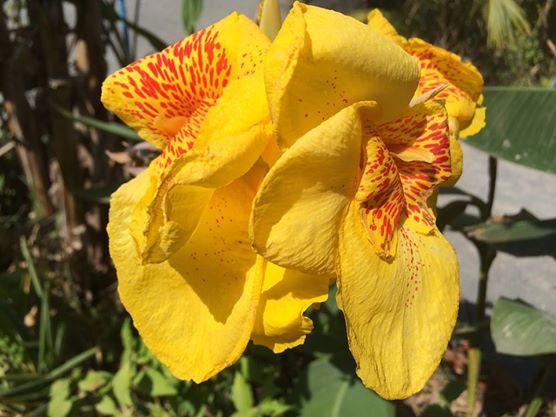
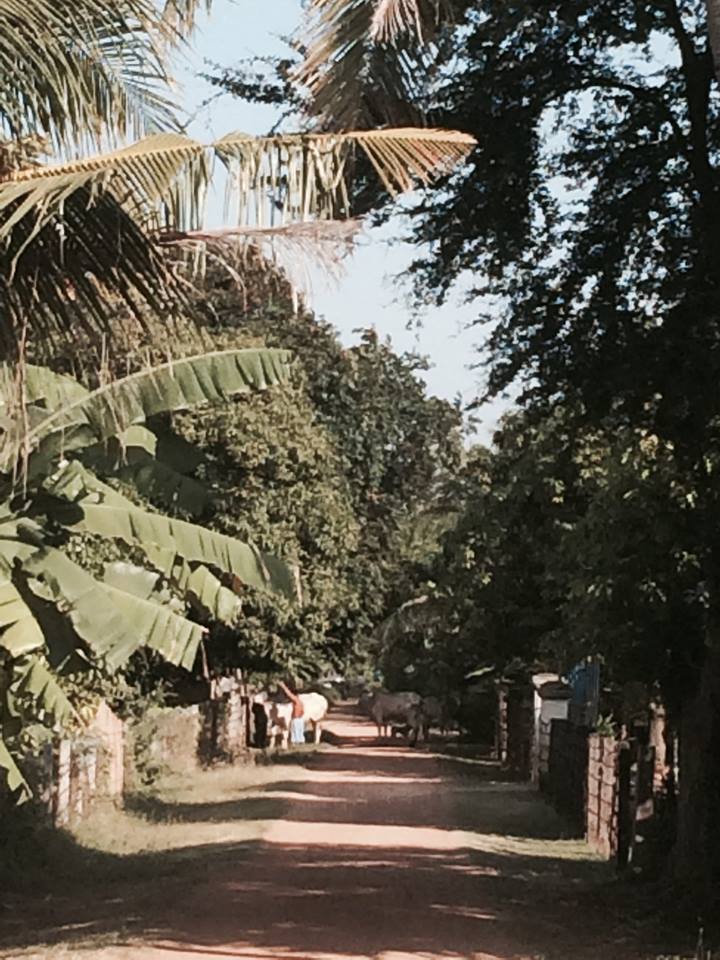
Some nature… #WritingCambodia
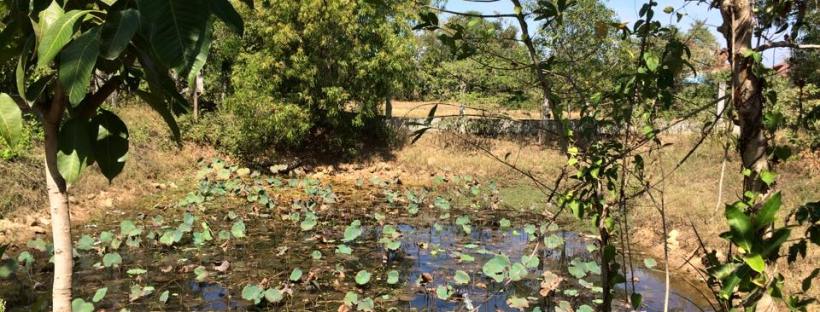
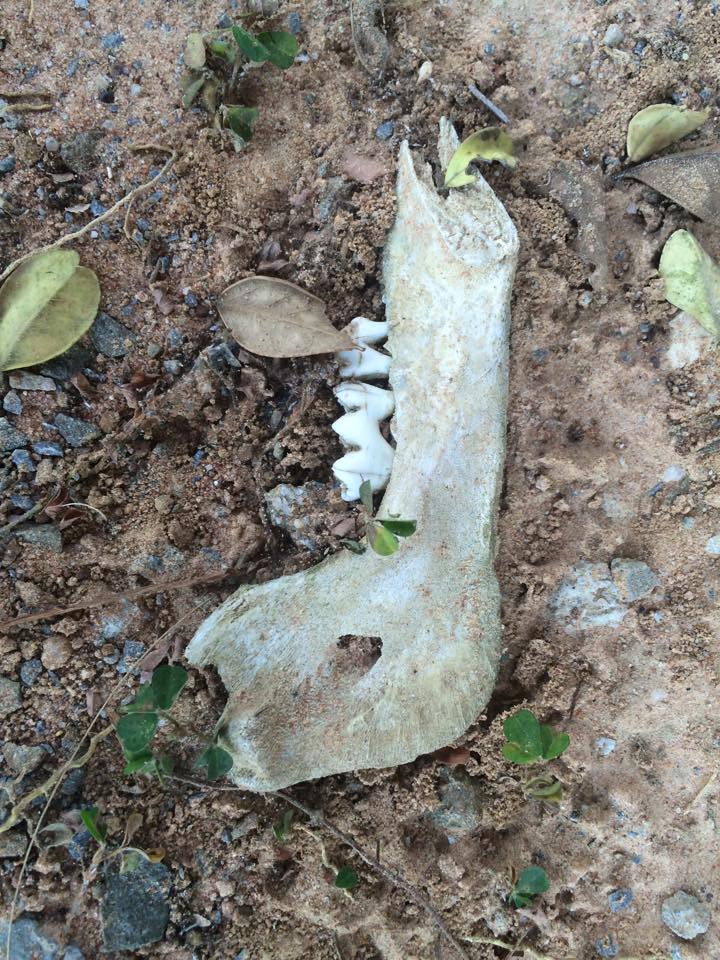
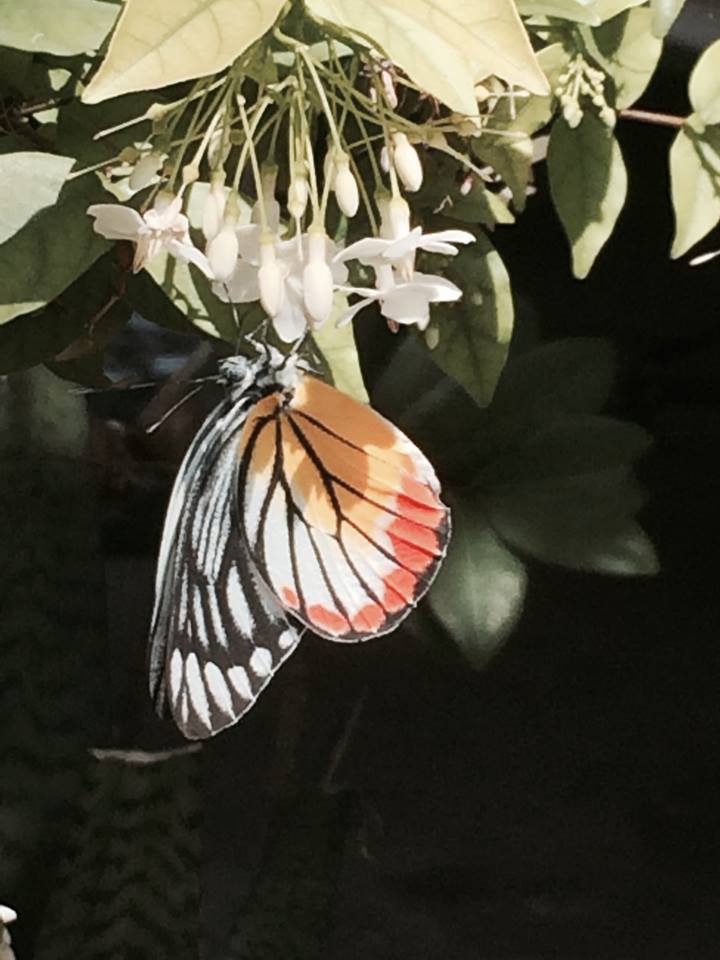
As everyone who reads this blog knows, I love the outdoors, so usually I bombard everyone with lots of photos of nature. In Cambodia, however, I’ve been so intrigued by the people, that I’ve neglected the beasties & the beautiful surroundings – so here are a few shots for you to enjoy. By the time you read this, I’ll be touching down on Irish soil….
Meeting S-21 (Tuol Sleng) Prison Survivors
Yesterday, I visited the Tuol Sleng genocide museum. There were graphic photos of torture and murdered prisoners and blood stains on the walls and floors. Three of the buildings have been updated so they can be used as exhibition areas, but the building that has been kept intact, full of tiny cells – some wooden, some brick – and a mass holding area is haunting beyond words.
The prison was formerly a school, but under the Khmer Rouge, education was forbidden and academics were murdered. Schools such as this one were taken over and used as places of imprisonment and torture. The regime wanted to create a society based on ignorance and so once they were overthrown, the country had to start over again in every way.
Some of the exhibits were defaced – the face of Pol Pot was scratched out and destroyed with abusive comments. The graffiti was in a variety of international languages, clearly showing a global anger towards these events. And yet all the Cambodian people I have met approach this differently – they show no anger, just a desire for it never to happen again. They do not forgive or forget, but neither do they react with bitterness or aggression.
Visitors were taking photos of the photographs in the exhibition, which I do not understand. There were no signs saying photos weren’t allowed, but it felt so wrong, especially seeing as families are still impacted and are still seeking the truth about their lost relatives. And yet people continued to take photos of the suffering of others. The only prominent sign was a pictorial request for ‘no smiling.’ I think this is important though there was nothing in the museum that would want to make you smile…
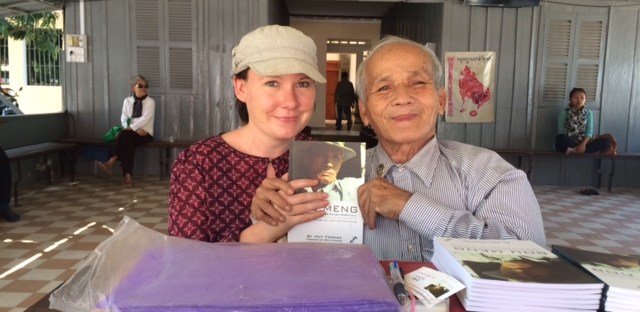
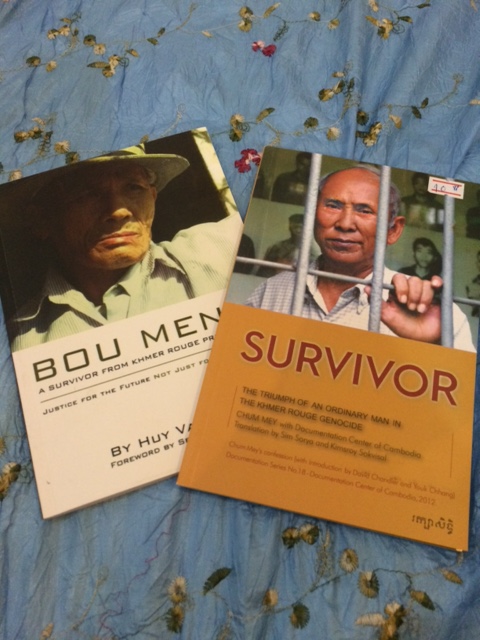
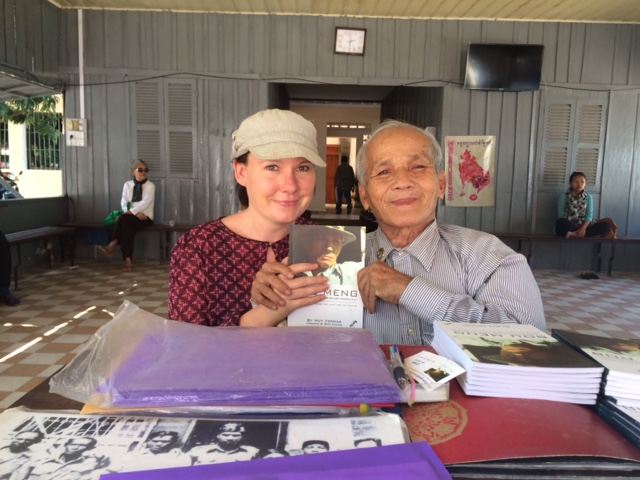
…Until you have seen all of the exhibits and are about to leave. Here, you get to meet two survivors – Chum Mey and Bou Meng. They each have a book for sale that documents their time within the prison, and their hopes for the future. The subtitle of Bou Meng’s book is:
Justice for the future, not just for the victims.
I got to meet each survivor, to ask a couple of questions and to tell them how much I admire them and how much I love the gentleness and kindness of the Cambodian people. Bou Meng was so delighted to hear this, he gave me a huge hug and an unexpected kiss on the cheek.
Yet another wonderful encounter that only strengthens my love for this country and its people.
A poem about worries by students of Singing Kites, Cambodia
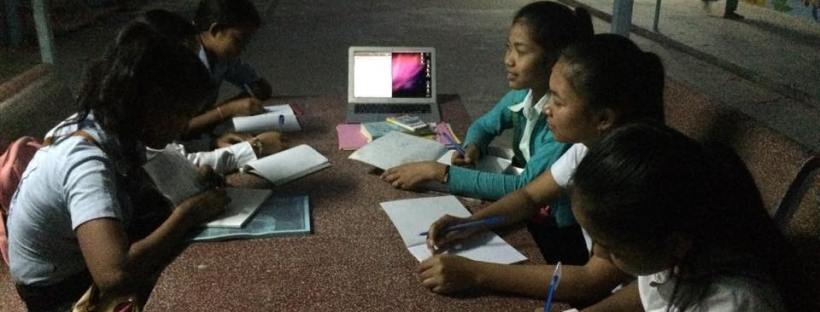
Another great piece of work by students at Singing Kites – and once again, their first ever poem in English.
I’m so very proud of them – well done girls! (The boys in the photo are their friends; they liked to visit and chat and they were all such great company)
Our Worries
I worry…
about my exams and if I will fail,
if I’m absent from school then my study isn’t good enough,
about my eyes because I always use the computer on the weekend,
that my brain gets tired when I study so much,
when I go home at night, my bicycle will get broken,
about riding my motorbike on the road in case there is an accident
I will hear ghosts in the dark,
that when I go home there is no rice and I’ll be hungry,
for my brother in Korea because he is working with machines – it is very dangerous,
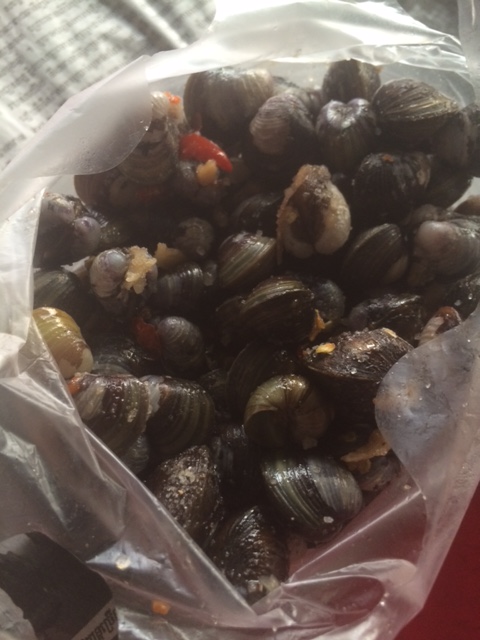
about not having money because I cannot study or buy things like leashal*,
that I make mistakes every day,
about not having enough water and the world getting hotter,
my face and skin is not white enough.
by Raksmey, Theary, Kaknika, Kanha, Lengheang
*Leashal are tiny clams, covered in salt and chilli and cooked in the sun. The shells do not open; you have to use your teeth. Very delicious. See below!
Being Included at Singing Kites #WritingCambodia
I really wanted to try and be part of the community while I was here, and to understand a bit about how the people live. Although I have enjoyed visiting the city, you do feel very much like a tourist because that’s everyone else’s perception of you. Staying in a commune in the countryside shows a whole other aspect, and has begun to show me the real Cambodia – and so that’s why I decided to abandon the city completely and stay at the school over the weekend while the teachers are away studying and the school is closed.
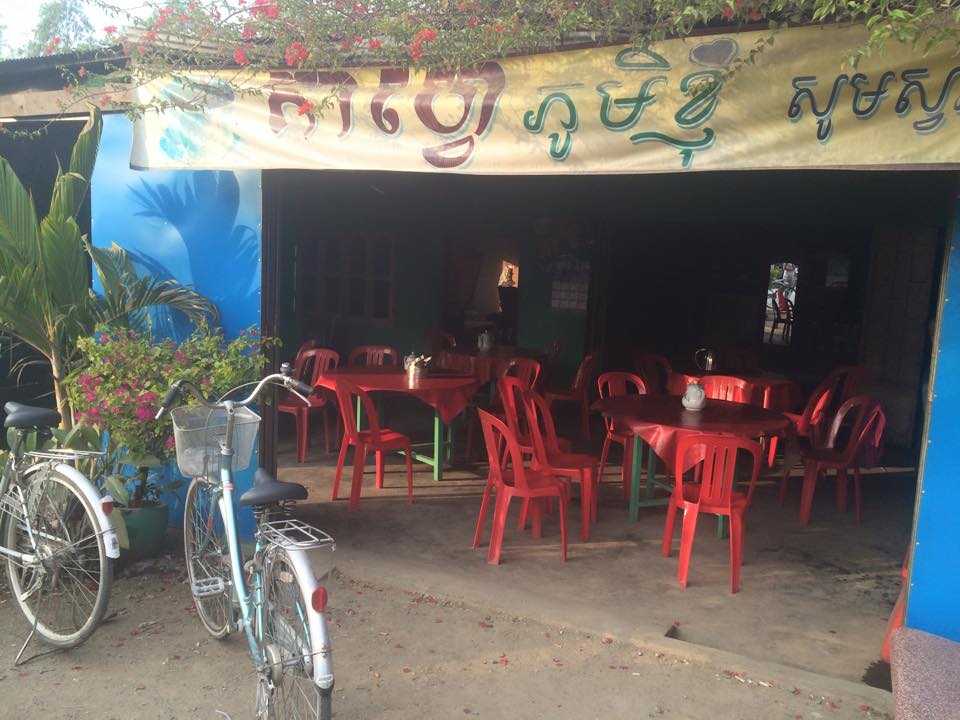
During the last week, I’ve been treated to breakfast in the little coffee shop – roasted pork & rice and sweet iced coffee – followed by a dawn motorbike ride through the local countryside. To catch breakfast you have to be at the coffee shop before seven – I asked about trying some noodles at around 8am and the reply was a chuckle and ‘no, you have to go in the morning’. OK, so 8am is no longer morning here – got it!
One of the dentists and her three dental nurses (local village girls and some of the first graduates from the school) also included me in their meals when they came to stay – smoked fish mixed with papaya, Cambodia spicy rice porridge, duck eggs (OK, I admit, I wasn’t expecting the foetus but this is common in South East Asia) and fried fish. They accompanied me on a beautiful morning bicycle ride through the fields to the village – rightly amused by my wobbly riding on the retro bikes – for a breakfast of banana fritters and giant prawn crackers filled with real prawns. And they also brought some strands of young green rice for me to look at, seeing as I’ve only ever seen it already dry and bagged. You can actually eat the young rice and it tastes like coconut milk.

My friend preparing the coconut from her garden – coconut water is the most refreshing drink in the heat.
This weekend, I was working on my book edits and freelance work, but I also had a few groups of girls visit me to take me for bike rides, join me for iced coffee, show me the stories they write, and share food; the villages in the commune are currently celebrating this year’s rice harvest by sharing Khmer noodles. I was also lucky enough to visit a girl’s home and meet her parents and sisters. They were such beautiful, welcoming people and I had a wonderful few hours in their company.
Then there was the roasted duck shared with the grounds men and teachers, the Khmer lesson over beers… The hospitality has been endless and generous, and I can’t thank everyone enough for their kindness. To feel safe, loved, and included, is such a gift – especially when you’re surrounded by people you’ve just met. People you can call friends in a very short space of time.
The darker side of the country’s past is also starting to reveal itself to me. I don’t pry because it’s far too sensitive, and far too recent, but one of the girls showed me their old traditional wooden house that had survived the Khmer Rouge times, how it was reduced in size due to damage from bombing. She also shared some stories that she had heard from her parents about their lives during that time. They were, as you would expect, horrific. Having met her parents, I have no idea how they have remained such kind and generous people. There is no sign of anger or bitterness; they emanate gentleness and warmth, which I find both remarkable and honourable.
There are also certain things that you can’t help becoming aware of. For instance, driving back to the school, Tith and myself listened to some beautiful and haunting Khmer music in the car. After a few songs had played, Tith explained that all of the singers we’d just listened to were now dead, brutally murdered during the Pol Pot regime for having beautiful voices. I’ve been reading the novel dogs at the perimeter by Madeleine Thien, and this has given me not only an insight into the terrible atrocities that Cambodia endured, but also the lasting impact of the Khmer Rouge regime. It shows me how far the country and its people have come in a short space of time.
Although I cannot understand the commentary, it is apparent from the snatches of the news that I have seen on TV that there is still faction fighting. The political situation remains tenuous and dangerous, and it seems that families need to ally themselves with either the police or the army – through family or marriage – to create some form of security for themselves, and particularly their daughters.
I have seen many Cambodian people wearing a T-shirt with the slogan ‘Sometimes we smile to hide the sad.’ I think explains plenty. I have only just begun to scratch the surface and my return to Ireland is imminent, but what I have seen so far only serves to enhance my feeling that this is an incredible country filled with strong and beautiful people that are making the most of what they have. They are striving to succeed, whatever odds are against them. To me, they are a shining example of what it means to be human.
My Village: A poem by students of Singing Kites, Cambodia
I’m so excited. I’ve been working with a group of six girls for three days in a row to write a ‘portrait poem’ of their village.
They found it challenging and scary at first but really got into it and there was lots of discussion and laughter and as there’s no right or wrong answer, I think they appreciated the chance to ‘make mistakes’.
My Great and Beautiful Village
My village sounds like…
Motorbikes beeping fast and loud,
People talking happily,
Bird cries all day,
Singers singing Khmer songs,
Children crying because they’re hungry,
Traditional music for weddings and festivals,
At night, the dogs bark and scare us.
My village feels…
Like a golden rice harvest,
Beautiful like a sunflower,
Friendly like the ants like sugar
Comfortable and warm like our wooden houses,
My village smells…
Of fresh water when it rains,
Like the white malis flowers in the gardens,
Tasty like fried fish, garlic and cauliflower,
Strong like durian and sweet like jackfruit.
When I think of my village,
I feel very happy and proud
I want to develop the roads, schools and hospitals,
And I want to live there
Forever.
By Lida, Sreynoch, Chanleap, Sothea, Seavmey and Danth,
Year 10-12
Return to Singing Kites: Books and Creative Writing
Returning to the school was like returning home. The welcome was so warm and inviting, from both the staff and the children, that it made me feel quite humble. The people here are openly appreciative of your presence, and that makes you really want to be useful, in whatever way you can.
However, I have no intention of being the starry eyed foreigner that thinks coming here for a few weeks will change lives. The fact of the matter is, it won’t – but it may spark something that can then grow. The director, Tith, has a lovely turn of phrase. He describes one educated person who wants to share their learning as a candle – and this candle can light another candle and another, which in turn can light further candles, until there are thousands of candles burning and the flame of learning has spread. I see myself simply as a candle.
Tith’s description mirrors my thinking with books, For me, books were always a release, somewhere to hide, learn, feel, and experience things that were otherwise unavailable to me. Books lifted me out of my unhappy childhood and into other worlds where I would prefer to be. Books proved to be my candle, and showed me that a better world existed than the one I knew. And by writing books, I feel that if even one child can use my book to help them dream, to be transported to somewhere better, then I have achieved my aim.
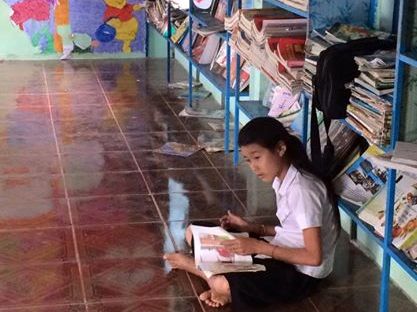
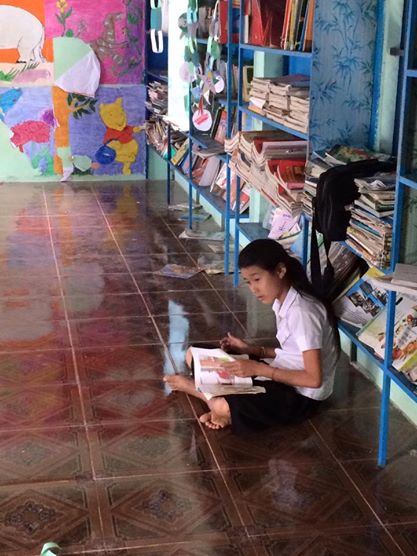
As books are close to my heart, it has been interesting to see the response towards books and reading while I am here. As I explained in an earlier post, the children learn by rote here, continuously repeating sentences and words from the board. There is a lovely, bright library, filled with an odd but colourful mix of donated books that cover a wide spectrum of topics, and I have seen a few children quietly using the facilities, lost in a book. However, the non-fiction books are the most popular, with children pouring over encyclopedias, while storybooks stay on the shelves, unnoticed.
Yesterday, a fifteen year old boy approached me in the library, asking what types of books I like to read and why. He was amazed when I picked authors like JK Rowling, Jonathan Stroud and Roald Dahl off the shelves and he really tried to understand my reasons for liking them. Fun, fantasy, and escape seemed to elude him, and when I asked what his favourite books were – he comes to the library every day before his classes – he said ‘grammar books. And books on nature that give me new words.’
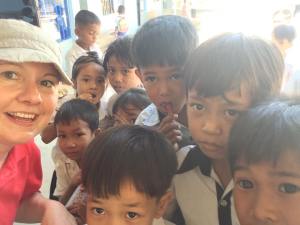
I have been positioning myself around the school playground to read my own books (currently Melvin Burgess, Cry of the Wolf, and Dogs at the Perimeter by Madeleine Thien), armed with extra picture books for when the inquisitive youngsters start crowding round. The response has been good, with children listening and laughing at the illustrations, and starting to repeat the words and understand the questions I repeatedly ask to draw them into the story. I have seen some of the children return to the storybooks on their own accord, and this makes me happy.
However, it is apparent that the desire to succeed, to learn – and be educated to a standard that can raise you out of your current situation and open up opportunities – has to be the number one priority. These children are fighting as a collective, to beat poverty, social pressures and low social expectations. Many are up at 4-5am, helping with the housework or peeling vegetables for their parents to sell at market, before attending Khmer school all day and then coming to Singing Kites (‘English school’, many of the children call it) at night until 7.30pm. Then they return home to more work and extra study. At weekends these children work. It is no surprise that reading books for fun, fantasy, escape, has little bearing on their lives.
But I believe there is still a place for creativity and the enjoyment of reading for reading’s sake – especially with such demanding lives. It’s just a case of finding a way to make these things relevant to the way they live. This week, I start some creative writing classes with some of the older children. As language is their main interest, I’m trying out similes, and I’m going to try some self-portrait poems about their village and families, moving on to aspirations and dreams. This work will be through concentrated group work over a period of three or four days a week, and although I’m not 100% it’s going to work, I’m looking forward to seeing what happens. After all, by being here I feel like I’m the one that’s learning.
You can find out more about this wonderful organisation by liking their Singing Kites Facebook page and I know they’d love you to show your support by sharing and reblogging this post if you can.